St. Peter Chrysologus’ Appeal By Christ To Be Transformed

Today is the memorial of Saint Peter Chrysologus.

Peter was born in the late 4th century in northern Italy. In 424, after serving as a deacon and priest in Emilia, he became bishop of the Italian city of Ravenna. Little reliable information about St. Peter’s life survives, except that he successfully drove heresy and the remnants of Roman paganism from his diocese by doing two things: providing exceptional pastoral care to the people and by giving practical yet passionate sermons. St. Peter’s brief sermons were so inspiring that he was given the title “Chrysologus” which means “of golden speech.”

He was declared a Doctor of the Church in the 18th century. In order to be called a Doctor of the Church the Pope and Cardinals must agree that the individual possessed three main characteristics during his or her life: truly outstanding holiness; a depth of doctrinal insight; and a body of writings which the Church recommends to people as authentic and life giving. These three qualities contributed to Peter’s success in ministering to the people of his diocese.
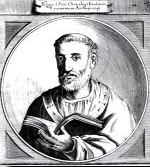
Our Gospel today speaks of the tiny mustard seed growing into a large bush, or the tiny yeast germ enabling the flour to rise. This theme of transformation is at the center of the story of the Incarnation. In a homily on this theme, St. Peter beautifully describes how Jesus is able, through His two natures, to touch and transform us. Christ meets us on a daily basis in prayer, and especially through the Scriptures and His real presence in the Holy Eucharist.

By means of these two marvelous gifts St Peter explains that we are able to identify with Jesus and be converted like the mustard seed and yeast germ, into something so much greater –  we are transformed and divinized into the life of Christ Himself. In one of his homilies, he has the Lord speaking and appealing to His people. He says,

“Listen to the Lord’s appeal: In me, [your Lord] I want you to see your own body, your members, your heart, your bones, your blood. You may fear what is divine, but why not love what is human? You may run away from me as the Lord, but why not run to me as your father? Perhaps you are filled with shame for causing my bitter passion. Do not be afraid. This cross inflicts a mortal injury, not on me, but on death.

These nails no longer pain me, but only deepen your love for me. I do not cry out because of these wounds, but through them I draw you into my heart. My body was stretched on the cross as an icon, not of how much I suffered, but of my all-embracing love. I count it no less to shed my blood: it is the price I have paid for your ransom. Come, then, return to me and learn to know me as your father, who repays good for evil, love for injury, and boundless charity for piercing wounds.”

May the Lord continue to raise up men and women with St. Peter Chyrsologus’ gifts to feed and care for His people.

Copyright © 2012 Deacon Paul O. Iacono All Rights Reserved.

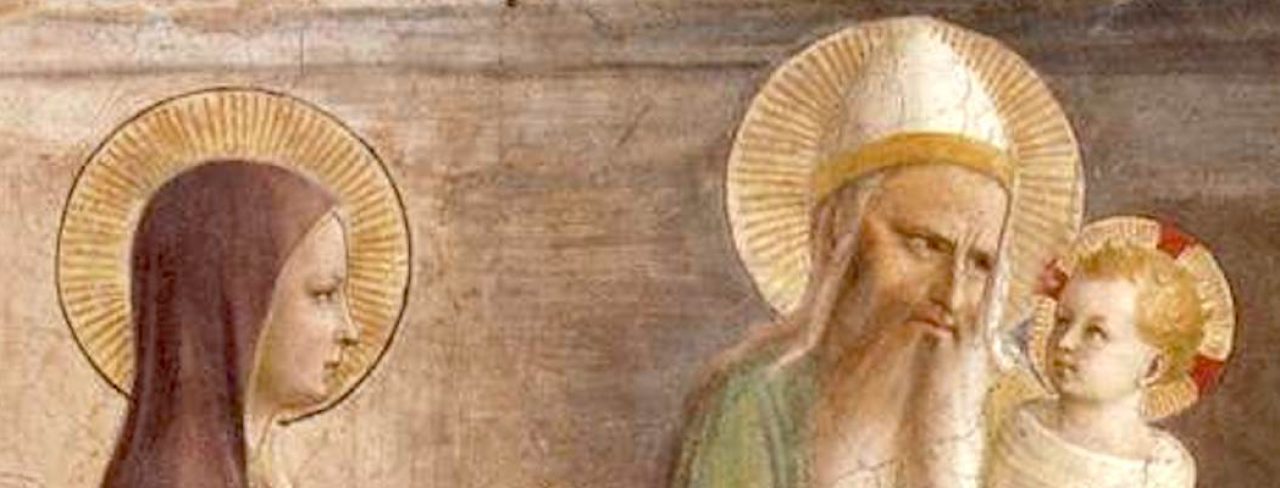
Image of St. Peter Chrysologus courtesy of info@crossroadsinitiative.com


Summer 2012 Workshop in Painting Sacred Images – A Few Reflections

Over the past six years I have participated in numerous workshops in sacred art and have produced a number of sacred images, each of which helped me understand the techniques of this sacred art.

In 2006, I participated in my first workshop at St. Michael’s Institute of Sacred Art at St. Edmund’s Retreat in Mystic, CT. The instructor was Peter Pearson, an Episcopal priest from Pennsylvania. He introduced the class to the beautiful and prayerful experience of painting a sacred image in the Russian Orthodox tradition; however, rather than using egg tempera paints (in which you mix the yolk of an egg with natural earth and mineral pigments) he taught the techniques using acrylic paints.

A note on acrylics versus egg tempera pigments. I personally believe that they are both valid materials to use. I have studied and painted images in each of these techniques and I personally do not have a solid preference, although, I believe it is helpful for a student to learn the techniques in acrylic first and then study sacred imagery using egg tempera pigments. I find both materials – natural or synthetic colors – enjoyable.

There are some people in the Internet community who become quite exercised over the fact that there are artists creating sacred images using acrylic paints. It is not necessary to get into, as Pearson would say, “the egg wars” debate, other than to mention that all sides are respectfully entitled to their opinion. Neither the Catholic or Orthodox faith exclusively owns sacred art, imagery, or iconography. Church art has always been (for at least the last 1500 years) an outgrowth of the Catholic and Orthodox creative spirit desiring to unite art with prayer. It was certainly part of the early tradition of the Roman Catholic Church prior to the winds of Western civilization moving the Catholic artists’ barque into Gothic, Renaissance, and Baroque ports of call.

In the late 20th and early 21st century, a growing element of the sacred art tradition of the Roman Catholic (and the Eastern Rites churches which are in union with Rome) has revolved around reestablishing traditional sacred imagery and iconography as part of the Catholic artistic heritage. Sacred iconography has always been a part of the Orthodox churches liturgical tradition, and they are to be saluted and commended for keeping the bright light of this sacred art tradition alive within the Church community.

It is probably part of the Western European/American mindset to accept and utilize new developments in artistic materials and techniques. This is why I believe some of us do not have any problem using acrylic paints. Acrylics are synthetic paints (composed in a lab) rather than natural earth or mineral pigments. My personal spirituality does not think that the Lord is concerned with the materials used in prayer, rather, He is interested in the intent and the creative outcome of that sincere prayer. You use what you think works, have fun with, and is readily available. There are many ways to catch a fish – as the Lord said to Peter – “throw out your nets again!”

So, on a practical level acrylic paint can be fun to work with, but it can also be problematical. Years ago Peter Pearson recommended a line of paints to us from the Chroma company called JoSonja. These paints are primarily used in the decorative crafts, yet, because of their color lines, they fit the bill for painting in a more traditional way – similar to the Russian tradition. By this I mean that the Russian Orthodox colors are primarily muted, unlike the Greek Orthodox who had a wide range of brilliant colors to choose from for their artwork. Geography and geology play an important part in understanding the color palette and artistic techniques of a civilization.

The nice thing about the JoSonja line of paints (available at DickBlick.com and other outlets such as Jerry’s Artarama) is that they are inexpensive but of surprisingly good quality. They also have an entire range of mediums, (such as flow medium and glazing medium) which are essential in getting the results you want, especially for the multi thin layering and highlights of the image’s face. The JoSonja line has also produced a polyurethane satin varnish that compliments the chemistry of the paints and mediums in their line. It was used on my sacred image for the recent workshop and went on without any problem. I applied this varnish with a one and one-half inch flat wash brush from Princeton Art and Brush Company (item # 4050 FW). It has very fine and soft bristles – perfect for streak free varnishing. I must give you a warning: work quickly as the varnish dries rapidly. It is non toxic and cleans up with soap and water.

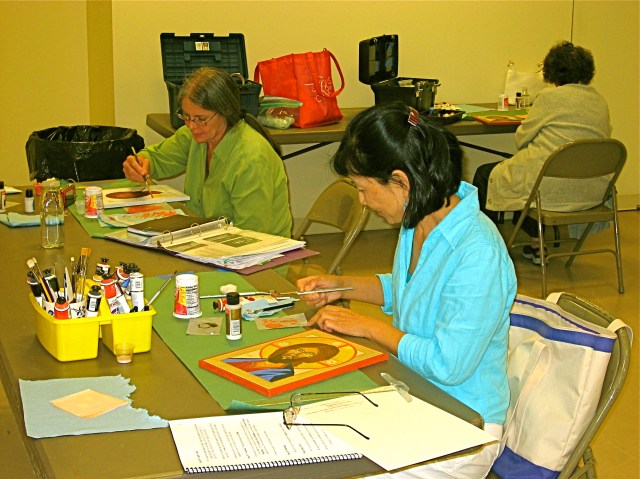
I produced a manual for the workshop which explained each step, yet, found myself talking more than I really wanted to, owing to the fact that this was the participants first sacred image, and for many, their first venture into art in many years. A sacred image workshop should be a place in which the participants can enter into prayer while they paint; hopefully, the next workshop will more conducive to this necessary element.

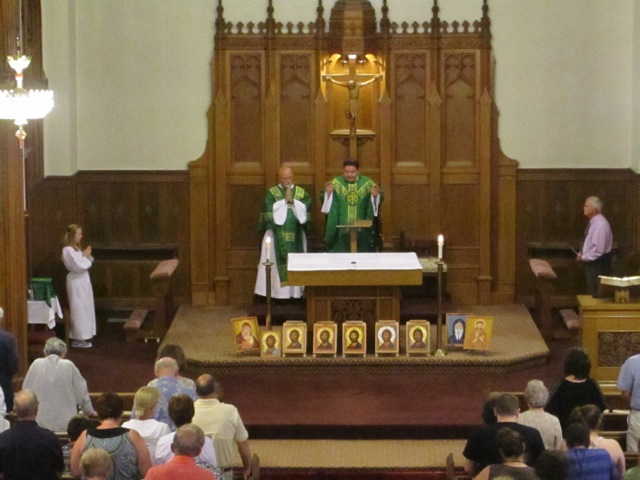
All the adult participants were very good sports and reacted with quite a bit of patience to some of the more difficult parts of the process. They were all happy with the results and want to embark on another workshop – which is good news! Please find below a few photos from the workshop and the Mass at which the sacred images were blessed. You can see the images in the sanctuary in front of the altar. I am behind the altar to the left vested in a green dalmatic, and Father Joseph Upton the Institute’s chaplain, has his hands raised as he recites the blessing over the sacred images. Thanks again to everyone who participated and see you soon!

Copyright photos and images © 2012 Deacon Paul O. Iacono All Rights Reserved

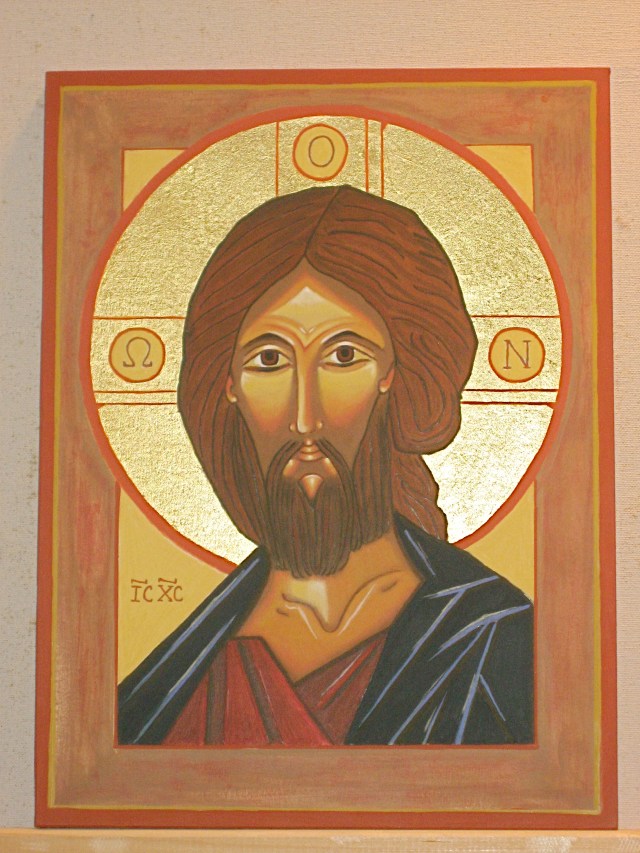
A Sacred Image – The Sun of Justice, Jesus Christ

You are probably thinking, the poor old fellow has made a mistake in his spelling. Shouldn’t the title read “Son” of Justice?

One evening a passage from Evening Prayer in the Divine Office caught my attention. It was the final prayer and it read: “Father, yours is the morning and yours is the evening. Let the Sun of Justice, Jesus Christ, shine for ever in our hearts and draw us to that light where you live in radiant glory.” That phrase provided this image’s title: Sun of Justice, Jesus Christ.

My intent was to have the image direct the prayerful observer to meditate on the truth that Jesus Christ is metaphorically the Sun, which as a result of His obedient and willing sacrifice on the holy wood of the Cross, shines in our hearts. It is up to us to prevent its eclipse in our soul.

Through his death and resurrection He redeemed us of our sins and guides us back to the Father. He is the Son and the Word of the Father. He is the Light of the World. He is also the Sun of Justice, in that we as individuals will all surely have His light illumine our souls and be judged by His standards.

The face and garments of the sacred image are not  painted in the artistic language of traditional iconography. I made preliminary sketches and based them on the drawings and wood carvings of Brother Martin Erspamer, O.S.B.      I attempted to emulate woodcarving methods.

I am happy to say that when you are praying in its presence it does provide comfort to your soul.

This sacred image of The Sun of Justice, Jesus Christ was a gift to Fr. Joseph R. Upton. He is a wonderful and holy priest who serves as the Chaplain of the Fra Angelico Institute for Sacred Art.

Essay and photo of the above sacred image – Copyright © 2012. Deacon Paul O. Iacono All Rights Reserved

Robert Henri – Artist and Teacher

One of the great pleasures of life is discovering and becoming friends with people who have a similar philosophy of life – especially when it comes to understanding truth, goodness, and beauty.

We are fortunate if we had the experience of five teachers on a combined high school, college, and graduate school level whose influence on us was greater than simple superficiality.

I spent thirty years in the field of education. Two of those years were in an administrative role, and twenty-eight were in the classroom. During that time I had the opportunity to study not only the philosophy of education but implement it as well.

In the process of the great adventure of being a classroom teacher, you come across individuals and books that have a marvelous impact on your own style and understanding of the art and craft of teaching.  For example, Gilbert Highet first introduced me to viewing teaching as an art, and the truth that all who desired to be great teachers must become artists of their craft. Another who molded my teaching behavior (literally like a potter molding a vase) was Haim Ginott. Ponder this beautiful and critical phrase as it presents the power that a teacher has over the lives of their students (from Ginott’s book Teacher and Child):

“I am the decisive element in the classroom. It is my personal approach that creates the climate. It is my daily mood that makes the weather. As a teacher I possess tremendous power to make a child’s life miserable or joyous. I can be a tool of torture or an instrument of inspiration. I can humiliate or humor, hurt or heal. In all situations, it is my response that decides whether a crisis will be escalated or de-escalated, and a child humanized or de-humanized.”

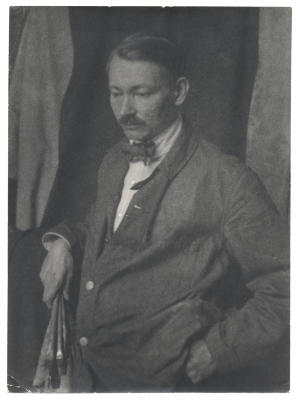
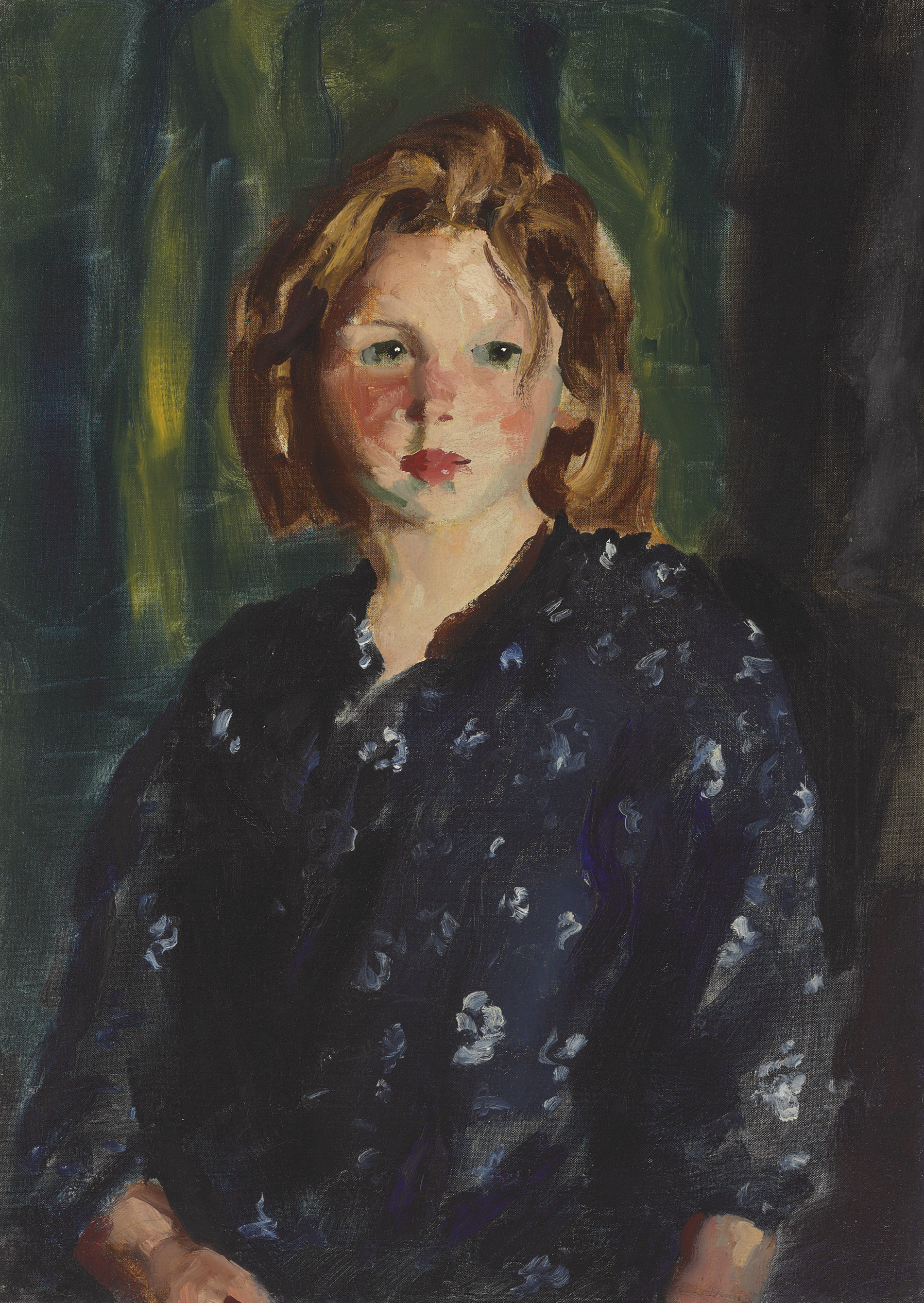
Robert Henri was also an important influence on me. Henri was an influential artist, art teacher, and critical force in the American art community during the early 20th century. In his wonderful book, The Art Spirit (1923), I find a brother in arms. He teaches us that our weapons are the tools of our art and our helmet are our words that inspire others to see themselves as artists.

He challenges us:

“Art when really understood is the province of every human being. It is simply a question of doing things, anything, well. It is not an outside, extra thing. When the artist is alive in any person, whatever his [or her] kind of work may be, he becomes an inventive, searching, daring, self-expressing creature. He becomes interesting to other people. He disturbs, upsets, enlightens, and he opens ways for a better understanding. Where those who are not artists are trying to close the book, he opens it, shows there are still more pages possible. Art tends towards balance, order, judgment of relative values, the laws of growth, the economy of living – very good things for anyone to be interested in.”

Highet, Ginott, and Henri implore us to see ourselves as people who desire to create beauty, express truth as we understand it, and to always keep the book open in a spirit of charity and goodness. Specifically, the spirit of Robert Henri continues to teach and prod me to create everyday. Maybe he will touch your mind and heart, too.2008_NYR_02058_0141_000(045104)-442857698

Painting by Robert Henri (1865 – 1929). This post was edited and reblogged by me on 12/29/2024. Copyright © 2012-2024, Deacon Paul O. Iacono. All Rights Reserved.

Photo of Robert Henri courtesy of the Parrish Art Museum:http://www.parrishart.org/.

Our Lady of Mt. Carmel Calls Us To Holiness

The book of Exodus mentions the Egyptian city of Rameses. If you travel to the Egyptian University Museum of Antiquities, in one of the side rooms, you will see two interesting artifacts: an ancient stone pillar that proclaims: “The pharaoh built the city of Rameses with Asiatic Semitic slaves,” and an ancient tomb painting showing slaves hard at work making bricks for the city. Many scholars view these “Asiatic Semitic slaves” to be the Hebrew people.

With the unveiling of Moses as a prophetic leader we read of the Hebrews release from bondage through the unstoppable combination of his leadership and the Lord’s power. Yet, four hundred years after the exodus from Egypt, Hebrew kings and their queens had thrown their traditions aside and were living sinful pagan lives. They too, had begun to oppress their people with extreme taxes and disregard of Mosaic Law.

In the 9th century BC, the Old Testament prophet, Elijah (Elias in the Greek), arrived on the scene and chastised the Hebrew king Ahab and his Phoenician wife Jezebel, a priestess of the pagan god Baal, and announced that a devastating drought would occur to punish their sins against God and their people. This drought did occur and caused great suffering in Israel; but Elijah, while praying on Mount Carmel, had a vision of a great cloud, pregnant with water, which would bring liberation and relief from the devastating effects of Israel’s sin and suffering. Some Bible scholars have linked Elijah’s rain clouds to our own Catholic traditions. The rain clouds serve as an image that foreshadows the spiritual life giving waters that Mary was to bring to the world through her being the Mother of God – the Mother of the Redeemer.

In the 13th century, Catholic monks of the community of Mt. Carmel in Israel created a formal religious order that today we call the Carmelites. They were attracted to the contemplative life of Elijah and the time that he spent on Mt. Carmel. They believed that their specific mission was to praise God while being under the protection of our Blessed Mother. Like the Hebrews of old, the Carmelites, at that time, were being persecuted and oppressed by certain groups within the Church. Amid the many persecutions raised against their Order, Simon Stock, their superior general in England, turned with confidence to the Blessed Mother, and in prayer, requested her help.

In Cambridge, England, on July 16, 1251, as Simon Stock knelt in prayer, Our Lady appeared before him and presented him with the now well-known brown scapular.  She said to him these words:  “This [scapular] shall be the privilege for you and for all the Carmelites; anyone dying [clothed] in this habit shall be saved.”

What does this mean?

It means, by our Lady’s promise, anyone who dies faithfully and lovingly wearing the brown scapular is not eternally lost. This is an extraordinary promise, one that unfortunately many Catholics have never learned or disregard as being irrelevant to their lives; but the promise is still valid and very relevant for us today. To make that point, Our Lady drives home its significance in subsequent apparitions.

At the approved apparition in Lourdes, in 1858, our Blessed Mother chose to make her last appearance on July 16th, the feast day of Our Lady of Mt. Carmel; and at the approved apparition at Fatima, on October 13, 1917, it is as Our Lady of Mount Carmel that Mary appeared when she said farewell to the three children who had witnessed her messages of warning and hope.

Eight hundred years ago, the Queen of Mt. Carmel brought relief and support to the Carmelite Order from the oppression of social sin and injustice; and today, Our Lady of Mt. Carmel continues to offer us relief from the oppression of our own transgressions and that of the world.

Let us have faith in the love of such a great Mother. Let us dedicate ourselves to imitating her and her Son. When we wear the brown scapular we unite ourselves to the Carmelite community and recognize in it the sign of the presence of Mary in our daily lives. The brown scapular is a visible commitment to be clothed in Jesus Christ and to manifest Him in our lives for the benefit of our eternal soul and the good of those around us.

Let us pray that we remain open to our Blessed Mother’s ability to refresh us from the drought of our own sinfulness; and through her intercession with the Lord and the sign of her scapular, appreciate the eternal love, power, and mercy of God.

Our Lady of Mt. Carmel, pray for us.

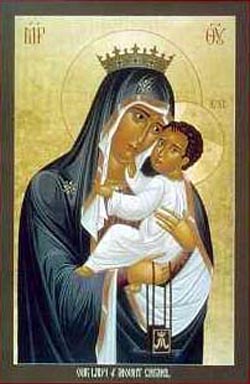
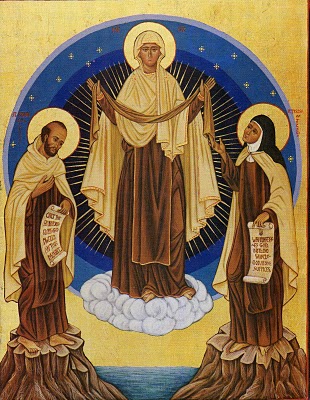
+++The first beautiful icon of Our Lady of Mt. Carmel appears through the courtesy of the website of Father Luis Gonsalves, a priest in the Diocese of Peoria, Illinois. I recommend that you visit his website: www.overheardinthesacristy.net/ The second beautiful image of Our Lady of Mt. Carmel appears through the courtesy of the artist Terry Nelson who painted it in the 1980’s. It is painted in acrylic and gold leaf on a wood panel. He comments on it: “I can’t recall the exact date that I painted this image of Our Lady of Mt. Carmel with Saints John [of the Cross] and Teresa [of Avila], but it was sometime in the 1980’s.  At one time it was used for the cover of Soul magazine – both Spanish and English editions, and prints were subsequently sold through the World Apostolate of Fatima in New Jersey.  The original is in the possession of a local Carmelite community of men.”  I recommend that you visit his website at abbey-roads.blogspot.com

Copyright © 2012 Deacon Paul O. Iacono All Rights Reserved

Ken Jan Woo – sacred artist

Please see my post of July 9, 2020 entitled Chinese Martyrs and the Art of Ken Jan Woo. Thank you.


A Decisive Hour for American Catholics

Deacon Paul O. Iacono's avatarThe Fra Angelico Institute for Sacred Art

As we approach the conclusion of the Fortnight for Freedom, we draw near to the decisive hour, an hour of decision in the history of our great nation; an hour which truly challenges  American Catholics’ sense of discipleship.

It has been a fortnight in which our bishops have asked us to reflect upon our liberties, our history, and our current state of affairs. If you have thought about these issues at all you know that our history has not lied in this case: America is a nation that was built upon reverence for God, His natural law, and respect for the primacy of individual conscience and religious tradition.

In 1636, one hundred forty years before Jefferson penned the Declaration of Independence, the founder of the little colony of Rhode Island, Roger Williams, made freedom of conscience and religion the keystone of his community.

In 1776, The Declaration of…

View original post 839 more words

A Decisive Hour for American Catholics

As we approach the conclusion of the Fortnight for Freedom, we draw near to the decisive hour, an hour of decision in the history of our great nation; an hour which truly challenges  American Catholics’ sense of discipleship.

It has been a fortnight in which our bishops have asked us to reflect upon our liberties, our history, and our current state of affairs. If you have thought about these issues at all you know that our history has not lied in this case: America is a nation that was built upon reverence for God, His natural law, and respect for the primacy of individual conscience and religious tradition.

In 1636, one hundred forty years before Jefferson penned the Declaration of Independence, the founder of the little colony of Rhode Island, Roger Williams, made freedom of conscience and religion the keystone of his community.

In 1776, The Declaration of Independence, and in 1789 the Constitution of the United States, all clearly stated the limitations of government; and in 1791, the Bill of Rights, carefully enunciated the rights of each individual citizen – the first right being, freedom of religion.

James Madison, a delegate to the Constitutional Convention and its secretary and recorder, described the legitimacy of conscience as “the most sacred of all property.” (1)   He wrote, “The religion then of every man must be left to the conviction and conscience of every man; and it is the right of every man to exercise it as they may dictate.” (2)

George Washington wrote, “the establishment of civil and religious liberty was the motive that induced [him] to the field of battle.” (3)

In 1804, President Thomas Jefferson assured the Ursuline Sisters of Louisiana – who had, for seventy-seven years, been serving an indigenous population by operating schools, hospitals, and an orphanage – that the principles of the Constitution were a “sure guarantee” that their ministry would be free “to govern itself according to its own voluntary rules, without, interference from the civil authority.” (4)

This is a matter of history. It is not a matter of conjecture, dispute, or equivocation; yet it is clear that the vast majority of our current state and federal government leaders do not accept this understanding of what the founding fathers of our nation wrote, lived, and established as our heritage.

So, we are at a decisive hour – an hour of decision – an hour that will determine the depth of our discipleship and test our understanding of who we are as American Catholics.

Many pundits, commentators, and yes even Catholic politicians, have remarked that there is nothing to worry about with this now Supreme Court approved Health Care Law. Yet our Church leaders – our bishops – are united in telling us that there is something drastically wrong with this law.

The American bishops have been united and clear on this issue and they clearly tell us that the Fortnight for Freedom has been about getting American Catholics – all 52 million of us – to understand that our federal government will force our Church to provide for certain types of medical procedures even though it is in direct violation of our collective conscience. My brothers and sisters, the Federal government’s actions are wrong and must be opposed.

So society may ask, “What do you want?”

Our Church responds, we respond, that as Catholics we ask nothing more than what Saints Peter and Paul and all the martyred saints and true disciples of Jesus Christ wanted; and as Americans we want nothing more than what Roger Williams, George Washington, James Madison, Thomas Jefferson and all true American statesmen and women have wanted: the right to follow our conscience, worship our God as we see fit, and to live out our faith by making a contribution within the public square.

We ask nothing more of our government than what our history has told us is our patrimony, our heritage: our blessed liberties.

This is a decisive hour – for it is the hour of discipleship in Christ Jesus. We must not shrink back in fear; for our sense of commitment to our nation’s heritage, and our loyalty to Jesus Christ and our Church, demands that we do not compromise on this issue.

We believe that all Americans, of all religious persuasions, and not just Federal or state government, must be allowed to have a contribution to the common good as prescribed by their faith and sense of duty. This is a liberty that has always been granted under our system of laws – until, until this critical moment in time.

So you may ask, “What do we do?”

We rise up my brothers and sisters and use all the law abiding and peaceful means at our disposal to inform our elected officials of this singular outrage against freedom of conscience. If they don’t address and rectify our concerns – we must remember it, and respond accordingly when we select our state and federal representatives. We can do no less.

Let us pray that through the intercession of the Holy Spirit we may have the courage to act as disciples of Christ – peaceful, courageous, and steadfast in the face of imperial tyranny.

Copyright © 2012 Deacon Paul O. Iacono All Rights Reserved

Quotations taken from: United States Conference of Catholic Bishops Ad Hoc Committee for Religious Liberty – their document: Our First, Most Cherished Liberty – A Statement on Religious Liberty

1. James Madison, “Property,” March 29, 1792, in The Founding Fathers, Eds. Philip B. Kurland and Ralph Lerner (Chicago: The University of Chicago Press, 1987) accessed March 27, 2012. http://press-pubs.uchicago.edu/founders/documents/v1ch16s23.html.

2.  James Madison, “Memorial and Remonstrance Against Religious Assessment,” June 20, 1785, in The Founding Fathers, accessed March 27, 2012. http://press-pubs.uchicago.edu/founders/documents/amendI_religions43.html.

3. Michael Novak and Jana Novak, Washington’s God, 2006.

4. Anson Phelps Stokes, Church and State in the United States (Harper & Brothers Publishers, 1950), 678.