The Lumen Christi Award

Teresa Rice, prolific essayist and insightful commentator at the catholibertarian.com blog has nominated The Fra Angelico Institute for the Sacred Arts for the Lumen Christi award.

This is our fourth award nomination, and I must say, I am also deeply touched an honored by it. Thank you very much.

I am told that I must answer three questions, and then nominate another blogger.

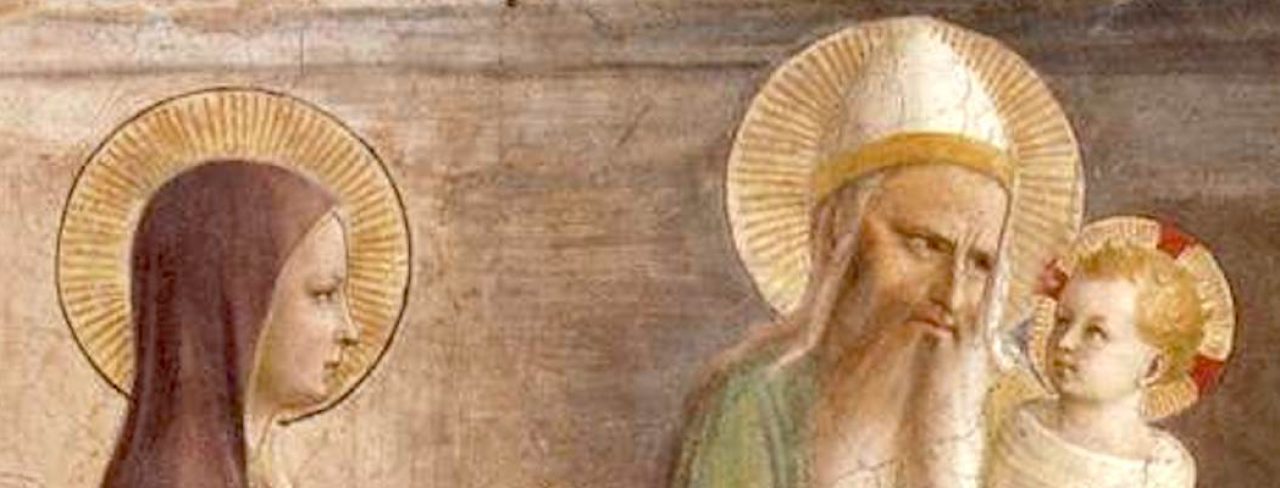
First, “the name of my favorite saint,” well, its a split decision: St. Thomas Aquinas and Beato Fra Angelico. For Aquinas expressed the truth, goodness, and beauty of God through scholarship and Angelico expressed it through artistic creativity.

Second, “Name my favorite part of the Mass”: the moment of the Consecration of the Holy Eucharist and Precious Blood and then my reception of the Divine Presence; the Eucharist – “the Source and Summit” of Our Faith.

Third, “My favorite part of being a Catholic.”  I hope my answer does not fall into the category of spiritual pride. “The favorite part” is the knowledge that, over a two thousand year period, the truths that Jesus Christ handed down to the Apostles have been continuously protected, expressed, evangelized, and elucidated by elegant teachers of the Church – in both the Latin and Greek Rites. These teachers were not afraid to explore the meaning of our faith as well as investigate and contribute to secular fields of study. Fine Catholic men and women have contributed much to world civilization; and with God’s help, will continue to do so in the future.

My nomination: I nominate the blog called The Pulpit: bigpulpit.com  It is compiled by Tito Benedictus and it is one of the finest resources for insightful, meaningful, and always thought provoking articles from around the Catholic world: Latin Rite, Eastern Rites, Coptics, and the Orthodox Rite. It is truly a cornucopia of information. Check it out!

Copyright © 2012 Deacon Paul O. Iacono All Rights Reserved


Our Blessed Mother’s Poverty of Spirit

Our Gospel today (Luke 21: 1-4) asks us to reflect on how we express our love for God.

At first glance, the poor woman in the Gospel looks reckless. Yet, love, regardless of whether it is for God or another person, doesn’t calculate all the percentages.

Many times, it just blissfully provides whatever the beloved needs, even to the point of true sacrifice on the part of the lover for the beloved. The lesson here is simple: love has greater value than material possessions.

This  Gospel reminded me of Our Blessed Mother Mary’s actions in a few Gospel accounts which speak about her presence, love, and the willingness to intercede with her Son; these actions reveal the condition and generosity of her heart.

So our Gospel is not just about what we contribute to the collection basket. It is all about the condition of our hearts – the state of our generosity to the Lord.

You see this Gospel challenges us to ask ourselves this question: “When we give to others, whether it is money, time, talent, or just a sympathetic ear, do we do it out of love or out of a sense of obligation?”

Mary and the poor woman’s witness is that our generosity should always be linked to God’s spirit of charity. These women show us that true selfless generosity must always come from the heart and that we must be willing to give of ourselves for the love of God.

This may not mean cleaning out our bank accounts and giving it all away, a few like St Francis of Assisi, were called to do that; but the vast majority of us are called to clean out our hearts of all those things that interfere with our witness to God’s spirit of love and generosity in our own lives.

As we conclude this liturgical year, and look forward to beginning a new one next weekend, let us pray to Mary to intercede with her Son so that we, too, may share in her poverty of spirit and love of God’s charity.

Copyright © 2012 Deacon Paul O. Iacono All Rights Reserved

Our Lord Jesus Christ, King of the Universe

Thought you might enjoy my homily for this weekend’s solemnity of Christ the King:

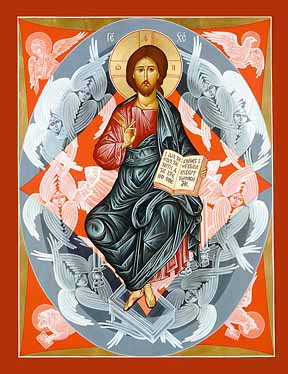
Today, the last Sunday of the liturgical year, we celebrate the solemnity of Our Lord Jesus Christ, King of the Universe; yet, our Gospel presents to us a scene that recalls Good Friday. For we again hear and visualize Pilate’s interrogation of Christ and His kingdom.

In the Book of Revelation Jesus is given the title King of Kings and Lord of Lords (Rev. 19:16); and today, at the heart of this Gospel, we are challenged to respond to that title.

It is a challenge that implores us to answer the most important question that we will ever confront:

Do I recognize – accept – and live my lifeas a witness to the truth that Jesus Christ is my Lord and King?” 

In 1925, when this solemnity of Christ the King was first instituted by Pope Pius 11th, the Pope realized that humanity was beset by all sorts of conflicting thoughts, ideologies, movements and distractions that continually cried out for attention and acceptance.

Pius 11th knew that the situation had to be addressed and that he needed to clearly state to the world that Jesus the Christ should be the only King of our hearts and souls.

“The Pope understood that “the claim of Christ came first: Pax Christi in regno Christi: the peace of Christ in the kingdom of Christ (as related by Fr. Ronald Knox).”  In other words – the peace of Christ comes only when we live our lives within and according to the kingdom of Christ.

We are here today because we know this to be true. Yet, there are many Catholics, and maybe even some of us – clergy and laity alike – who are similar to the people that Pope Pius was addressing in 1925.

We are conflicted. We are distracted. We are beset by numerous loyalties that, when examined are truly not of Christ – loyalties whether social, political, sexual, or financial that are more akin to the Kingdom of Darkness and Shadows – the Kingdom of Deception  – than the kingdom of Light and Truth.

We are beset by numerous confusions or lack of comprehension that affects our entire understanding of who Jesus is, what He accomplished on the Cross, and is capable of doing  for us in our own lives.

We shouldn’t be surprised by the statistics. There are approximately 68 million Catholics in this nation, but only 30% – or 21 million of them – actually practice their faith on a weekly basis and these numbers hold true for even our own parish.  (Gallup Poll, Parish census)

Based on these numbers alone, we must again ask the question: “Is Christ our King?”

If Catholics do not participate in the great prayer of the Kingdom of God – which is the Holy Mass – and have no understanding of the reality of Christ’s true presence in Holy Communion, and rarely receive the Sacrament of Reconciliation because they have lost all awareness of the concept of sin and have convinced themselves that they do not sin – will they receive the welcome of God’s love and fellowship at the time of their deaths?

My brothers and sisters – Jesus Christ is truly our Lord and King – but He will never force Himself on us. He gave all of us, repentant and unrepentant, the gifts of reason and free will; and through the Sacraments He freely gives to us the gifts of His saving grace.

Jesus does not want mankind to be robotic in their love and worship of Him; we can freely choose to be members of the Kingdom of Light  – or  –  the Kingdom of Darkness.

Remember Christ’s words in His Gospel – ‘Choose one Kingdom or the other’ – regardless of what the pundits say – there is no middle ground.

Next weekend we begin a new liturgical year, and as we do so it is incumbent upon us, in this Year of Faith, to evaluate ourselves and do everything we can to accept, practice, and proclaim that Jesus Christ is the king of our lives and souls – not just for an hour on Sunday – but for all eternity.
Copyright © 2012 Deacon Paul O. Iacono All Rights Reserved.

Thanks to livingscripture.wordpress.com for the icon of Jesus Christ, King of the Universe. The artist of this image was not listed.
A Papal Statement: The Beauty Of Faith Is Not An Obstacle To Artistic Creation

Wishing all Americans a Happy Thanksgiving holiday weekend, and all friends and followers of this blog a blessed and creative day. The statement below was released by Pope Benedict 16th this morning. It contains some very poignant and relevant points for meditation and implementation. As artists we have a wonderful responsibility to be “Guardians of Beauty in the World”  – especially the beauty of faith. Enjoy!
          “Vatican City, 22 November 2012 (VIS) – Yesterday afternoon in the Aula Magna of the Palazzo San Pio X, the Pontifical Academies held their seventeenth public session on the theme “Pulchritudinis fidei testis: the artist, like the Church, is a witness to the beauty of faith”. The session was opened by Cardinal Gianfranco Ravasi, president of the Pontifical Council for Culture, and Cardinal Secretary of State Tarcisio Bertone S.D.B read out a message from Benedict XVI to the participants.

In the text the Pope confirms “the desire of the Church to rediscover the joy of common reflection and concerted action, with the aim of restoring the theme of beauty as the focus of attention within ecclesial communities, civil society and the world of culture”.

Beauty, continues the Pope, “should be confirmed and expressed in all forms of art, without however detracting from the experience of faith; rather it should freely and openly confront faith in order to draw inspiration and to find subject matter. The beauty of faith, indeed, is never an obstacle to the creation of artistic beauty, as it constitutes in a sense its vital lymph and its ultimate horizon.

Indeed, true artists, defined in the Vatican Council II Message to Artists as ‘guardians of beauty in the world’, by virtue of their special aesthetic sensibility and intuition, are capable of grasping and assimilating the true beauty of faith more deeply than others, and thus expressing and communicating it in their own language.

“In this respect, we can therefore consider the artist as an important witness to the beauty of faith. He/She is able to participate, through his/her own specific and original contribution, to the vocation and mission of the Church, especially when, through various forms of artistic expression, they wish to or are requested to create works of art directly linked to faith and worship, or to the liturgical activity of the Church”.

In the Year of Faith, the Pope invites all Christian artists and all those who engage in dialogue with faith to ensure that their artistic development becomes a “complete journey involving all dimensions of human existence, in order to witness more effectively the beauty of faith in Jesus Christ, the image of the glory of God Who illuminates the history of humanity”.

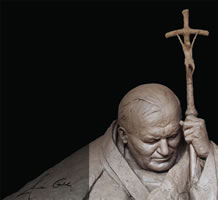
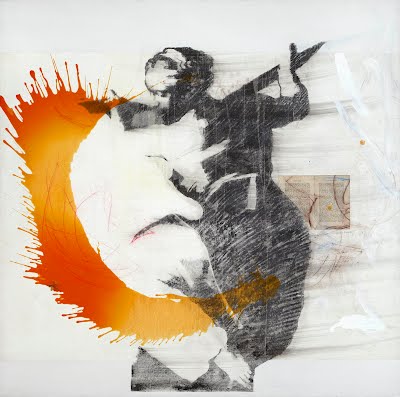
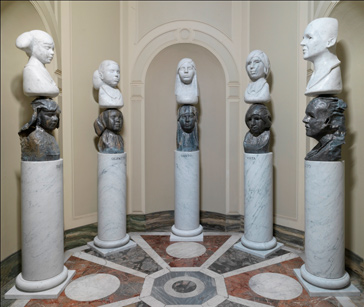
The session concluded with the awarding of the pontifical academies annual prize, dedicated this year to the arts and with special emphasis on the fields of painting and sculpture. The prizewinners were the Polish sculptor Anna Gulak and the Spanish painter David Ribes Lopez, while the pontifical medal was presented to the Italian sculptor Jacopo Cardillo.”

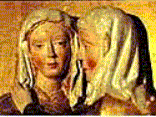
The images below: the first is part of the monumental sculpture of Beato John Paul II by the Polish sculptor Anna Gulak. The second is by the Spanish painter David Ribes Lopez and I believe is part of a series that he painted entiled Art is Revelation completed in 2007. The third image is a series of marble sculptures that were created by the Italian sculptor Jacopo Cardillo. A sincere thanks to their various websites for providing these images.

Copyright © 2012 Deacon Paul O. Iacono All Rights Reserved

We Are All Blind – We Are All Needy

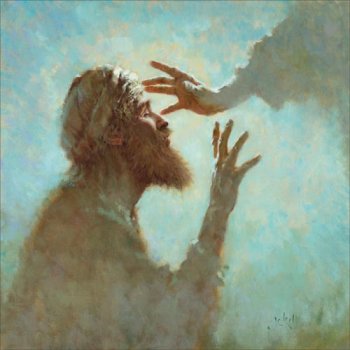
There are three parts of this morning’s Gospel that we should highlight. The first is that the blind man is petitioning the Lord for His help. The lesson from this is that we should never feel guilty or selfish in our continuous requests for assistance from God.

At times we become so overwhelmed with our cares, that we stop our appeals. This may occur out of frustration, a sense of futility, distraction, or weakness of faith.

This sense of frustration directly leads to the meaning of our second highlight, which is the reaction and rebuke of the crowd. The crowd, in its frustration to quiet the blind man – actually censured the man’s faith, attempting to get him to stop and go away. We too, at times, may feel the frustrated rebuke of our own wills which, like the crowd, is molded by the consequences of Original Sin.

Rather than scream at us, our wills may quietly yet incorrectly whisper in our ears that our prayers are not heard, and that we should stop, and retreat, from the Lord’s presence. This, in turn, leads to the Gospel’s final highlight which contradicts our inclination to retreat and run away from prayer. You see, the blind man gives witness to the importance of courageous personal faith.  He shows us that the public rebuke by the crowd did not discourage him because he had faith.

How do we obtain the faith of the blind man? The answer is simple to say, but difficult to implement, because we must first acknowledge that we, too, are needy. The blind man knew that he was in need of Jesus’ healing power, His grace, and he didn’t allow the screams of his own anxiety, or that of the crowd, deter him from petitioning Jesus.

The blind man engaged his heart, mind, and will to not only petition but to believe that the Lord would respond and heal him. His actions, in their clarity and simplicity, are a model for us, too.

As we approach our Thanksgiving holiday, let us remember to give thanks not only for our material blessings – but for the most important spiritual one – the joyful knowledge that our baptismal faith in the Lord and His Holy Sacraments have healed us from the darkness of sin and given us the ability to see the saving power of Jesus in our own lives.

Copyright © 2012 Deacon Paul O. Iacono All Rights Reserved     Image source:http://joshmcclellan.files.wordpress.com

Bishop Josaphat Kuncevych – A Saint of Forgiveness and Unity

In this morning’s Gospel from St. Luke (17: 1-6) we hear Jesus imploring His disciples to teach and practice the art of forgiveness toward those who hurt and abuse us, our families, and friends.

Jesus is teaching that it is so important for people who want to be considered His disciples to follow His example and in no way offer a bad example or scandal to others. Jesus is emphasizing the power of faith to assist us in our efforts to be His disciples. People of faith possess the grace to forgive others.

Our desire to model Jesus enables our hearts to be filled with the grace of the Holy Spirit. This, in turn, empowers us to demonstrate our faith and yes, do the impossible in touching and moving the dead weight of a person’s soul who is mired in sin and dissension.

Faith is infused into our souls at the moment of our Baptism. It is increased at our First Holy Communion and every subsequent Communion, and is increased further still when we receive the Sacrament of Confirmation. The grace of Faith is given to us so that we may possess the spiritual energy to develop a personal relationship with God, and, those around us.

With today’s Gospel in mind we can say that God expects more from us than we can do by ourselves. You see God wants us, with His help, to scale the mountains of our own difficulties and to climb upon the crosses of our everyday life. It is through this stress and burnishing that we receive, in His love, the personality that makes us ready to be His partners in eternity.

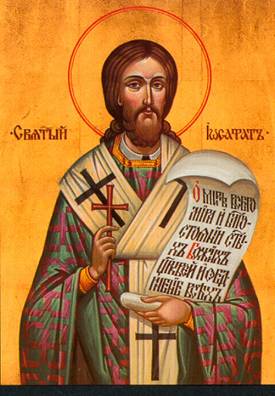
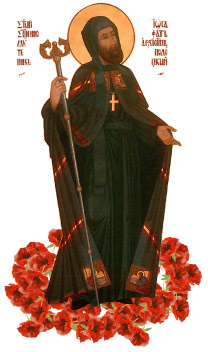
We are given numerous examples of this truth through the various saints of the Eastern and Western Rites of the Church. Today we remember Bishop Josaphat Kuncevych who died in 1623. He was born in Poland, and raised within the Ukranian Orthodox Church. He however, as a young adult, converted to the Latin Rite of the Church, became a monk of St. Basil, and ultimately was ordained a bishop.

His fidelity to the Roman Catholic Church, and his outstanding ability to convince members of the Orthodox Rite to unite with Rome while still preserving their Slavonic rite and liturgy, led to his murder and martyrdom for the Church. His enemies dubbed him “the thief of souls.”

St. Josaphat Kuncevych took today’s Gospel to heart. He is, as Pope Pius 11th said of him “the great glory and strength” of the Eastern Rite Slavic Church. He literally was a mover of the mountain of disunity, and energetically believed that there should be fraternal bonds of respectful love, liturgy, and unity between the Eastern and Western Rites of the Catholic Church.

Let us pray today for St. Josaphat’s intercession to obtain the grace of his strength, love, and sense of forgiveness so that we, too, may carry out the Lord’s desire to see the various Rites of His Church living in love and unity.

Copyright © 2012 Deacon Paul O. Iacono All Rights Reserved