The Christmas Star of Bethlehem – Merry Christmas, Everyone!

Even though the vast majority of us are not astronomers, the famous star of Bethlehem still has a great ability to intrigue us especially as it relates to its actual astronomical occurrence. As Christians we believe in the Christmas story, not as legend or myth, but as an actual historical occurrence which led to the Redemption of mankind by the Son of God – Jesus Christ.

There are many elements of the Nativity of Christ that are expressed by the evangelists, and one of the most interesting is the illumination of Israel by a brilliant star at the time of the actual birth of Jesus. The Christmas Star has intrigued artists and poets in its ability to shed light on the truth of the cosmic meaning of Christmas; and in recent years some research has been done using computer animation and astronomical programs to determine if, when, and where it actually occurred.

The EWTN network usually airs a contemporary and extremely popular documentary entitled The Star  (of Bethlehem) (please examine the filmmaker – Rick Larson’s site – for a wonderful, multipart, overview of his documentary: www.bethlehemstar.net/

The following post attempts to determine the birth date of Jesus Christ in light of the astronomical evidence. The quotes I provide are taken from a fascinating study entitled Probable Date of Birth of Christ found in this website: www: copiosa.org/christmas/birth_date.htm by Father William G. Most (Fr. Most’s article offers a summary of the work done by  E. L. Martin, in his book The Star That Astonished the World, ASK Publications).

“In the evening of June 17, 2 BC, there was a spectacular astronomical event in the western sky. Venus moved eastward seemingly going to collide with Jupiter. They appeared as one star, not two, dominating the twilight of the western sky in the direction of Palestine. This conjunction had not happened for centuries, and would not happen again for more centuries. Jupiter was considered the Father, Venus the Mother.

Then not many days later, Venus came within 0.36 degrees of Mercury. On September 11 came the New Moon, the Jewish New Year. This happened when Jupiter, the King planet was approaching Regulus, the King star. Further, there were three conjunctions of Jupiter and Regulus within the constellation of Leo, the lion, which was considered the head of the Zodiac.

Now Genesis 49:10 had foretold there would always be a ruler from Judah, whom Jacob called the lion, until the time of the Messiah. The star Regulus, which astronomers called the King Star, dominated Leo.

The Magi, being astronomers and astrologers, would surely read these signs. (The three conjunctions with Regulus were August 12, 3 BC; February 17, 2 BC, and May 8/9, 2 BC). In Hebrew, Jupiter was called sedeq = “righteous,” a term especially pertaining to the Messiah.

On September 11, Jupiter was close in the constellation of Virgo, the virgin. On September 3rd of 3 BC Jupiter was in conjunction with Regulus, the brightest star in the constellation of Leo — Leo the Lion, which was associated with Kings, and the Lion of Judah, as foretold by the dying Jacob in Egypt in Genesis 49:10.

Also, on December 25 of 2 BC, Jupiter stopped for 6 days over Bethlehem. This is a normal motion for Jupiter; it stops twice, and reverses its seeming movement. This may have been the very time the Magi came with their gifts. This was also the time of the Hanukkah festival, during which it was customary for Jewish Fathers to give gifts to their children.

The shepherds watching their flocks in the fields indicate a date either in late summer or early fall.

E.L. Martin [whose research this article is based on] thinks the birth of Jesus was in September, 3 BC (Jupiter in conjunction with Regulus), and the probable date of the Magi was December 25, 2 BC (Jupiter stopped for 6 days over Bethlehem).”

Please don’t forget when we speak in BC time, the “ladder of time” comes down from let us say 10,000 BC to 1 BC, in a descending order, so 3 BC comes before 2 BC.

In AD time (Anno Domini, a Latin phrase which means “the year of Our Lord” the “ladder of time” is ascending, so, we are currently in the year 2012, but as of midnight December 31st, we will then be in the year 2013, or two thousand and thirteen years since the birth of Christ. When this Gregorian Calendar system was developed and applied to western Europe, approximately five hundred years ago, they did not have the sophistication of computer/astronomical observations to correct the date of Christ’s birth, if we agree with Martin’s research, to the year 3 BC.

“The above span of dates (approx. 16 months) coincides with The Slaughter of the Innocents, where Herod killed all males under the age of two years. Herod died shortly thereafter. Interestingly, More than 600 planetariums here and in Europe have revised their Christmas star show to match this work of E. L. Martin.”
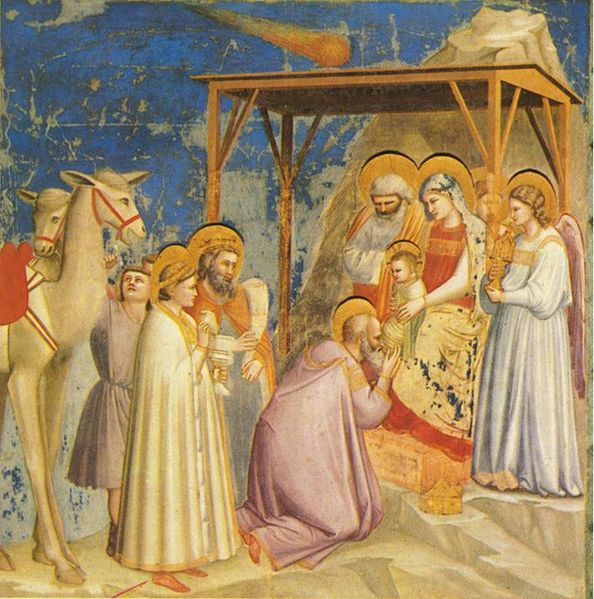
594px-Giotto_-_Scrovegni_-_-18-_-_Adoration_of_the_Magi

The above painting is entitled the Adoration of the Magi by Florentine painter Giotto di Bondone (1267–1337). The Star of Bethlehem is shown as a comet above the child. Giotto witnessed an appearance of Halley’s Comet in 1301.

“Magi were not really just astrologers. They served as court advisors, going from one royal court to another. It would not then be difficult to suppose they had come from a great distance with gifts. In those days all astronomers were acquainted with astrology. They were also mathematicians.” This is the end of Fr. Most’s article.

For more information check out Fr. Most’s website: copiosa.org/christmas/index.htm. As you go down this index on the left hand side you will see Fr. Most’s complete article on the Probable Date of the Birth of Christ. His site has some very interesting articles that can be very helpful in explaining to people – especially children – the origins of Catholic Christmas traditions.
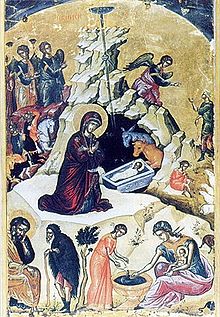
220px-Nativity_Icon

The above icon was written (painted) in Russia and displays, in a lovely catechetical way, the entire Nativity narrative: the angel’s appearance to the shepherds, the Star of Bethlehem (appearing as a disk with a shaft of light coming down to the cave of the birth, the actual birth of the child Jesus being wrapped in swaddling clothes by His Blessed Mother – Mary, the coming of the Magi, the washing of the child Jesus, and St. Joseph being visited by an old man in furs (some refer to this last image as the temptation to doubt that confronted Joseph.

Soon after the dream visitation by an angel, St. Joseph realizes the nature of this Child. He understands that he is given the responsibility to care for Him and His mother and raise the child as if He was his very own. St. Joseph does exactly that; he is the epitome of quiet, loving leadership, and a model for all fathers.

St. Joseph is silent throughout the entire Gospel narrative. Yet, his actions speak louder than words. We see in St. Matthew’s Gospel (Chapter 1: 18ff) that he ultimately had a thoughtful plan to quietly divorce Mary when he learns that she is pregnant; however, he is not stubborn or hard of heart, for when the angel Gabriel visits him and tells him what is happening he does not rebel and say “No, I will not do it” out of pride or ego. Rather, he changes his plan and trusts the angel’s message which was sent by God to him.

This is so important – and it should speak volumes to us – if we, too, have open hearts and minds to hear what God is telling us in prayer, Scripture, and the grace of the Holy Sacraments. These three sacred tools, along with a holy orthodox spiritual director, will assist us on our path – and like the Star of Bethlehem – lead us to the Christ.

In the immortal words of Tiny Tim Cratchit: “… and a Merry Christmas, everyone!”

Copyright © 2012 Deacon Paul O. Iacono All Rights Reserved

The Magnificat of Mary – A Beautiful Analysis By The Venerable Bede

This morning’s selection from the Office of Readings in the Roman Breviary is written by an English monk named “the Venerable Bede.” It discusses Mary’s joy-filled song – The Magnificat.

Bede was born in the year 673 and died in 735. He lived in Northumbria, primarily in the two monasteries of Saint Peter and Saint Paul. These monasteries had accumulated a wonderful collection of Greek, Latin, and early Church manuscripts. Bede spent his life studying, writing, and dictating the results of his research and prayer. He is known primarily for his most famous tome which is The Ecclesiastsical History of the English People. This work resulted in later generations giving him the title “The Father of English History.”

In 1899, Pope Leo 13th made Bede a Doctor of the Church. Bede was a skilled translator, linguist, and writer. His ability to compose insightful spiritual essays, and skill in making the writings of the Early Church Fathers accessible to his fellow Anglo-Saxons, significantly contributed to the growth of Roman Catholicism in England.

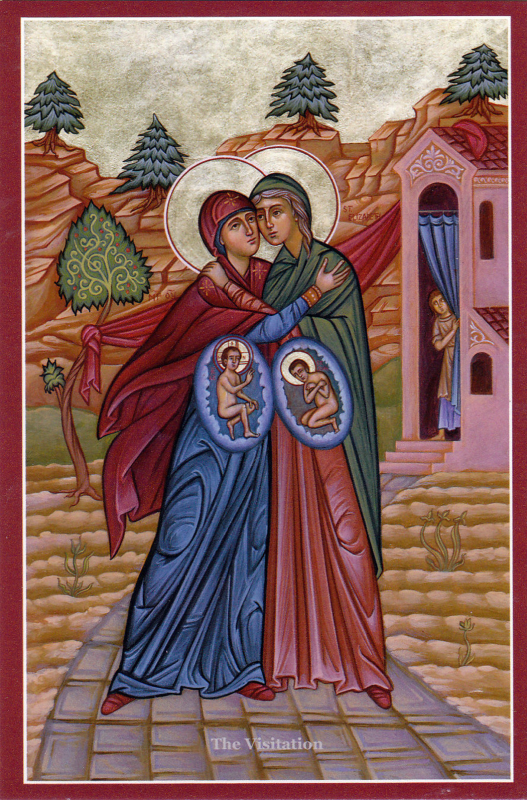
Let us take a moment today to dwell upon one of his perceptive and rich essays on the Blessed Mother. In the selection below, Bede provides us with an essay on Mary’s response to the knowledge that she will be the mother of the Savior. Her poetic song is known as The Magnificat, said in the presence of her cousin Elizabeth (and possibly Elizabeth’s husband Zechariah). They mutually rejoice in the knowledge that they are both pregnant (The Visitation).

visitation

Mary’s song of joy, faith, and trust is here separated by Bede and analyzed for our prayerful consideration. Mary’s words appear in bold italics, Scriptural references are in plain italics, Bede’s are in regular print. The entire Magnificat can be found in the first chapter of the Gospel of St. Luke, verses 46 – 55.

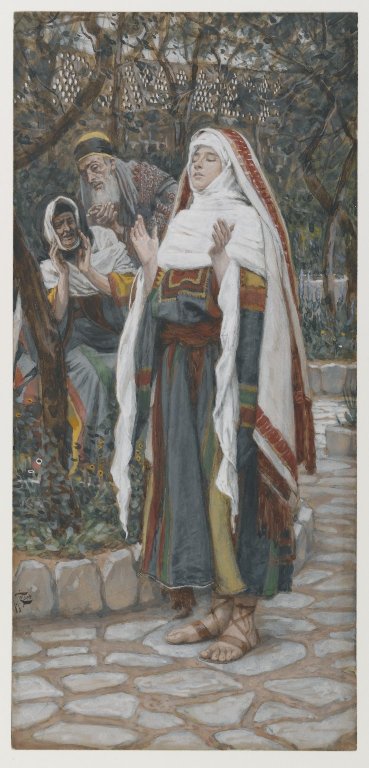
00.159.19_PS1

Mary said: My soul proclaims the greatness of the Lord, my spirit rejoices in God my Savior.

Bede’s comments have Mary thinking these thoughts: “The Lord has exalted me by a gift so great, so unheard of, that language is useless to describe it, and the depths of love in my heart can scarcely grasp it. I offer then all the powers of my soul in praise and thanksgiving. As I contemplate his greatness, which knows no limits, I joyfully surrender my whole life, my senses, my judgment, for my spirit rejoices in the eternal Godhead of that Jesus, that Savior, whom I have conceived in this world of time.”

The Almighty has done great things for me, and holy is his name.

“Mary looks back to the beginning of her song, where she said: My soul proclaims the greatness of the Lord. Only that soul for whom the Lord in His love does great things can proclaim his greatness with fitting praise and encourage those who share her desire and purpose, saying: Join with me in proclaiming the greatness of the Lord; let us extol His name together.”

“Those who know the Lord, yet refuse to proclaim His greatness and sanctify His name to the limit of their power, will be called least in the kingdom of Heaven. His name is called holy because in the sublimity of his unique power He surpasses every creature and is far removed from all that He has made.”

He has come to the help of His servant Israel, for He has remembered His promise of mercy.

“In a beautiful phrase Mary calls Israel the servant of the Lord. The Lord came to his aid to save him. Israel is an obedient and humble servant, in the words of Hosea: Israel was a servant, and I loved him.”

“Those who refuse to be humble cannot be saved. They cannot say with the prophet: See, God comes to my aid; the Lord is the helper of my soul. But anyone who makes himself humble like a little child is greater in the kingdom of Heaven.”

The promise He made to our fathers, to Abraham and his children for ever.

“This does not refer to the physical descendants of Abraham, but to his spiritual children. These are his descendants, sprung not from the flesh only, but who, whether circumcised or not, have followed him in faith. Circumcised as he was, Abraham believed, and this was credited to him as an act of righteousness.

The coming of the Savior was promised to Abraham and to his descendants forever. These are the children of promise, to whom it is said: If you belong to Christ, then you are descendants of Abraham, heirs in accordance with the promise.”

The Responsory Prayer (Luke 1: 48 – 50) follows this reading:

“From this day all generations will call me blessed. The Almighty has done great things for me, holy is His name. He has mercy on those who fear Him in every generation.”

Bede’s words are beautiful words and the sacred images shown may be very helpful to you as we enter the eve of Christmas. May you all have a holy and joy filled Christmas day and good fortune in the New Year! You are in my prayers. Thank you for reading my post.

Copyright © 2012 Deacon Paul O. Iacono All Rights Reserved. Notes on the paintings: The first sacred image is a contemporary sacred image written/painted in the iconographic style; I do not know its author. The second sacred image of Mary lost in ecstasy as she sang The Magnificat, was completed by James J. Tissot, a French painter (1836 – 1902). This painting currently hangs in the Brooklyn Museum. The medium is opaque watercolor over graphite on gray woven paper. It is approximately five by ten inches in size. Bede’s commentary is taken from The Liturgy of the Hours, Volume 1. Catholic Book Publishing Co., New York, 1975, page 362.


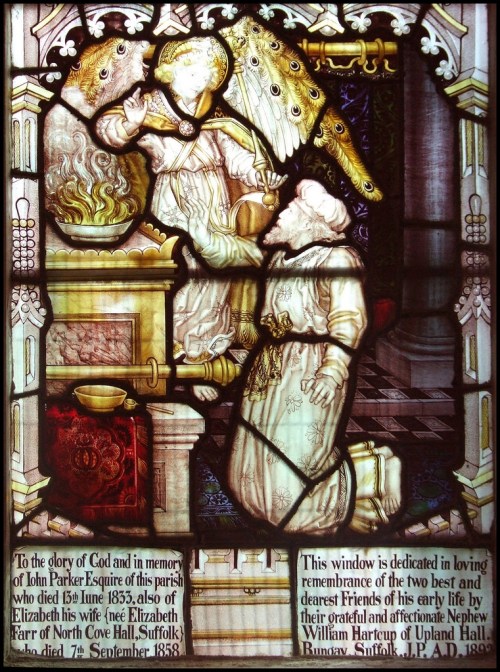
December 21, 2012 – The Archangel Gabriel’s Greeting to Zechariah

A very clear narrative greets us in the Gospel by St. Luke. He tells us that both Zechariah and his wife Elizabeth were both righteous before God: walking in all the commandments and ordinances of the Lord – they were blameless; but they have no child. Elizabeth was barren and both were elderly. We read of Zechariah silently bringing his heavy heart before the Lord – even after all those years – it was still burdened with disappointment. The couple probably remembered Psalm 112 which says:

“Happy the man who fears the Lord, who takes delight in his commands. His sons will be powerful on earth; the children of the upright are blessed.”

Zechariah was a priest, and on that day – by lot – it was his turn to enter the chamber within the Temple called the Holy Place and burn incense on the special altar. The Holy Place was a small chamber that led to the Holy of Holies, which housed the Ark of the Covenant.

For whatever reason, Zechariah that morning carried his disappointment with him into the Holy Place; and while he was there the archangel, Gabriel, appeared on the right side of the Altar of Incense. Gabriel tells Zechariah not to be afraid and that his prayer was heard before the throne of God. Gabriel continues with the joyous news that Elizabeth will bear a son, and that he will be called John – which in Hebrew means – “the Lord is gracious.” This child will grow and be great before the Lord, and even from his mother’s womb – he will be filled with the Holy Spirit.

But, in a typically human way, Zechariah questions the archangel’s announcement. His query must have been different in tone. It must have had the typical masculine attitude of “Are you kidding me!” Zechariah’s tenor makes Gabriel, and possibly God, indignant – and Zechariah is struck speechless for his insolence.

In Scripture, few lines later, we see Gabriel’s announcement to Mary. She questions him, too, as “How can this be since I do not know man? But Gabriel does not strike her speechless. We have to be struck by this difference. What does it teach us?

It is clear that God knows our hearts. God knew what was on Zechariah’s heart when he was in the Holy Place. Zechariah does not trust the message or the messenger, and by inference – he does not trust God. God knows his heart; and disciplines this good man. Like Zechariah, we, too, may disbelieve God. In our sophistication or position in life we may say “Well that’s fine, but, the Scriptures don’t apply to our situation, or this specific teaching was acceptable years ago, but, too much time has passed and it doesn’t apply to my problems.

The Gospel says that Zechariah and his wife were good and righteous people. It was mentioned that he kept all the Commandments and ordinances. Yet, when his big moment comes – where is all that goodness and righteousness? It might still be there in his heart, but, there was also a pocket of doubt – a crevice of skepticism – that was significant enough for him, as a priest of the Almighty God, to be struck speechless in punishment for not trusting Gabriel’s message.

As sacred artists, as Christians, this Gospel asks us to stop, and check our souls in this last week of Advent. It asks us how patient, confident, and trusting have we been of the Lord’s message to our hearts, and have we allowed this to carry over into our actions? Have we become more interested in all the hype about the end of the world from a pagan culture, or, have we trusted in the Word of the Lord and His messengers?

Zechariah learned the hard way that when the Lord prepares us for His coming He desires us to be alive, awake, and alert to His call and to trust His message. So, our prayer in these last days of Advent should echo that of Zechariah, who in the months of speechless waiting, most likely in his mental prayer said,  “Lord, I believe; cleanse me of my disbelief. Lord, I trust, heal me of my distrust;” and it should also echo that of Mary – who in humility and expectation waited patiently for the graciousness of the Lord to take fruit in her womb.

Copyright © 2012 Deacon Paul O. Iacono All Rights Reserved
Thanks to angels-angelology.com for stained glass window image

Gaudete Sunday In Light of the Tragedy in Newtown, Connecticut

Today we celebrate Gaudete Sunday. Gaudete means, “Rejoice!” – and we visualize this by the rose-colored vestments and candle in the Advent wreath.

Yet, it is so difficult to rejoice in light of the unspeakable horror and evil that befell the 27 innocent children and adults in Newtown, Connecticut, or the 22 children and an adult who were slashed by a man wielding a knife in a city in China, or the teenager arrested in Oklahoma for plotting to kill his fellow students and bomb his high school; and this all occurred on the morning of December 14th.

Connecticut Governor Dan Malloy, at the Vigil service at St. Rose of Lima Church on Friday night, spoke of the fact that true evil had touched the community of Newtown and that this evil would continue to have repercussions for many years.

Its consequences would be long lasting because it would continue to test the faith of the children and all those families and residents affected by this tragedy. He went on to say that it would be “a test not only of our faith in God, but faith in our fellow man – our community.”

He was right in saying that, given that the forces of darkness have always preyed upon mankind in an attempt to subvert and infect the beauty of the most significant element of God’s creation – our fellow human beings.

Through distortion of the good, and the promotion of rage and evil, the forces of darkness attempt to drag mankind down into the despair, and loss of God, that they themselves feel.

But, the knowledge of that ancient cosmic distortion of God’s creation, perpetrated by Satan himself, on a spiritual and historical level, is the exact reason for our celebration of the solemnity of Christmas. It is the reason for our rejoicing – for the moment of the birth of the innocent Savior marks the beginning of the end of the period of time that evil will reign on this earth.

We cannot help but remember another madman, King Herod, who upon learning from the Magi of the birth of this innocent child, gave the order to kill over a hundred children, and their parents, if they attempted to get in the way of his psychotic depravity. And we remember another grieving mother, Our Blessed Mother, who witnessed the horror of the killing of her child – and the tears that must have flowed from her.

Rage against motherhood, rage against childhood, rage against innocence: in two thousand years of Christian history this has become the sad spectacle of man’s inhumanity to man; it appears nothing has changed.

But, if we are a people of faith, we have opened our minds and hearts to understand that the birth and death of Jesus Christ – has, in reality, changed everything.

Today, Gaudete Sunday, we are called to rejoice, as St. Paul tells us “Rejoice in the Lord always” – not just in good times but in bad, as well.

How do we do that?

How do the parents, and husbands, and wives, the teachers and children, the communities of Newtown, Columbine, Aurora, and many other cities and towns in America, and the world, surrounded by the darkness of evil and senseless violence – do that?

To a secular person the answer would come simply from psychological and grief counseling that would occur over many years. Yet important as that is, it is not the only answer.

A close reading of the letters of St. Paul show us that it was St. Paul’s faith – the knowledge in his mind and heart that he shared a deep personal relationship with the Savior of the world – that enabled him to withstand all sorts of evil.

It was that mental memory of who Jesus was – what He preached – how He suffered and died – and the truth that Jesus – the Word of God and the Light of the World – had resurrected from the dead and had appeared to him – face to face – mind to mind – to express His love for all of us and to say that evil would never endure – it would never in the end – win.

It is this focus, this trust, this faith that enabled St. Paul to deal with his problems and maintain joy in the knowledge that all the evil that he faced, and that ultimately would kill him, was overcome by the life, death, and resurrection of Jesus Christ.

St. Paul tells us today “Have no anxiety at all, but in everything by prayer and petition, with thanksgiving, make your requests known to God. Then the peace of God that surpasses all understanding will guard your hearts and minds in Christ Jesus.”

My brothers and sisters, the Apostle Paul does not speak empty words. They are there for us to hang on to with dear life in times of great trial and grief as we turn our heavy hearts over to Jesus and Our Blessed Mother.

It will be many, many years before the grieving parents, and the innocent children and adults heal from the trauma of Friday morning; yet, St. Paul tells us that healing is possible.  The Blessed Mother’s life – and Jesus Himself – tells us that healing is possible: through daily prayer, faith, trust, and the love of God Himself. When we pray we must not forget these families or the families throughout the world who suffer, and walk the path to Calvary, carrying their own crosses thrust upon them by a violent world.

It is at times like these that we truly understand our own fragility and brokenness – and realize that we are not able to survive without the grace of God and the support of the people in our own families and community.

So on this Gaudete Sunday, our hearts and prayers go out to all the grieving people of Newtown, and we remember that we are called to rejoice in the truth that, even though evil swirls all around us, Jesus our Savior loves us – was born and was killed for us – and He will never abandon us; with that knowledge, and His grace and strength, we can endure any tribulation.

Copyright © 2012 Deacon Paul O. Iacono All Rights Reserved.  Sermon delivered by Deacon Iacono on Sunday December 16, 2012 at St. Francis of Assisi Church and St. Romuald Chapel  Wakefield, Rhode Island USA

St. Lucy – Patron of the Blind

On December 13th of every year we remember the life and death of Saint Lucy. Lucy was the virgin martyr who was put to death in the year 304 during the great persecution started by the Emperor Diocletian.

St. Lucy is one of those saints whose feast day came at the time of the winter solstice, and because the name Lucy is derived from the Latin “lucis or lux” which means “light” a song was written that had this refrain: “This is the feast of St. Lucy Light, the shortest day and the longest night.” In the 6th century, with the advent of Pope Gregory the Great’s liturgical reforms, her feast day lost that significance and concentrated on the manner of her death.

The legend of St. Lucy’s martyrdom centers on the fact that she was a Sicilian maiden who had vowed perpetual virginity in honor to God; however, complicating this vow was the fact that her father had promised her in marriage to a Roman citizen.

When she told the man of her determination to remain unmarried, he accused her before the governor of being a Christian. Since being a Christian was, at that time a capital offense,  she was sentenced to death. Her executioners tried to burn her alive but according to eyewitnesses that attempt, remarkably, didn’t work.

Roman executioners were especially known for their sadistic brutality (the Empire believed it made more of a psychological statement to the masses), so they then decided to gouge out her eyes and put her to the sword.

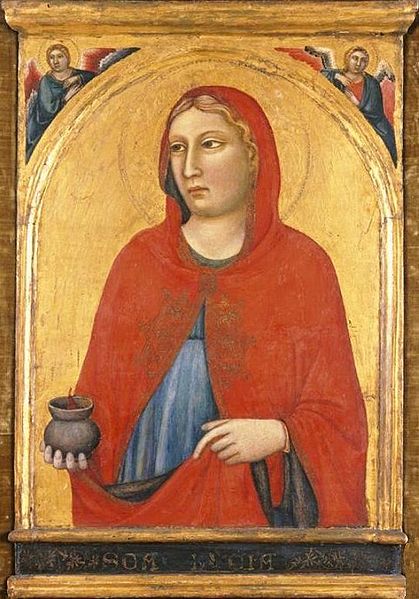
She is artistically portrayed as either holding her eyes on a plate or in a small container. This is the way she is painted in the image below by Jacopo del Casentino (also known as Jacopo Landino), a Florentine painter working in the early 1330’s. He was the student of Taddeo Gaddi,  who in turn had been the student of Giotto. Tragically, Jacopo’s son Francesco Landino was blind, yet, overcame this major challenge in his life (maybe with the help and intercession of St. Lucy?!) and became a successful composer.

In this painting you see St. Lucy portrayed with her eyes restored, while at the same time holding her severed eyes in the cup. Del Casentino was attempting to portray Lucy in an eschatological way, in other words, being present with God in Heaven.

419px-'St-1._Lucy',_painting_by_Jacopo_del_Casentino_and_assistant,_c._1330,_El_Paso_Museum_of_Art

In Heaven, her spiritual eyes are fully functional, yet, she is still holding her severed physical eyes to give testimony and witness to her heroic martyrdom for the Christian faith. Del Casentino, painting in what the Western Rite of the Catholic Church would call the Gothic period (AD 1100 – 1400), correctly shows her in a red cloak, symbolic of her martyrdom, while her inner tunic is blue – symbolic of her holiness/sainthood. Similar to the Iconographic period, the background is pure gold leaf, symbolic of Heaven itself.

Nine years after her execution, in AD 313, the Edict of Milan stated that Christians could worship freely and without any persecution. Lucy’s body was then brought to the Roman emperor Constantine’s new capital city – Constantinople (present day Istanbul, Turkey). In the early 13th century, after the Crusaders sacked Constantinople, her relics were brought to Venice where they presently rest in the Church of San Geremia.

Because of the manner of her torture she is the patron saint of the blind, and all those with ailments of the eyes. She is also the patron saint of the Venetian gondoliers, who because of their devotion to her wrote the famous song – Santa Lucia – which would be sung to their patrons as the ferried them around the canals of Venice. The song, however, is also claimed by the boatmen of the Bay of Naples who also, according to custom, sing it as they ferry people and cargo around the Bay.

The celebration of St. Lucy’s feast day is still common in Scandinavia and Italy and is celebrated with festivals of light and special St. Lucy cakes, resembling a frosted “Danish Twist” with candles on it. A recipe for such a cake can be found here at the Women For Faith and Family website: http://www.wf-f.org/stlucy.html.

It is interesting that the Church chose the Gospel about the bridesmaids with their oil lamps to accompany this feast of Saint Lucy. For our Gospel speaks about preparation. It asks us whether we, as Christians, are really focused on what is most important in life: our faith-filled devotion to the Lord, willingness to suffer for Him, and preparation for His return.

At a time when Christians needed encouragement to patiently and heroically suffer for their faith, her example led many others to witness to the faith in the same way. We all need heroes, and the saints as uniquely Christian heroes show us how to live, and sometimes, how to die for our faith.

Copyright © 2012 Deacon Paul O. Iacono All Rights Reserved
Our Lady of Guadalupe – An Icon of The Woman Who Will Crush The Serpent

Today’s feast of Our Lady of Guadalupe, the patroness of all the Americas, recalls the apparition of our Blessed Mother on the hill of Tepeyac in present day Mexico City. This approved apparition occurred from December 9th through the 12th 1531. Guadalupe is the Spanish translation of the Aztec phrase that Juan Diego heard Mary associate herself with – the name, interestingly, in Aztec means “she will crush the serpent of stone.”

In the same year as this Marian apparition, rebellion and protest against the Latin Rite of the Catholic Church was sweeping Germany, France, and England. While millions of people were leaving the faith in Europe, the  Blessed Mother, through the miraculous image that appeared on Juan Diego’s tilma, convinces millions of people to enter the Catholic faith in Central America.

As the European rebellion was tearing down millennia of Church theology and sacred tradition, Our Lady was building up the understanding of both the Spanish clergy in Mexico and the Native American population of the love of God and the assurance of her compassion and protection.

Our Lady spoke to Juan Diego in his native dialect. She identified herself and said:  “Juanito, the humblest of my children, know and understand that I am the ever virgin Mary, Mother of the true God through whom all things live. It is my ardent desire that a church be erected here so that in it I can show and bestow my love, compassion, help, and protection to all who inhabit this land and to those others who love me, that they might call upon and confide in me. Go to the Bishop of Mexico to make known to him what I greatly desire. Go and put all your efforts into this.” (footnote 1)

You probably know the rest of the story. The Bishop is told of this event, disbelieves Juan Diego, and then the bishop asks for a sign. Juan Diego reports back to Mary and is told by her to cut the Castilian roses that are growing and put them in his poncho which is called a tilma. The tilma is opened in front of the Bishop and other witnesses, the roses fall out, and the miraculous image of Our Lady appears on the tilma.

But is this story true?

Here are some of the historical facts:

1) The extraordinary conversion of multi-millions of Native Americans, and the Aztecs in particular, who, as a blood thirsty civilization, were known to kill as many as 20,000 human beings in one day to appease the blood lust of their primary god.

2) The roses that Juan Diego cut were native of Damascus, Syria, and did grow in Spain, but were unknown in Mexico at that time.

3) The tilma, or poncho, that Juan Diego wore was made of the agave fibers traditionally used by the Native Americans. These fibers were a natural substance that should have deteriorated within 35 years, and yet, today, the 481st anniversary of the event – this tilma is still in excellent condition.

4) Through scientific analysis done over the last forty years, it has been determined that the pigments used on the tilma are not of natural or man-made material, and there is no glue or sizing on the tilma to fix the pigment in place. Plus the colorization or iridescence of the image on this “icon not made with human hands” would not have been able to be produced by a human artist in the 16th century. This iridescent effect would have been seen only in nature.

5) Our Lady is represented in the colors and dress of a pregnant Aztec princess. Modern astronomical research has shown that the stars on Our Lady’s image are in the configuration of the stars in the heavens on the nights of the apparition in 1531.

6) Most remarkably, a microscopic analysis of Our Lady’s eyes was completed by Peruvian engineer and optical scientist Dr. Jose Aste Tonsmann (who trained at Cornell University and worked at IBM). He magnified the iris of the Virgin’s eyes 2,500 times and, through mathematical and optical calculations, was able to identify the witnesses of the Guadalupan miracle at the moment Juan Diego unfurled his tilma before the bishop and other witnesses [the bishop was Juan de Zumarraga, the Franciscan bishop of Mexico City.] (footnote 2)

But most importantly, these few miraculous facts about the icon of Our Lady of Guadalupe, do not stress the key issues of this apparition:

1) You see, Our Lady came to the Mexican people – as she comes to us this Advent season – as a pregnant young woman who is promoting life and her protection – not only for her unborn child – but for all of us.

2) Our Lady calls to us through this icon to stress that she loves us, has compassion for us, sees our tears, and desires to offer us her love and comfort.

3) As the Mother of the incarnate Son of God she also points to her Son, and desires a church to be built so He can be properly worshipped, the people receive His graces, and so she can be there to assist us in our prayers to God.

4) Mary has always reminded us that He is the One, True, All Powerful God who desires our love, respect, and obedience.

As the Roman Breviary says this morning: “Who is this that comes forth like the dawn, as beautiful as the moon, as resplendent as the sun? You are the glory of Jerusalem, the joy of Israel; you are the fairest honor of our race. O Virgin Mary, how great your cause for joy; God found you worthy to bear Christ our Savior.”

And as the Book of Revelation tells us, God has found Mary worthy to crush the head of the Serpent. All praise, honor, and glory be to God! And may the Blessed Virgin’s love help transform us into the image of Christ. Amen.

Copyright © 2012 Deacon Paul O. Iacono All Rights Reserved

Footnotes and  sites to investigate for more information:

(1) From a report by Don Antonio Valeriano, a Native American author of the 16th century; as published in the Supplement of the New Feasts and Memorials for the General Roman Calendar – The Liturgy of the Hours.

(2) “Science Sees What Mary Saw From Juan Diego’s Tilma”   Zenit News Service, 2001.

Zenit News Agency. Science Stunned by Virgin of Guadalupe’s Eyes. 1/14/2001

http://www.miraclehunter.com/marian_apparitions/index.html

Akathist Hymn – Link to Hearts on Fire blog

This is a beautiful thanksgiving hymn composed by a brother in the Lord – Metropolitan Tryphon – that was posted on Fr. Paul Wharton’s excellent site: Hearts on Fire: http://heartsonfire33.wordpress.com/2012/12/09/glory-to-god-for-all-things-an-akathist-part-12/.

Paul Wharton's avatarHEARTS ON FIRE

[“This Akathist, also called the “Akathist of Thanksgiving,” was composed by Metropolitan Tryphon (Prince Boris Petrovich Turkestanov) in 1934.  A copy was in possession of Protopresbyter Gregory Petrov shortly before his death in a prison camp in 1940. Suggestion: Light a candle in a silent room.  Make the Sign of the Cross, and slowly pray the words aloud, take time to reflect on them, and make them your own.  Revisit these words this Wednesday as well as next Sunday and Wednesday.   Part 13 will be on Sunday December 30]

ODE 12

How oft have I seen
the reflection of Your glory in the faces of the dead.
How resplendent they were, with beauty and heavenly joy;
how ethereal, how translucent their faces;
how triumphant over suffering and death, their felicity and peace.
Even in the silence they were calling upon You.
In the hour of my death, enlighten my…

View original post 349 more words

The Immaculate Conception of Mary – The Beauty of the New Eve

We are about to begin the second week of Advent and as you may know the word Advent has its root in the Latin word adventus which means “coming.” The liturgical term adventus is similar to the Greek word parousia which refers to the Second Coming of Christ at the final judgment of the world.

Through the millenia Church scholars have linked these two words together because they hope to instill within us the understanding that we are on a spiritual journey. In this journey we experience the waiting period – the longing – for the coming of Jesus, the actual birth of Jesus, and then, we again experience the waiting time for His return at the Second Coming.

As part of our preparation for the great solemnity of Christmas, the Catholic Church, in both the Western and Eastern Rites, remembers the significance of Mary’s immaculate purity as being a necessary part of this entire spiritual journey.  For in her humble “Yes” to the invitation to be the Mother of the Messiah, Mary becomes the New Eve – the mother of Jesus – and the Mother of the Church.

Our sacred Tradition tells us that Mary was the daughter of Saints Joachim and Anne. They were devoted Jews who raised their child to be loyal and pure within the Jewish holy tradition. Mary was born within the royal line of King David and was betrothed, and later married under Jewish law, to Joseph, a respected Jewish carpenter from Nazareth.

Little is known of Mary’s day-to-day life other than the references to her in the Gospels. Those early references indicate that she was a loving, concerned, and devoted person. During her Son’s ministry she attended the wedding feast at Cana, was present at Jesus’ crucifixion, and was most likely with the Apostles at the coming of the Holy Spirit on Pentecost.

The most famous Old Testament prophecies concerning the coming of the Messiah are Genesis 3:15, Isaiah 7:14 and Micah 5:1-4. In all three prophecies the Mother of the Messiah plays a prominent role.”Therefore the Lord Himself shall give you a sign; Behold, a virgin shall conceive, and bear a son, and shall call his name Immanuel.” [Isaiah 7:10-14].  The name Immanuel in Hebrew means “God is with us.”

As the mother of Jesus, and the wife of Saint Joseph, Mary is the greatest saint. She is the model of faith, purity, and maternal devotion for all Christians. Mary is called the Blessed Virgin because our Sacred Scriptures tell us that she conceived Jesus by the power of the Holy Spirit, so Saint Joseph is the foster father, not the biological father, of Jesus.

To become the mother of the Savior, Mary was “enriched by God with gifts appropriate to such a role.” (Lumen Gentium). Mary freely gave herself to God with complete trust even in the face of possible confusion about what was happening to her, and she freely responded and consented to God’s Will for her life. Mary’s “Yes” to God’s request that she become the Mother of the Incarnate Son of God, Jesus, enabled our Redemption to occur.

What is the Dogma of the Immaculate Conception?

The Church teaches that Mary was conceived without sin.  This is the Dogma of the Immaculate Conception which we celebrate on December 8th of every year. This Solemnity explains to us that Mary received from God a special grace which is known as Prevenient Grace. Prevenient Grace is a “grace that comes before.” This means that prior to Mary’s biological conception, God decided that in His plan for salvation history He needed a totally pure woman to be the New Eve – to be the New Ark – free from all stain of sin and free from any future sin.

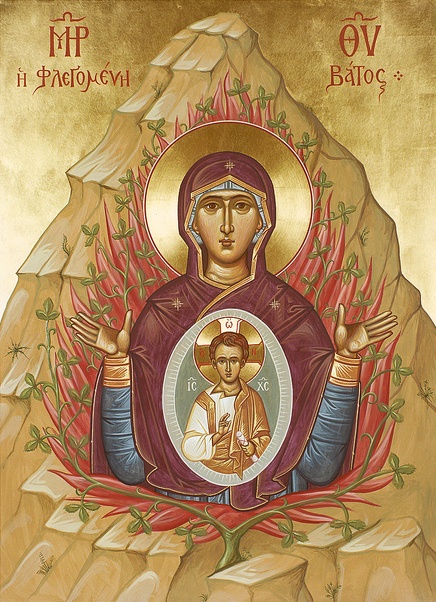
This was possible through God’s gift of Prevenient Grace which was given at her conception. Mary burned with God’s grace, purity, and love – gifts that were freely given by God.  She, like the burning bush that Moses confronted, was enriched by these gifts and, like a warming fire, softly radiated the grace of God’s love to those around her.

As The Catechism of the Catholic Church states in paragraph 491, the Dogma of the Immaculate Conception means that “Mary was redeemed from the moment of her conception.”  Pope Pius 9th  announced this Dogma when he said: “Mary was preserved immune from all stain of original sin.” This was accomplished through the power of God. He willed and acted so that Mary should be free from the stain of sin. Mary, as the angel Gabriel described is “full of grace”… “Hail Full of Grace / Rejoice Highly Favored One.”

The Fathers of the Eastern Catholic Church also agree with this truth and verify it when they address the Mother of God as “the All-Holy” (Panagia) and celebrate her as free from any stain of sin.

Theotokos-the-burning-bush-Inner-Liturgy-of-the-Heart

An interesting article entitled Mary in Scripture, on the EWTN website, explains “The angel Gabriel’s greeting to Mary is of great consequence for our understanding of Mary and Marian doctrine. The greeting has been variously translated as “Rejoice highly favored” and “Hail full of grace.”

The object of the varied translations is the Greek word kecharitomene which refers to one who has been transformed by God’s grace. The word is used only one other time in the New Testament and that is in the Epistle to the Ephesians where Paul is addressing those who, by becoming Christians, are transformed by grace and receive the remission of sins. It is clearly significant that Mary is considered to already have been transformed by grace before the birth of Christ.” ( Confer the article “Mary in Scripture” at this site: http://www.ewtn.com/library/MARY/MARYINSC.htm

So, we see that God intervened and did not allow the stain of Original Sin to be passed to Mary. She – as the pure vessel – would receive the redemptive grace of God before the actual Redemption took place. This is logical and filled with common sense. Why would God the Father have His Incarnate Son be conceived in a woman who was tainted by the stain of Original Sin? As the Scriptures state – we do not put new wine into old wineskins. To make a commonplace analogy: would any self respecting surgeon, cook, artist, or musician use soiled instruments as they were healing, creating, or performing a masterpiece in their art?

The Christian scholar Origen (AD 185 – 254) made a very interesting observation, he said,  ”Because the angel greeted Mary with new expressions, which I [Origen] have never encountered elsewhere in the Scriptures, it is necessary to comment on this. I do not, in fact, recall having read in any other place in the Sacred Scriptures these words: “Rejoice highly favored one, O Full of Grace. “ Neither of these expressions is ever addressed to a man: such a special greeting was reserved only for Mary.” (quote taken from the article referenced above – “Mary in Scripture.”

In the year AD 431, at the Council of Ephesus in present day Turkey (attended by over 200 bishops from throughout Christendom), Mary was named Theotokos (the God Bearer) and a model of Christian living. “Mary is truly “Mother of God” since she is the mother of the eternal Son of God made man, who is God Himself.” (Catechism of the Catholic Church, 2nd edition, #509).

She is called the New Eve because just as the original Eve brought sin and death into the world, Mary, as the bearer of spiritual life, brought Jesus (the New Adam) into the world. This provided the opportunity for grace, Redemption from Sin, and salvation to impact and transform mankind for all eternity.

Since 1964, Mary has been honored as the Mother of the Church She is called The Mother of the Church because through her free choice she cooperated with God’s plan to be the Mother of God – mother of our Redeemer. As a result of His life, ministry death, and resurrection He was able to transform us into a new people and build a new “arc of salvation” (the Church) for us.

By the 700’s the Catholic Church celebrated four major Marian solemnities: the Annunciation (Gabriel’s announcement to Mary that she would be the Mother of the Savior), the Presentation of Mary in the Temple, the Assumption of Mary into Heaven, and the Birthday of Mary. The Immaculate Conception became popular by the tenth century. Saint Bernard of Clairvaux, Saint Louis de Montfort, Pope John Paul II and many other saints of the Church have written extensively on Mary and her role in the Church and in the lives of individuals. The Church teaches that Mary was assumed into heaven with body and soul united. 

Roman Catholics, Greek Orthodox, Russian Orthodox, and all of the Eastern Rite Catholic Churches DO NOT worship Mary. WORSHIP IS RESERVED FOR GOD ALONE. The Western and Eastern Rites of the Catholic Church pay respect and reverence to Mary but never worship her.

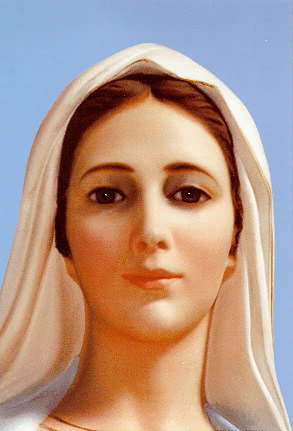
ourlady2

The meaning of Our Blessed Mother Mary for us today is that, especially at this time in history, we must remember that she spiritually pleads for mercy on behalf of us before the throne of God. She does this in the same way that a mother would intercede with the father on behalf of her children. She loves us with the love of a true mother – for she sees not only our faults but our inherent goodness, too. Please God that we respond to the graces she has to offer us. Hail Mary, full of grace. The Lord is with you. Blessed are you among women, and blessed is the fruit of your womb, Jesus.

Copyright © 2012 Deacon Paul O. Iacono All Rights Reserved

Some sources on the concept of Prevenient Grace: “Every time we begin to pray to Jesus it is the Holy Spirit who draws us on the way of prayer by his prevenient grace” (#2670 Catechism of the Catholic Church). “That grace is preceded by no merits. A reward is due to good works, if they are performed; but grace, which is not due, precedes, that they may be done [St. Prosper].” Can. 18. #191 Council of Orange II A.D. 529 (Second Council of Orange).  St. Augustine also wrote extensively on the concept of grace; and my Associate Pastor Rev. Joseph R. Upton, also mentioned it in his beautiful sermon for this solemnity’s vigil Mass on December 7, 2012 at St. Francis of Assisi Church in Wakefield, Rhode Island.  Special thanks to the blog: http://classicalchristianity.com/category/holyfathers/theotokos-mary/ for the Orthodox sacred icon of Mary and the Child Jesus surrounded by the Burning Bush.

What Does Charles Dickens Have To Do With St. Francis Xavier?!

The novels of Charles Dickens have always been a favorite of mine, for contained within them are so many marvelous and accurate observations of human nature.

For example, in his novel The Christmas Carol, Dickens knew that each of us carries within our hearts and memories an accumulation of past Advent and Christmas seasons – seasons that dramatically influence the way we prepare and celebrate the birth of Jesus.

All of our past and present preparations for the Solemnity of Christmas either enriches or diminishes our love for our Lord and for those who will share in His birthday with us.

With this in mind, possibly we can admit that our past Advent preparations have not been as good as they should have been; maybe we were more concerned with the sights, sounds, tastes, and smells of the season rather than the state of our hearts and souls.

If this is so, then we should joyfully take the prophet Isaiah’s advice and “Climb the Lord’s mountain, to the house of the God of Jacob, that He may instruct us in His ways and we may walk in His paths.” (Isaiah 2: 3).

The prophet’s instruction in this morning’s reading  demand that we remain alert and awake, to the promptings of His voice and the movement of His Spirit.

Perhaps, most importantly, he demands that we spend time in prayer – learning and reflecting on the fact that Advent is a time of penitentially preparing for Jesus to enter our lives right now by being born into our hearts.

If Christmas Day is to be especially meaningful for us this year, we need to embrace Jesus not just as the past babe in the manger or the future righteous king; but as the present healer, Savior, and teacher who alone is capable of touching our hearts and bringing joy into our lives.

It is in this spirit of healer and teacher that we also remember today, the witness of one of the founding members of the Jesuit Order, St. Francis Xavier, who preached throughout Asia and brought the love and hope of Christ to those who lived in darkness and ignorance of the Redemptive sacrifice of Christ.

st-francisxavierbody-7128321

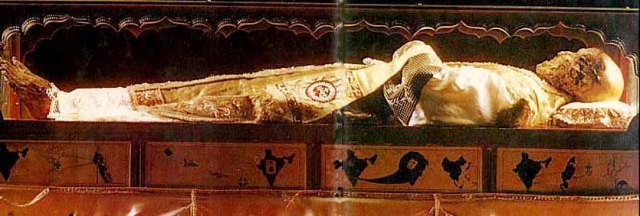
The above photograph is of the incorrupt body of St. Francis Xavier S.J. He died on this day in 1552. Forensic pathologists have examined his body and have concluded that while it is decomposed in spots, the body is, for the most part, incorrupt. It presently resides in the Church of the Baby Jesus in Goa, India. Xavier possessed indefatigable zeal, extraordinary and heroic faith, and desire to spur others to see themselves as missionaries; because of this he is known as the patron saint of all missionaries.

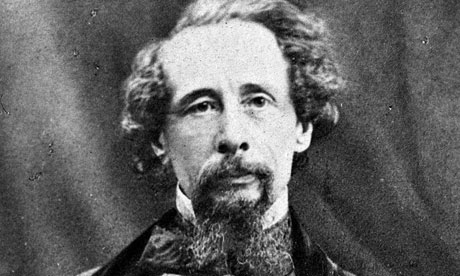
Charles Dickens, the 19th century English writer has captivated many people with his extraordinary ability to paint word pictures of unforgettable characters and scenes. But, what is it that links St. Francis Xavier with Charles Dickens?

Charles Dickens

It could be said that they both, as very gifted men, had the ability to speak to the heart of their listeners. They desired to touch not just the emotions, but the will of their audience. By that I mean that they both desired to see that their listeners had an experience which took them beyond themselves into a realm that opened their minds, hearts, and wills to act on the message that was being given. Who can disagree with Xavier’s ability to sway the hearts and minds of the Indian people who desired to hear him and follow his call to turn their lives over to Christ?

And what of Dickens?  Because of their emotional and psychological impact he was known to have people faint at his public readings of his most loved stories. Who can forget the haunting and cutting words of the Ghost of Christmas Present when he says to Scrooge “Are there no poor houses? Are there no prisons?” after showing Ebenezer the scrawny bodies of Ignorance and Want.

As we begin this Advent Season, let us pray that we possess the faith, hope and love of St. Francis Xavier, and, yes, even the gift of a Charles Dickens’ story, to express that our Lord will quietly work in our own lives to prepare our hearts to be ready to hold and comfort Him on Christmas morning and throughout the year.

Copyright © 2012 Deacon Paul O. Iacono All Rights Reserved