David Clayton, Needle Arts, Music, and the Creation of Beauty

My wife Jackie and I had the pleasure to meet Mr. David Clayton, artist-in-residence at Thomas More College of Liberal Arts in Merrimack, NH at a lecture he gave this week in New Hampshire. David is a fine artist, teacher, and creator of The Way of Beauty blog and program at the College.

He posted comments on 9/9/11 on the connection and application of artistic traditions within the American experience. His blog was posted on The New Liturgical Movement’s website and is attached here: www.newliturgicalmovement.org.

David has a quality to his artistic perception that needs to be mentioned as valuable for all of us to emulate – and that is – let us examine all that is around us and see the patterns of beauty that are there and draw from them a deep sense of contentment, order, inspiration, and spiritual nourishment.

Natural and artistic life and expression in all its forms may speak to us of the patterns, harmonies, and flavors of reality that express the beauty that was created by God. A sensitive eye and soul is able to distinguish, with a little tutoring, the wheat from the chaff.

God’s palette and palate are perfect – but, even in our artistic weakness and imperfection we must try, in imitation of Him, to replicate what He has laid out for us.

I especially would like the members of the Institute’s Sacred Needle Arts Guild to enjoy the article as a means of inspiration for their own work. Also, Adam Wood’s comment which is at the end of David’s article speaks of applying these ideas to music and he provides a sample of his work, too.

Copyright © 2011 Deacon Paul O. Iacono All Rights Reserved

The Birth of Mary – The Pure Disciple Who Shows Us the Way

We cannot allow this day, September 8th, to slip by without celebrating the nativity of  our Blessed Mother. For as the Invitatory in the Roman Breviary says for today’s feast: “Come, let us celebrate the birth of the Virgin Mary, let us worship her Son, Christ the Lord.”

It is right, and proper, and good that we do this. Inspired by divine Wisdom, the Holy Church of Jesus Christ, has through the years been fractured, tempted, and bruised by the assaults of Satan. Yet, in this feast we remember that we are saved, that Satan, ultimately, has been defeated by the willingness of a young woman to be the Mother of our Savior. It is through the grace filled moment of Mary’s conception and birth that we have the Scriptural road diverge toward final fulfillment of the Divine Will.

As Saint Luke tells us in chapter 1 of his gospel verses 26 ff., her birth began the dramatic shift in the theological paradigm since it provided the opportunity for her to ultimately see, understand, and say a quiet “Yes” to the truths that Gabriel announced to her. Mary, is the pure disciple, and because of that she “… found favor with God… the Holy Spirit will come upon you and the power of the most high will overshadow you.”  For what end? The end is clear, Gabriel tells her “You shall conceive and bear a son and give him the name of Jesus. Great will be His dignity and he will be called Son of the Most High… hence, the holy offspring to be born will be called the Son of God.”

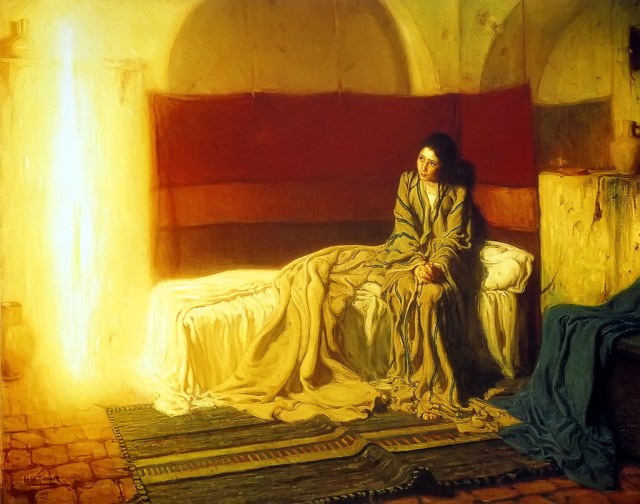
The sacred image below is by the late 19th century American artist Henry Ossawa Tanner. Of all the sacred art that has been done through the centuries, I believe, this is the best image of that moment of the Annunciation, the moment in which the Old Testament became the New, because it is correct in the manner in which it presents the theological, symbolic (semantic) and artistic truth of that instant in historic time (I thank freechristimages.org/index.htm for the clarity of Tanner’s painting). 

So it is at her birth that we have the road of our spiritual journey fork to the right. Mary’s decisions and actions allowed us to ultimately come to the point in our own life in which we, too, must make a decision. Mary shows us the way (as our Orthodox brothers and sisters would say – hodegetria) to Christ her Son, as she lovingly holds Him in her arms.

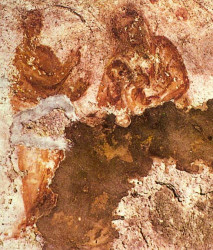
The ancient sacred icon, that you see below, is the earliest image of the Blessed Mother holding the Christ child. It is found in the catacombs of Priscilla, on the Via Saleria in Rome, and is dated to circa AD 225.

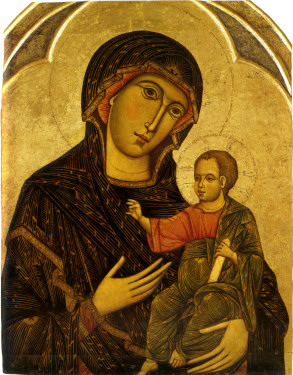
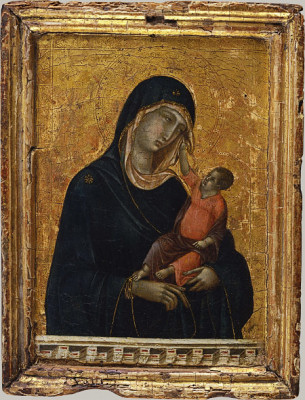
The sacred art of the early Church desired to express the beauty of the Scriptural truth. As you can see from the following two images – the first a Byzantine icon, and the second a painting by the great 13th century master painter – Duccio, from Siena, Italy. Duccio led a school of painters to infuse a strong sense of the humanity of Jesus and Mary into their figures.

These images, and others like them, continue to have an impact on the hearts and minds of those who are open to their Truth. As simple human beings, and as Catholic artists, it is our delight to not only appreciate them, but, to venerate and delight in the Truth that they convey – all of which was made possible by the birth of a humble Hebrew teenager two thousand years ago.

May she continue to show us the way.

Copyright © 2011 Deacon Paul O. Iacono All Rights Reserved

Sacred Iconography and Personal Creativity – Do Not be Afraid!

What is iconography?

The Sacred Iconography Guild is one of the twelve Sacred Arts Guilds that is sponsored by the Fra Angelico Institute. As of this post we have six members of this Guild who have expressed interest in learning this particular artistic tradition of the Church. Unfortunately, many people in the 21st century do not know the traditions of the Western (Latin, that is the Roman and affiliated rites of the Church) or the Eastern (Orthodox, that is the Coptic, Greek, Russian, and other Middle Eastern Rites) of Christ’s Church. All of these Rites have beautiful liturgies, the Sacraments – Holy Mysteries, and traditions – of which sacred iconography is one. This Institute hopes to be one more voice – among many – bringing these traditions to light to a new generation of people. So this post hopes to begin the survey of what sacred iconography is and how we can participate in it.

The word icon is Greek for “image.” Specifically, as it is applied in our usage, it refers to a sacred image that has been painted by a trained iconographer in a way that portrays the sacred presence of Jesus Christ, His mother – “the Theotokos,” His angels, and the saints. Icons in both the Latin Rite and Eastern Rite Churches are venerated – never worshipped. They act as sacred windows or doorways that allow us to view the heavenly realm of divinized humanity or the visual representation of Scriptural truth.

Iconography is simply the study of icons, their development through the centuries (the first iconographer is considered to be St. Luke the Evangelist), the techniques and methods used by various “schools” of iconography within specific cultural regions – and within specific national areas. By “school” I mean a collection of iconographers working under a master iconographer that has a specific style through which they portray Our Lord and the sacred people, mysteries, and historic occurrences within the Church’s history.

Sacred icons portray theological reality. So, it is mandatory that a sacred iconographer follows the “canon” of iconography that developed through the centuries. The “canon” consists of the rules that an iconographer must follow in painting, that is, “writing” an icon. I say “writing” because the tradition states that an iconographer must be aware of the great responsibility that he or she has in conveying the “Scriptural truth” within the image itself. In other words, the iconographer must not change Holy Scripture. He or she paints (“writes”) what is in Holy Scripture, or within Church history and Tradition, because as Pope Benedict 16th has said: sacred images have an important role to play in the “catechesis of the people.” So the iconographer cannot be portraying his or her version of Scripture – or Church history – to do so would be as bad as one of the Evangelists changing the words of the Gospel as he writes or prints a new copy because he desires to be creative or “express” himself.

So this brings up the question of the role that an artist’s personal creativity and skill plays in the development and expression of the written icon. I highly recommend that you go to the websites of my teachers (Peter Pearson; Dimitri Andreyev (Prosopon School); Marek Czarnecki (Seraphic Resorations); and Anna Pokrovskaya Gouriev (Izograph School) to examine their galleries and to see the beauty of their work. Examine an icon of our Lord Jesus or our Blessed Mother by Peter, Dimitri (or his father Vladislav), Marek, Anna (or her mother Xenia) and you will see not only the display of creativity of these iconographers, their skills, their color choices, their simplicity and purity, but also, the truth, goodness, and beauty that is the theological truth of their icons. Their icons are 20th and 21st century pieces of sacred art – yet – they are firmly within the “canon” of the Church’s perception of iconography and serve as models for the expression of Truth, Goodness, and Beauty.

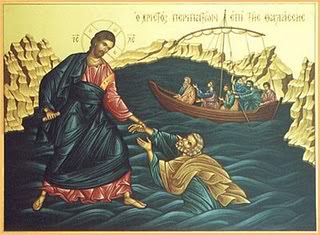
As our Lord said to His disciples in the boat as they were being tossed about by the sea – “It is I. Do not be afraid.” This applies to us, too, as spiritual travelers, artists, and novice iconographers – the Lord is with us – we have nothing to fear because we have put our trust in Him.

Copyright © 2011 Deacon Paul O. Iacono All Rights Reserved

The Eternal Now and the Coronation of the Blessed Virgin Mary

Today is the memorial of the Coronation of our Blessed Mother. Sacred icons and images have expressed the Queenship and Coronation of the Holy Theotokos – the Mother of God – for at least 1500 years. The icon The Virgin Salus Populi Romani, a 5th century icon, displayed in the Church of Saint Mary Major in Rome, and seen below, shows the Blessed Mother dressed in typical first century Middle Eastern garb as she holds her Son who gives a blessing. This icon reputed to
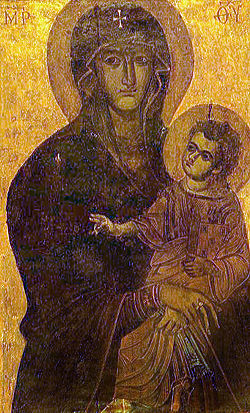
be a copy of one that was painted by St. Luke the evangelist who tradition states knew the Blessed Mother and spoke and listened to her .

A 6th century icon of the Blessed Mother and Child displays a coronation theme – in which the Blessed Mother and her Son are in Heaven. Mary sits on her throne with Her Son on her lap, surrounded by St. Theodore on the left and St. George on the right, while two angels look up as the hand of the Father gives a blessing. This icon is found in the Monastery of St. Catherine in the Sinai Peninsula.
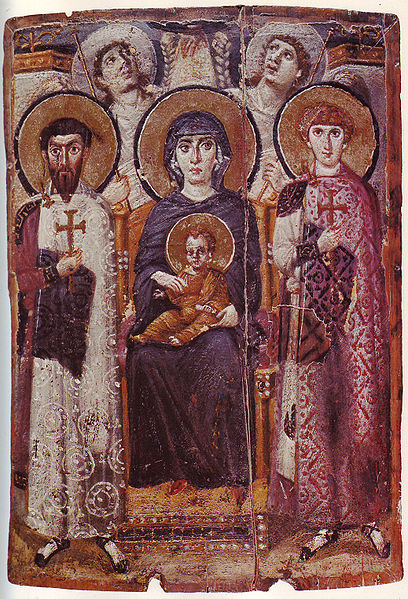
Our iconic images painted (“written”) by orthodox iconographers of both the Latin, Greek, Russian, Coptic, and other Rites agree with the ideas found within our Holy Scriptures. For example, today’s Gospel passage tells us “… the Lord God will give to Him the throne of His father David; and He will reign over the house of Jacob forever, and of His kingdom there will be no end.” This Scripture explains that the Lord willingly takes the initiative to come forth – with hands extended – to meet us and share the reign of His kingdom.

In sacred art we visualize this not only in the extension of Christ’s hands on the cross – but also, in the extension of the infant Jesus’ hands, to give us a blessing, as He sits in His mother’s lap – or is caressed in her arms – an image that is found not only in the above icons but in numerous statues found in Latin Rite churches throughout the world.

Our first reading – from Isaiah – also speaks of Christ in regal terms – as Emmanuel (God is with us) – the “Prince of Peace.” And we can even get apocalyptic and speak of the Books of Daniel and Revelation which recall the truth that the world will be transformed through the birth of the Redeemer, made possible by Mary, (“a woman clothed with the sun, with the moon under her feet, and on her head a crown of twelve stars… who gave birth to a son – a boy destined to shepherd all the nations with an iron rod. Her child was caught up to God and His throne”). – This woman, our Blessed Mother, enables the incorporation of the reign of God into the world. She is the  woman destined to crush the head of the apocalyptic serpent.

St. John of Damascus speaks about this in the 8th century when he says of the Blessed Mother that she “has become the terror of demons, the city of refuge for those who turn to her. [He has her say:] Come to me in faith, O people, and draw as from a river of grace. Come to me in faith, without doubt, and draw from the mighty and certain source of grace.”

On the solemnity of the Assumption – we recalled Blessed John Paul 2nd saying “…the Assumption of the Mother of Christ in Heaven forms part of the [Lord’s teaching about] His victory over death – the beginning of which is found in the death and resurrection of Christ.”

So in today’s memorial – Mary, the humble daughter of our Heavenly Father, garbed in the majestic robes of a queen takes her place next to the throne of her resurrected and ascended Son.

Why? 

Because the Church desires to teach us that Mary is privileged – beyond all other women and men – to be the first and most significant human being to participate in the glory, triumph, and reign of God. By her very willingness to become the Mother of God – the Theotokos – she agreed to become our spiritual Mother, too.
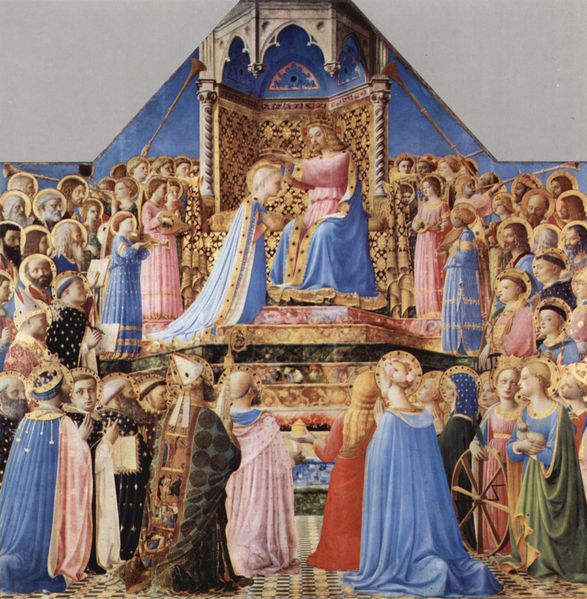
In this beautiful sacred image by Blessed John of Fiesole, also known as Fra Angelico, the great Dominican artist of 15th century Florence, portrays the moment of Our Lady’s Coronation – with the Heavenly court surrounding her. Interestingly, you see men and women saints that were alive thousands of years after Mary’s assumption observing the event. Why did the good Friar do that? He is expressing the fact that Heaven is within the eternal now of the Trinity – the knowledge of that coronation moment is known by St. Thomas Aquinas – who looks out at the observer (in the lower left corner) – and notes the truth, goodness, and beauty of God in desiring this for His beloved and humble human daughter – the Queen of Heaven.

The Blessed Mother, in her regal beauty, authority, and power, has not left us orphans – for she is “the Living Temple of the Holy Spirit, the Inviolate Mountain, the ladder” that joins Heaven and earth – the “One who Shows the Way” (Hodigitria) to her Son and to our Heavenly reward.

If we remain faithful and loyal to the teachings of Christ – as expressed through our Sacred Scriptures and our Church – and as the Epistle of St. James teaches – “Act on that faith…” then we, too, will reign alongside our Heavenly Mother as we give praise and glory to God.

Our Lady – Queen of Heaven – pray for us.        Sources: John Paul 2, L’Osservatore Romano, August 15, 1983; Pope Pius 12th – encyclical Ad Caeli Reginam, October 11, 1954.

Copyright © 2011 Deacon Paul O. Iacono All Rights Reserved
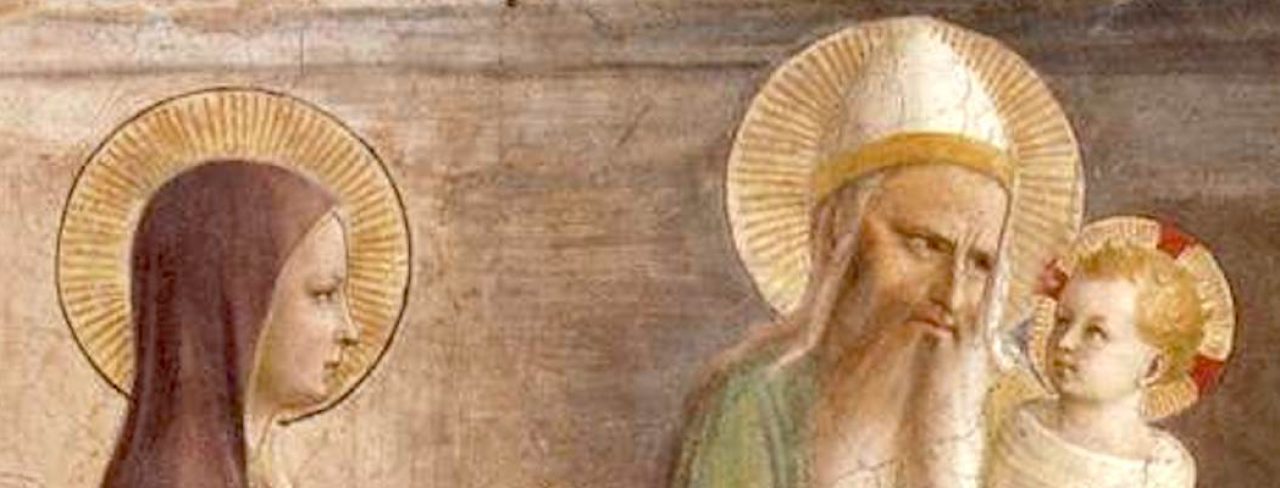
The Dormition – Assumption of Mary

Over the past two weeks, our Sunday Gospels have stressed the truth that to be a faithful disciple of Christ we must keep our focus – in good times and bad – on Jesus. On August 15th, the solemnity of the Assumption/Dormition of Mary, the Church again directs our gaze – for in focusing on Mary we see not only our Queen – but the one true sign – the Great Sign – who points the way to her Son.

Her signature was that of a perfect disciple – for she possessed the confident competence and the courageous commitment – of true faith.

In the “fullness of time” – after millennia of human history – the Father of Mercies saw in Mary – a loving and lovable woman who possessed great courage – the person – who in her simplicity and purity would be completely open, totally surrendering, and free from the pollution of pride or self-will.  She was the woman who would be the New Eve – the mother of the living – the mother of a new creation. She is, as the Eastern Rite proclaims, the All Holy Onethe Panagia, who as our spiritual mother shows us the way by guiding us to her Son – and through His grace – enables us to be reborn into eternal life.

It is through our own rebirth, through water and the Spirit, that we are able to bear fruit and imitate Mary in bringing the newborn Christ to others. St. Maximus the Confessor speaks of this when he says “Every soul that believes, conceives and gives birth to the Word of God according to faith. Christ is the fruit – and all of us – are mothers of the Christ.” (quote found in Vladimir Zelinsky’s  “Mary in the Mystery of the Church: The Orthodox Search for Unity” which is contained in Mary CoRedmptrix, Mediatrix, Advocate – Theological Foundations II. M.I. Miravalle, S.T.D., editor).

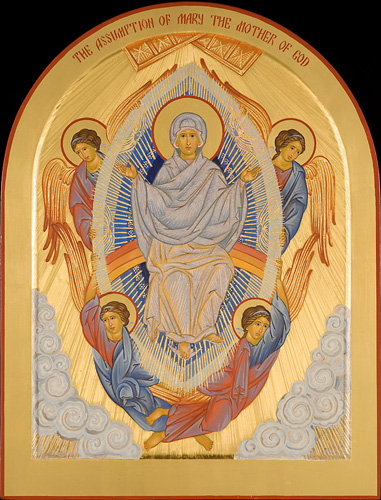
This beautiful sacred icon was done by one of my teachers – the master Marek Czarnecki of Seraphic Restoration Studio in Meriden, Connecticut. It is done in the traditional egg tempera and measures 13 by 17 inches. It is different from one of the most famous sacred images of  the Italian Renaissance – The Assunta by the master – Titian – yet Czarnecki’s sacred icon is theologically, aesthetically, and semantically correct. Titian painted his Assunta between 1516-18.

Our Catechism (of the Catholic Church, paragraph 966), proclaims that “The Immaculate Virgin, when the course of her earthly life was finished, was taken up – body and soul – into heavenly glory, and exalted by the Lord as Queen over all things, so that she might be the more fully conformed to her Son, the Lord of lords, and the conqueror of sin and death”

This proclaims the wonderful news that the Assumption of Mary is a participation in the act of her Son being raised from the dead – and so is a Sign – a Sign that points to our own resurrection and union with God. The Eastern Rite liturgy says on its August 15th celebration of this solemnity: “In giving birth you kept your virginity; in your Dormition you did not leave the world, O Mother of God, but were joined to the Source of Life.”

Our Blessed Mother’s words in her beautiful Canticle, and her personal destiny, are inseparably linked to our own – for she is one of us; and by keeping our focus on her Son  – we too – through the grace of God – will experience His mercy which lasts from age to age on those who fear Him.


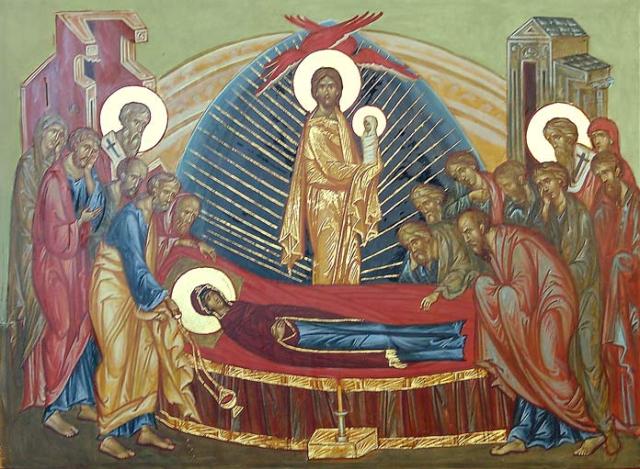
Below Titian’s masterpiece is a traditional Orthodox icon of the Dormition (or falling asleep) of Mary with the grieving apostles surrounding her bed. This icon was painted (“written”) by Irina Kolbneva.

One of the purposes of this blog is that we will explore how a sacred icon is painted (“written”) in the Eastern Church’s tradition and how the Western Church began to explore new avenues of visual expression after being in harmony with the Eastern Church for the first thousand years of our existence.

(Additional sources: The Book of Revelation, Chapter 19; Lumen Gentium, 59; and Pope Pius 12th in his Munificentissimus Deus (November, 1950).  Our Lady of the Assumption, pray for us.

Copyright © 2011 Deacon Paul O. Iacono All Rights Reserved.


Fra Angelico’s Beautiful Image of St. Lawrence

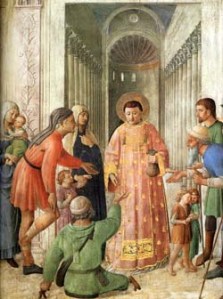
Fra Angelico painted (fresco) this image between 1447 – 1449. It is found in the Vatican. It is approximately 9 by 7 feet and portrays the deacon, St. Lawrence, distributing the Church’s monies to the poor of Rome.

St. Lawrence is wearing a beautiful rose colored dalmatic A dalmatic is the outer garment that is worn over an alb, stole, and cincture.  The dalmatic represents the deacon’s service to his bishop. It is only worn during the celebration of Holy Mass. St. Lawrence was martyred on August 10, 257.

If you are interested in a more detailed review of the history of St. Lawrence  please refer to my post of August 10, 2020 entitled “St. Lawrence – Deacon and Martyr.” Thanks.

(This post was edited on August 10, 2020).

A Reflection on St. Matthew 14: 22-33

Today’s Gospel reading cuts right to the heart of the matter – and asks the question: do we have faith in our Lord Jesus Christ?

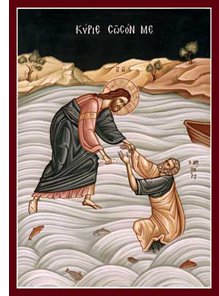
St. Peter certainly came face-to-face with that question. As a commercial fisherman he knew how dangerous that storm was and that his boat and companions could easily perish in its waves. Then, suddenly, Jesus appears – walking on the water. The companions respond – “It’s a ghost!” Jesus calms them and says “Get a hold of yourselves! It is I. Do not be afraid!” Peter speaks up and says, “Lord, if it is really you, tell me to come to you across the water.” Jesus responds “Come.”

Peter gets out of the boat and begins to walk toward Jesus, but when the wind begins to buffet him he becomes frightened and begins to sink. He cries out “Lord, save me!” Jesus at once stretched out His hand and caught him.”

Jesus wants us all to walk toward Him – in faith – on the “water” of our life. He wants us to cast aside our fears and commit to Him with a radical faith. We are all like St. Peter. We want to walk on the water toward Jesus but the waves of doubt mingle with the inner turmoil of our own hearts, and the circumstances of our own life. That truth continually affects our heart and our faith.

Peter’s faith was tested – as is ours – everyday. His example of calling out to the Lord – in faith – should be our prayer, too. This is especially true when we pick up the tools of our art and begin to feel the winds of self-doubt and dissatisfaction brush against our cheeks.

Copyright © 2011 Deacon Paul O. Iacono All Rights Reserved

What is a Sacred Arts Guild?

We, here at the Fra Angelico Institute for the Sacred Arts, believe that the foundation stones for this Institute are its Sacred Arts Guilds. A Sacred Arts Guild is a collection of people within a specific type of art form such as painting, sculpture, wood-carving, story writing, music, etc. The Sacred Arts Guilds are made up of those artists who are willing to come together on-line through posting and commenting with me on this blog, and when possible, in person to discuss and share their sacred art with other interested artists, and, if working in the same field, be willing to discuss and solve problems, gain insight, and rejoice with fellow artists in a final product that was personally satisfying and prayerful to create, simultaneously inspires others to prayer, and gives glory to God.

Within our Institute there are numerous categories of Sacred Art Guilds:

Painting of Sacred images

Sacred illuminated miniatures

Sacred calligraphy

Sacred stained glass

Sacred architecture and gardens

Sacred needlework – includes the knitting of prayer shawls/quilts

Sacred ceramics and tile work

Sacred music: singing, playing, or composing of music and chant

Sacred sculpture and wood working/carving

Sacred photography and the digital arts

and the Written word: sermons, essays, poetry, literature, drama

It is our prayerful hope that these Guilds will bring together individuals with a love for God and who desire to create beautiful works – to give glory to God – improve their own personal prayer life – and evangelize their fellow man.

Our motto being: Accept Lord, our prayers, petitions, and creativity, as the fruits of our day.

Copyright © 2011 Deacon Paul O. Iacono All Rights Reserved
Welcome to the Fra Angelico Institute

Our First Post

As our first post – on August 1, 2011 – I would like to explain that the mission of the Fra Angelico Institute for the Sacred Arts is to promote the creation of Christian sacred art and unite the creative process to the artist’s personal prayer life. Over the coming months we will be discussing various topics within the sacred arts, the creation of sacred art, important sacred artists from the past and present, and the development of our personal prayer life in union with our personal creative efforts.

The Fra Angelico Institute for the Sacred Arts was founded by myself and my wife Jackie in 2009. I am an ordained Roman Catholic deacon in the Diocese of Providence, Rhode Island. Professionally, before my retirement, I was a teacher of history and the humanities. I have studied and created sacred art since 2006. I am a sacred image painter.

An Amazing Revelation!

In my very first sacred art workshop, that was conducted by the talented and very fine teacher, Rev. Peter Pearson, I was profoundly struck by the impression that the actual creation of sacred art was of great importance to the improvement of my own personal prayer life. As I followed Peter’s directions in the creation of a sacred image, I realized that the truly spiritual connection I was experiencing was not the result of anything artificial, rather, it was the yearning of my soul to “connect” with the Person  coming into view on the wooden panel (the image that I was painting was an interpretation of St. Andrei Rublev’s icon of Jesus). It became very clear to me, as it had to so many other artists down through the centuries, that the creation of sacred art, regardless of what medium or form it takes, is a profoundly spiritual and prayerful act – IF – the artist decides to open up their mind, heart, and soul to the whispers of the Holy Spirit.

Join Us In This Exciting Adventure!

We think that the Institute is an exciting adventure in art and prayer. Currently we have over twenty people from the Diocese of Providence who are members, and, a few from out of state. The ideas and images that you will be seeing are meant to be educational, inspirational, and practical in the improvement of your development as a sacred artist. You may be a seasoned artist – secular or sacred, or, you may be a complete novice – all are welcome. In future posts I will explain the different categories of art you may want to explore and – if you are an experienced artist – display and express your creativity in the galleries on this site.

As Roman Catholics we have a specific theological perspective and faith tradition, however, please consider following us if you are from a different Christian denomination. After all, my teachers of sacred art are Episcopalian, Russian Orthodox, and Roman Catholic; and the participants in the sacred arts workshops that I have attended have been from many different Christian and non Christian denominations. Thanks for your interest and we look forward to your comments.

Copyright © 2011 Deacon Paul O. Iacono All Rights Reserved