October 13, 2019 commemorates the last message in the apparitions of the Blessed Virgin Mary by three Portuguese children. The children’s ages were six through nine, and they lived in the town of Fatima, Portugal. The apparitions occurred over a five month period which began on May 13th and ended on October 13, 1917.
The Roman Catholic Church, after a period of study, formally declared in 1930 that these apparitions are worthy of belief by the faithful. It is wise to remember that many supposed apparitions have occurred over the centuries that have not been approved by Church authorities.
In this post let us pursue a quick review of who Mary is in the teachings of the Church, the three parts of the message of Fatima, and the ramifications of what the Blessed Virgin Mary told the children over that five month period.
Who is Mary?
- Mary was a human being, born during the early first century in Israel, her parents were named Anne and Joachim.
- Mary was engaged to a man named Joseph, whom she eventually married. The Sacred Scriptures and the Traditions of the Church teach us that prior to the marriage she conceived, through the power of the Holy Spirit, the Messiah, Jesus of Nazareth. Joseph became the stepfather of Jesus. He was not His biological father. Mary remained immaculate from the stain of sin and a virgin prior, during, and after the birth of Jesus.
- As the Gospels clearly state, Jesus’ Mother appears at very critical times in His ministry; she was present at the Crucifixion, and at Pentecost. The Fathers of the Roman Catholic and Greek Orthodox Rites of the Catholic Church clearly discuss and formally state Mary’s role in Salvation History in their scholarship from the first through fifth centuries.
- The Fathers of the Church, at the Councils of Nicaea, Ephesus, and Chalcedon in the 4th and 5th century discuss these basic points. The Council of Ephesus clearly proclaims and defines Mary as the Theotokos, the Mother of God – “the one who gave birth to God”.
- The Holy Trinity could have chosen any method for our Redemption. The Father chose the Son’s Incarnation through the means of a human birth to be the instrument through which the Redemption occurred. This was accomplished through the ministry, suffering, death, and resurrection of His Son, Jesus the Christ.
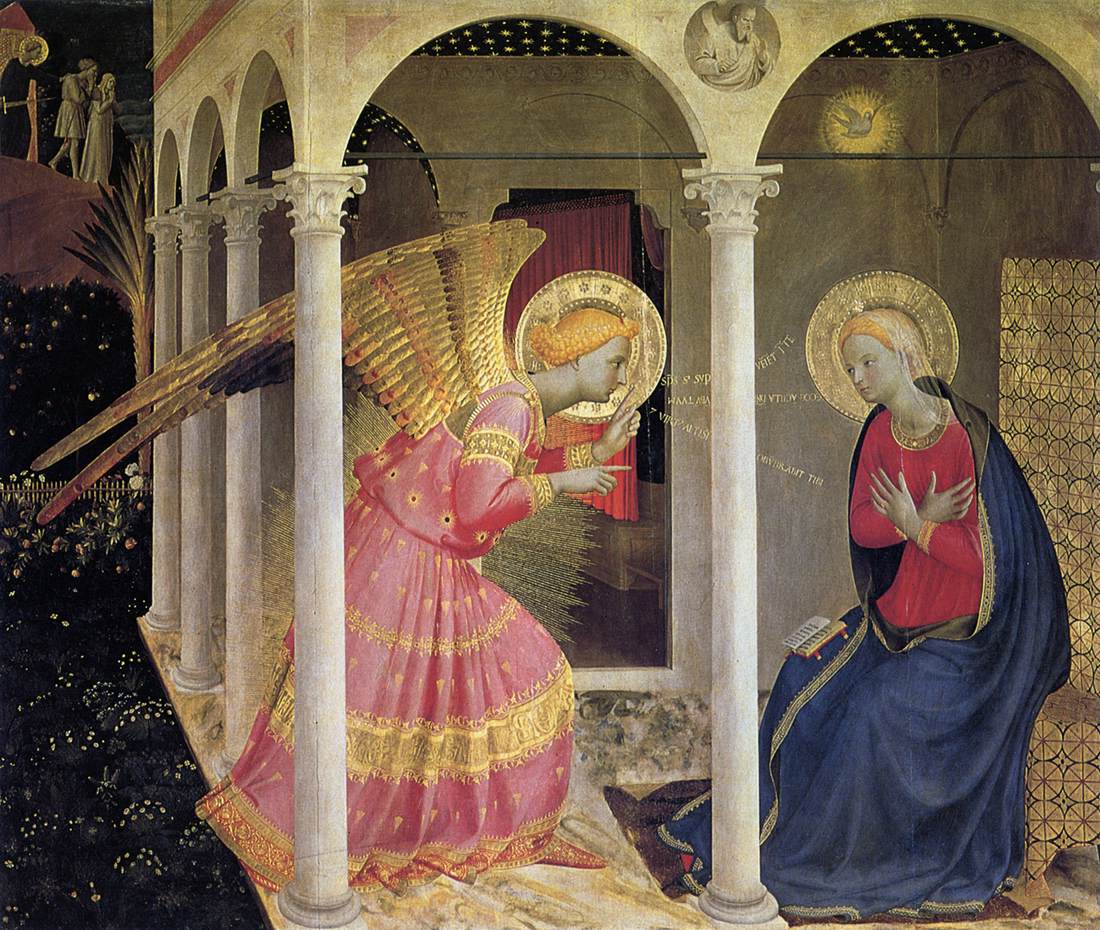
- Mary’s “Yes” in response to the angel Gabriel’s invitation during the Annunciation allowed the Incarnation of Jesus to occur. The Council of Nicaea defines very specifically that Jesus, as the Son of God, has dual natures: human and divine. The human woman, Mary, gave birth to the human nature of Jesus. Yet, the two natures of Jesus – human and divine – are united in Him. Jesus has a direct human relationship and unity with us through His Blessed Mother; and He has a spiritual relationship to us through His Redemptive Act and as the 2nd Person of the Holy Trinity.
- Early heretics denied these ideas. But the early Councils clearly refuted the heretics. The Gospel writers, and specifically St. Paul in his Epistles, stated these truths in their writings.
- We should always remember that our Blessed Mother Mary, was never considered by the Roman Catholic and the Orthodox Churches, to be a goddess. We worship One God who is known through the three Persons of the Holy Trinity. We venerate Mary as the greatest of the saints. She is the perfect and most virtuous of women. She is our spiritual mother.
Mary, is the “without which nothing,” the sine qua non, of our Redemption. Of course, Jesus, as the Second Person of the Blessed Trinity, accomplished the healing of the separation that occurred as a result of the sins of Adam and Eve. The Holy Trinity willed it, Jesus fulfilled it, but the instrument that started the process was the woman, Mary; this is why we call her the Blessed Mother.
Now, what does this have to do with the messages of Mary at Fatima? As our spiritual mother Mary warns us that we need to rise from our spiritual slumber and take seriously her messages to us. Below are the three basic parts of the Fatima message conveyed during the summer of 1917:
The Message of Fatima:
- The First Part: Heaven is real, and Hell is real, too. The extraordinary fearful vision of Hell was received by Lucia, the oldest of the children, on July 13, 1917. She saw a “lake of fire” with demons and humans within it. The Church Fathers and St. Thomas Aquinas discuss and assert the reality of Hell. It was clearly stated that many people, including members of the clergy, are going to Hell as a result of their lifestyle and unrepented sins. Lucia, who ultimately became a religious sister, was not known to be, as a child or adult, a liar. The reality of Hell was seriously questioned by some theologians and some members of the clergy during the 20th century and it continues into the 21st century. The question can be asked “If we don’t admit to the reality of Hell, then why do we need the Sacraments? Why did Jesus need to suffer and die for us?” Jesus Himself stated and exhibited the need to fight the demons, their temptations, and the possibility of spending eternity in Hell. If we don’t believe this then we are calling Jesus a liar, and the Sacred Scriptures nothing but a collection of pious stories. The life of the average Catholic has been dramatically affected by many clergy, over the past sixty years, not preaching the doctrine of Hell. What are the spiritual consequences of unrepented sinful acts if there is no Hell? In the first message of Fatima, Mary warns us about the reality of Hell, and the fact that many in the 20th and 21st century would deny it – to their peril.
- The Second Part: Mary told the three children to inform the Pope that he needed to consecrate Russia to her Immaculate Heart. Russia would soon be renamed the Soviet Union through the Communist Revolution in November 1917. Through this consecration to Mary’s heart, Russia would be converted and become a sensible member of the community of nations. I learned in high school, fifty-seven years ago, the phrase “To Jesus through Mary.” The Lord does not want mankind to suffer damnation or turmoil. Mary was warning that Russia, if it wasn’t consecrated to her Immaculate Heart, would become a major cause of war, famine, turmoil and suffering during the 20th century. There is continuous discussion and debate whether or not the Popes of the 20th century formally and correctly performed this consecration, or, if it was ignored and/or performed in an incomplete way.
- The Third Part: This part is the most discussed, furiously debated, and controversial of the three messages of the Blessed Mother. Some declare that the entire Third Part of the message of Fatima has not been released. This part of message has been reviewed in great detail on the internet and in video on YouTube. When you view these videos make sure you are on a Catholic site, but understand that even Catholics disagree on this part of the message of Fatima. The Third part is indirectly related to the approved apparition of the Blessed Mother in Akita, Japan. Pope Benedict XVI when he was known as Cardinal Ratzinger, the head of the Congregation of the Faith and a direct advisor to St. Pope John Paul II, said that the messages of Mary in Akita, Japan are related to the Third Message of Fatima. It has been recommended that you review Mary’s message at Akita, Japan for a clear understanding of many of the elements of the third part of the Fatima message. Mary repeated her warnings at Akita to again emphasize to the world that the time is short. She tells us to be on our guard. To be ready and watchful, to repent, prepare, and pray the Holy Rosary.
The Blessed Mother, as our spiritual mother, has warned mankind of the reality of Hell, the significance of Russia, and the entrance of Satan and turmoil into the Catholic Church. Did the world take her warning seriously? Did the Church?
In Rome the Amazon Synod this past week produced a series of events that were egregious and flagrantly offensive to the theology, sacred traditions and dignity of the Church. October 4th produced the spectacle of pagan idol worship ceremonies by Amazonian shamans and tribesman in the Vatican Gardens. The Pope, certain clergy associated with the Synod, lay men and women from the nations of the Amazon region, and a Franciscan friar were present. The shaman performed ritual pagan blessings and was accompanied by two fertility symbols of naked women. The purpose of this disgraceful event was to show the Amazonian cultures’ pantheism, love of the earth and the interrelationship of all the elements of nature.
Have men forgotten the first Commandment, the preeminence of God the Father, Christ’s Redemptive Act, and the role of the Holy Spirit? Have they forgotten the dogmas of the Nicene Creed?
Hopefully, the clergy that organized the event would say that they did not forget any of these basic principles. Yet, is it not fair to say that in the case mentioned their theological judgement, pastoral sense, ignorance of the “optics” of the situation, and defiance of the dignity and sacredness of a church and its gardens was totally lacking?
Some of the Synod leaders and supporters said that we can “learn” from these cultures. Have they forgotten that their evangelization efforts are to bring the truths of Jesus Christ, His redemptive act as Savior, the grace of the Sacraments, and the truths of Sacred Scripture to the world?
God does not come from within us. God’s transcendent truths have been made immanent through the events found within Holy Scripture and specifically through the life, death, and resurrection of Jesus Christ. God’s truths have been revealed to us. We have the free will and reason to accept or reject it. We do not need to learn and adapt the theological truths of pantheistic cultures to our Faith.
To add insult to injury, during this past week at the church of Santa Maria in Traspontina (close to the front piazza of St. Peter’s Basilica) what appeared to be an additional pagan like “nature” ceremony took place in front of the sanctuary and the tabernacle. Also, contained within that church were exhibits showing the tribal cultures of the Amazonian rainforest region of South America. A Brazilian guide explained a large poster of the “nature relationships” of the Amazonian tribes to the earth. One photo portrayed a woman suckling a human infant on one breast and a dog, yes, a dog, on the other breast. See journalist George Neumayr’s (he writes for the American Spectator) video report of this event on Taylor Marshall’s podcast of October 11th, it is entitled “Dog Nursing Story & Cardinals in Rome” warning: this video is a very frank discussion of what happened).
Are the current troubles and sins a potential precursor of the “end times”? Only God the Father knows the “time and the date,” but the events of the last 102 years, 1917 – 2019, certainly indicate that it may be right around the corner.
Let us pray, Jesus, I trust in you. Lord Jesus Christ, Son of God, have mercy on me a sinner. Mary, conceived without sin, pray for us. St. Michael protect us from the snares of the devil.
Copyright © 2011- 2019, Deacon Paul O. Iacono – All Rights Reserved. Permission to reprint must be obtained from the author in writing. Students, and those interested, may quote small sections of the article as long as the proper credit and notation is given. Thank you


 The Fra Angelico Institute for Sacred Art
“Paul, your protestations begs the question, do pagans go to Heaven? If so, why? If not, why not?” from Bernard Gallagher
These are excellent questions.
Before I attempt to answer them my readers should understand that I am a committed and Traditional Roman Catholic. His questions will be answered through the lens of the teachings of my Faith. That Faith is based on a foundation of Holy Scripture, Sacred Tradition, and two thousand years of Catholic scholarship.
Allow me to also mention that we need to understand that two Councils of the Church, the Councils of Orange and Trent (1000 years later), are critical in forming a correct answer to Mr. Gallagher’s questions. The Councils of Orange are significant (both of them were held in the city of Orange in Southern France, AD 441 and 529). The more important Second Council of Orange’s episcopal deliberations were sent to Rome and approved by Pope Boniface II in AD 531. That Council specifically proclaimed that everyone (who has reached the “age of reason”) is given sufficient Grace to be saved from eternal damnation. God will give, and has given all people, Actual Grace. If a person accepts and acts on that Grace, they will be saved.
What is Actual Grace? Actual Grace is an admonition by God for a person to correct their way of life, desire, search after, and make the sincere effort to obtain the Sanctifying Grace provided by the Catholic Church. The key action which achieves salvation and eternal life with God is the Holy Sacrament of Baptism. This allows the person to enter into God’s family. The Sacrament of Baptism removes Original Sin from an individual’s soul and enables it to receive additional Sacramental Sanctifying Grace. All Grace enables a person to become holy in God’s eyes. The other six Sacraments flow from the waters of Baptism. Pope Pius 9th (papal reign 1846 -1878) proclaimed that it would be extraordinary for an unbaptized person to achieve the eternal salvation and reward of Heaven.
First principle,
a) The Roman Catholic Church, the ethnic church Rites that are in union with Rome, the Greek and Russian Orthodox Churches, and some of the Protestant churches say that Jesus Christ, is the Word of God, the Son of the Father, begotten not made and consubstantial with Him. He is the Messiah, the Savior. His human life, ministry, passion, death, and resurrection redeemed mankind from their sins. His divinity is expressed through His position as the Second Person of the Blessed Trinity.
b) He is known to mankind through the historical Gospels and Epistles of the Apostles, the witness of His Mother, the Virgin Mary (especially at her apparition at Fatima, Portugal in 1917. When asked what sin was most harmful and condemned unrepentant people to Hell she responded: ‘The sins of impurity are one of the major reasons why men and women are condemned to Hell.'” We cannot ignore our sins or consider them unimportant because of the current worldview. Also, the erudition of the Catholic Church Fathers, Doctors of the Church, Saints, and the historical teaching authority of the Church have all provided the scholarship and analysis that is sufficient for humanity to understand God’d Revelation and laws.
c) He is also known through the extraordinary scholarship of St. Augustine and St. Thomas Aquinas. The teaching authority of the Church, (as found in its Magisterium), is the Church’s responsibility to give to the world an authentic interpretation of the Revelation of God as found in Sacred Scripture and Sacred Tradition.
d) Additionally, let us not forget the importance of the testimony of the angels found in Holy Scripture, and the saints, of whom Jesus’ Mother Mary is the greatest of saints. All of these facts contribute to mankind’s understanding and witness of our Savior Jesus Christ.
e) Jesus commissioned His Apostles (the first bishops) to make known the free gift of His Redemption and graces. These critical graces are found in the Seven Sacraments of the Church, beginning with the keystone Sacrament, Baptism.
Second, let’s refer to what Jesus Christ says in response to Nicodemus’ questions concerning eternal life in the Gospel of St. John, John 3: 1-21: “Amen, amen, I say to you, unless a man be born again, he cannot see the kingdom of God.” Nicodemus continues to question Him, and Jesus responds, “Amen, amen, I say to you, unless a man be born again of water and the Spirit, he cannot enter the kingdom of God…You must be born again.”
The great significance of the necessity of Baptism into the Christian faith is again stressed in another passage of the Gospels. The Gospel of St. Matthew, in its very last passage deals with the commissioning of the Apostles which occurred after His resurrection and before His Ascension back to the Father. Jesus emphasizes that combined with their preaching and works they must baptize faith-filled individuals because of Adam and Eve’s sin. Humanity’s broken relationship with God must be healed. It was healed through the death and resurrection of the Father’s Son Jesus the Christ. Jesus death, on our behalf allowed the formation of the Church and the Sacraments to be instituted to provide the grace to a broken humanity. Baptism is the Sacrament that makes this happen. It makes an individual’s body and soul a member of God’s family. Matthew 28: 18-20: “Jesus drew near and spoke to them saying, “all power in Heaven and on earth has been given to me. Go, therefore, and make disciples of all nations, baptizing them in the name of the Father, and the Son, and the Holy Spirit, teaching them to observe all that I have commanded you; and behold, I am with you always, to the close of the age.”
Third, it appears, within the Christian faith, that we can come to specific conclusions that will provide a springboard for my response to Mr. Gallagher:
Fourth, so, are pagans going to Heaven or Hell?
In a nutshell, I would never presume to know God’s mind, except from that which He revealed through Holy Scripture and Sacred Tradition. I would never make a judgement on another person’s soul as he or she are seen by God at the time of their death and individual judgement. Unknown to the world, even a great sinner may suddenly, in their last moments, repent of their sins and ask for God’s mercy. But, make no mistake about it, Scriptural Revelation, and the Sacred Tradition of the Catholic Church and specifically the words of Jesus in the Holy Scriptures, states that there is a Hell (Matthew 10: 28; 22: 13. Luke 16: 26; etc.); there is a Heaven, and, damnation into Hell for all eternity.
It is believed that there is also a place of natural happiness called Limbo. It is not within Heaven, nor is it in the fires of the Hell of the Damned. It is a state of natural happiness and joy. It is not supernatural happiness because its inhabitants do not have the Beatific Vision (see additional discussion in the Summa Theologica, Supplement 1, 3rd part article 2, by Fra Rainaldo da Piperino). The question of what happens to infants who die without the Sanctifying Grace of Baptism is a much debated issue. Many Traditionalists support the idea of Limbo; however, contemporary scholarship supports the idea that God, in His mercy, would not withdraw the vision of His glory to unbaptized infants who have died.
Some additional issues:
Copyright © 2011- 2019, Deacon Paul O. Iacono – All Rights Reserved. Permission to reprint must be obtained (through the Comments section below) from the author in writing. Students, and those interested, may quote small sections of the article as long as the proper credit and notation is given. Thank you