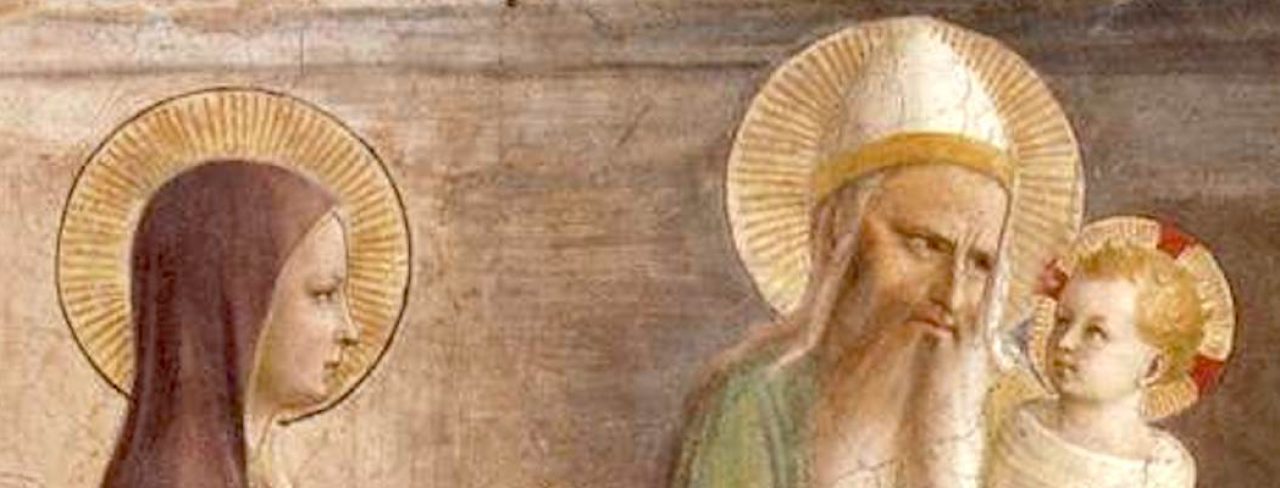
The other night I watched the popular, opinionated, and entertaining BBC art historian Waldemar Januszczak discuss Medieval and Renaissance art. Over the years he has presented many shows on various artists and artistic movements. His programs, while informative, are distinctly opinionated. That’s fine, there is no law saying that you can’t present your own opinions (the exception, of course, being social media).
In one of his shows Mr. Januszczak briefly mentioned the Shroud of Turin. He said that the Shroud is a fake, a forgery, a bogus remnant of Medieval skullduggery. Yet, based on over fifty years of scientific research one can say that Mr. Januszczak’s opinion and conclusion is undoubtedly wrong.
It is my informed opinion that the Shroud is more than a just an interesting cultural artifact. I believe that it is a relic of the passion, death, and resurrection of Jesus Christ. My belief is based on faith and scientific evidence.
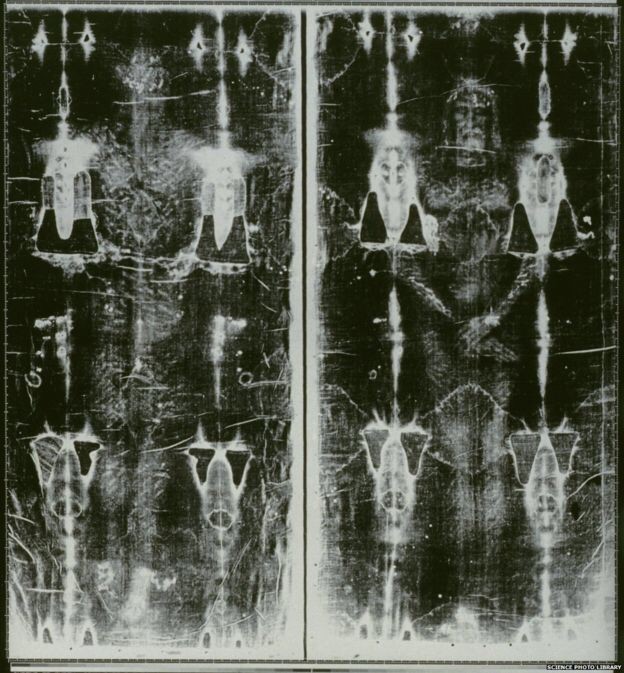
The Shroud of Turin is a linen herringbone weave cloth. It is 14 ft. 3 in. long by 3 ft. 7 in. wide. It appears to have served as the burial cloth of a man (5 ft. 11 in. tall and of muscular build) who had been severely beaten, scourged with a Roman flagrum, his scalp pierced with thorns or slivers of bone, who fell numerous times on a pavement, and was crucified in the Roman fashion.
Since the 1950’s significant and serious investigations have been completed by reputable physicians, scientists, and specialists on the Shroud.
Research is ongoing. Current results certainly lead the unbiased observer to conclude that the Shroud is not a fake. There are, however, commentators that continue to bang the drum and receive headlines claiming that the Shroud is bogus.
Science can never prove that the Shroud of Turin is the burial cloth of Jesus. That is not its job. It can, however, determine and clearly pronounce the scientific and historical evidence contained within it. Valid research results point to specific conclusions. In the case of the Shroud of Turin science, logic, reason and ultimately faith will lead a Christian to conclude that the Shroud of Turin is the true burial cloth of Jesus.
The responsibility of scientists and specialists gleaning the Shroud is to follow the Scientific Method of establishing a hypothesis, produce correct models of investigation and data collection, accurately and without bias thoroughly investigate, check for error, and publish their conclusions for peer review. Impartial scientists, anthropologists, and historians of the Shroud should have no agendas secret or public.
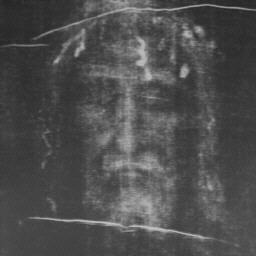
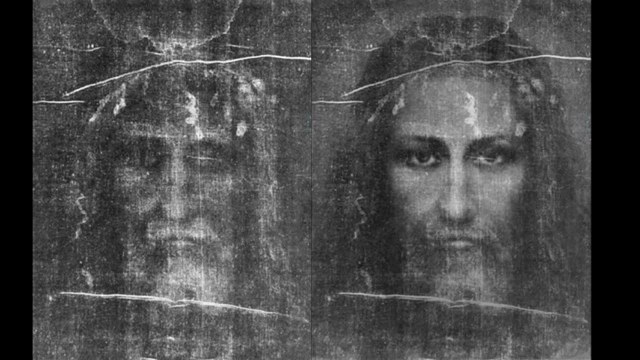
The following points are a minuscule portion of the available scientific and historical results related to the Shroud of Turin:
- The “Hungarian Pray” Manuscript (1192 – 1195 AD) contains a painting of the burial cloth of Jesus Christ that had, at one time, resided in the city of Constantinople. Interestingly, it clearly shows a herringbone weave, the lack of visible thumbs on the body, L-shaped burn holes that are also on the Turin shroud, etc. The date of that manuscript provides a clear discrepancy with the 1988 Oxford C 14 date of 1260 – 1390 AD.
- The Shroud shows over 100 scourge marks on the man’s body resulting from a Roman scourging tool called a flagrum. It is a whip of two or three leather strips with lead balls or pieces of splintered bone attached at the end. Its purpose was to tear pieces of flesh off of the chest, back, thighs, and calves. The man in the Shroud was simultaneously scourged by two men.
- There are deep abrasions on the man’s shoulders from carrying a heavy object.
- There are 141 different pollens found within the fibers of the Shroud. Forty-five of them are specifically from the area in and around Jerusalem, and thirteen from the area within and around Constantinople (present day Istanbul, Turkey).
- The coloration of the entire image goes only one or two fibers deep into the thread structure. It has been determined that no paint was used to discolor the fibers. The fibers were scorched by some unknown process which contributed to the image being formed of the crucified man.
- The facial features of an icon of Christ (known as Christ Pantocrator), found in St. Catherine’s Monastery in Egypt, perfectly corresponds to the facial image found on the Shroud of Turin and the Sudarium of Oviedo (the face cloth that covered the face of a man who was severely beaten). That specific icon of Jesus Christ is dated to the 500’s, not the Middle Ages.
- Human blood is found throughout the Shroud. It is type AB. “The blood has a high bilirubin content and nanoparticles of creatinine bound to ferritin” indicating that the man on the Shroud was severely tortured (quotation of research by scientist Robert Rucker which is found on-line).
- The Shroud shows the location of nail wounds possibly through the wrist. The nails may have extended up through the palm; this would allow the nails to suspend the man without having his body’s weight tearing him away from the cross/tree.
- Photographs taken in 1988 show Giovanni Riggi cutting samples from a part of the Shroud that would be Carbon 14 tested that year. Riggi is not wearing protective gloves or face mask. Cardinal Ballestrero is leaning on the table over the Shroud, and another technician has his ungloved hand on the table right next to the area that was being sampled. How can we conclude that this sampling was pure since its data collection methodology was so flawed and sloppy? This provides another fact that throws the 1988 C-14 date into question
- Pope Stephen III (768 – 772 AD) specifically discusses the Shroud and how the “Lord’s face and entire body …was transfigured on the cloth so that those who could not see Him bodily were able to see Him divinely transfigured on the cloth” (quotation found in Ian Wilson’s The Shroud of Turin. Image Books, 1979). Other Popes, prior to 1200 also speak publicly about the Shroud.
If you are interested in this subject you should seek out additional research papers and books (that are legitimate) to help you form your own conclusions (start with Vittorio Guerrera’s book – The Shroud of Turin, published 2001. He provided the basis for the above ten points). Ultimately, for many Christians, belief in the Shroud as the burial cloth of Jesus, comes down to scientific evidence, personal faith, and the realization that Jesus Christ’s savage death led to our Redemption and the joy of His glorious resurrection.
Copyright © 2011- 2022 by Deacon Paul O. Iacono – All Rights Reserved. Permission to reprint essays and/or my paintings must be obtained from me by, using the comment box and making a comment/request on the post. I will respond to you through answering in the comment box. Students, and those interested, may quote small sections of my essays as long as the proper credit and notation is given. Thank you.


 The Fra Angelico Institute for Sacred Art
You must be logged in to post a comment.