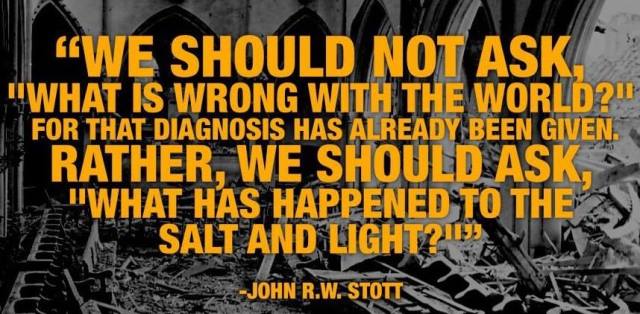
Our society is quite adept at pointing out the sins and foolishness of others. Cable TV, radio talk shows, and various web sites love to dwell on the ignorant and immoral actions of politicians, celebrities, and the man in the street. But, as sacred artists within the Christian Tradition, what does Jesus require of us?
Jesus demands that we become countercultural. He requires us to be more concerned with our own sinfulness rather than the sins or inadequacies of others.
When we first heard it years ago, last Sunday’s Gospel of Matthew 5: 17-37 must have caught us off guard – with talk of plucking out of eyes and cutting off of hands. Today, as adults and sacred artists, we certainly would have a difficult time practicing our craft if we took Jesus at His word. As you know the graphic figures of speech that Jesus uses are meant to shake us up – to provoke a reaction in us by vividly describing what we should figuratively do rather than falling into certain types of sin.
The vivid images that He uses emphasizes the truth of how dangerous these sins are to our souls. He uses this phrase twice: “it would be better to lose one of your members than to have your whole body thrown into Gehenna.”
What is He saying?
Human nature, combined with the age that we live in, contribute to our forgetting the essence of this Gospel and reflecting on its purpose. It is apparent that Jesus is emphasizing the following three truths: 1) Sin is real; 2) We will be judged on our sins; and 3) Gehenna, that is, Hell, is a real place: the place of eternal sorrow and separation from God.
Now, in the last fifty years, there exists some Catholic and non-Catholic theologians that would disagree with all or some of these three Scriptural truths; in fact, some of them would even cast doubt on the authenticity of the Holy Scriptures. But make no mistake; it is the doctrine of the Holy Catholic Church that we will be personally judged, not by these theologians, but by Jesus Himself.
So, it is wise and prudent for us to understand that Jesus is not mincing any words in this section of Matthew’s Gospel. For Jesus is challenging us to take seriously God’s perception of reality, and the truth that we can, through our personal and social sinful acts, be separated from God not only in this life but for all eternity, too.
Jesus’ words are timeless because He cites pride, anger, vengeance, unlawful divorce, lust, and lying as problems that affect not only the Jewish community – but our community as well. Jesus knows our hearts; and He knew the hearts of the men and women that stood before Him. His goal was to teach and heal us, and most importantly, willfully sacrifice Himself so that we would be redeemed of the stain of Original Sin and the subsequent sins of our life.
So Jesus is presenting us with an opportunity to be a student in His school of discipleship. Jesus’ school, however, demands that we be honest with ourselves, as artists and as Christians, and recognize and strive to eliminate all sins – all barriers – to being His disciple. For how can we produce sacred art in the Tradition of the Church if we are carrying the burden of unrepented sin?
We pray that the Holy Spirit uses us as His instruments to promote the truth, goodness, and beauty of God, His angels and His saints. It follows then that if we are His instruments we must make every effort to model ourselves after Him. Rather than just copying the image of the sacred model, as a fellow artist Jesus desires us to become the model – alter Christus – another Christ.
I don’t need to tell you that, over the last fifty years within the Latin Rite of the Catholic Church in certain parts of the world, the Sacrament of Reconciliation is widely ignored as a throw back to the Middle Ages. This attitude by American and European Catholics is based on poor catechesis and, possibly, an unwillingness to accept and repent of their own faults and sins. We may have forgotten the reality of sin, but Jesus, our Judge, has not; and why hasn’t He?
It is because sin is the reality of our separation from Him – and He is always aware of it. It is the reason why He suffered and died for us; however, along with this is His desire to share His mercy with us – if – we want it. Christ’s mercy is always available to us; and as Catholics we are blessed to have the Sacrament of Reconciliation to spiritually cleanse us from our sins. Why would we cast aside such a valuable gift?
Today, Jesus is calling us to repent – let us not turn a deaf ear, and a hard heart, to Him.
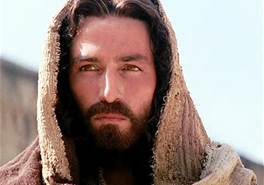
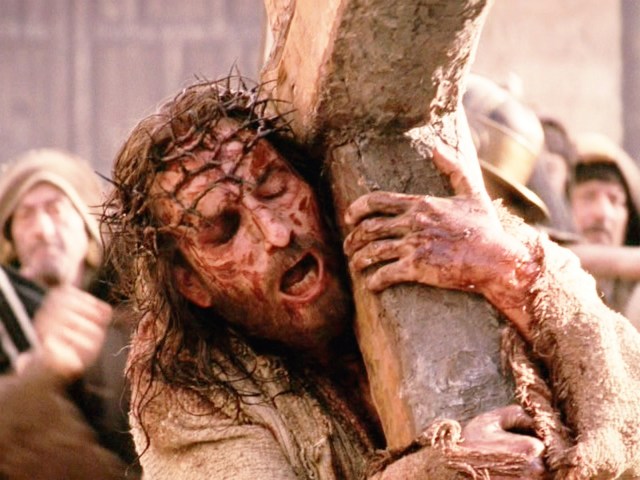
Copyright © 2011- 2014 Deacon Paul O. Iacono All Rights Reserved. This essay is a modified form of a homily I delivered last week at St. Francis of Assisi Parish in Wakefield, Rhode Island, USA. Photo Credits: “Jesus,” and “Jesus Carrying the Cross” from Mel Gibson’s classic film: The Passion of the Christ.


 The Fra Angelico Institute for Sacred Art
You must be logged in to post a comment.