Making Room In Your Heart for God, Prayer, and Creativity

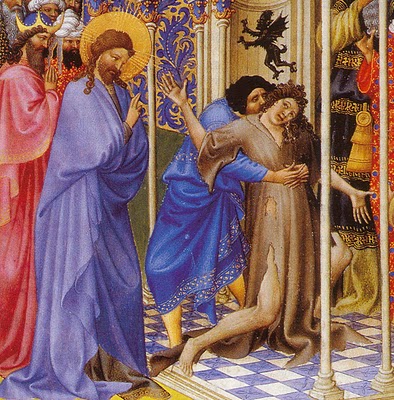
The Gospel of St Mark, chapter 9: 14-29, challenges us to ask ourselves the question “How does the effective disciple of Jesus live his or her life?” Clearly the ineffectiveness of Jesus’ disciples in doing His work is evidenced when the father of the possessed boy complains to Jesus that His disciples were unable to help his son, and even questions the power of Jesus to intervene on his son’s behalf.

Jesus responds with disappointment tinged with anger over the actions of some of His disciples; people who took it upon themselves to act in Jesus’ name but were not prepared to do so – for they did not ready themselves through prayer, fasting, and good works.

Jesus was upset with them for their lack of preparation. He implies that they were not effective co-workers. They were not ready to share His mission because they believed  they could remain who they were and still carry out the work of Jesus.

At that point in Christ’s ministry they didn’t realize that they had to be willing to cooperate with Him and transform themselves into His Life; a transformation, which accompanied by the grace of God, demanded great effort on their part.

In private, Jesus’ disciples asked Him why they didn’t have any success. He said, referring to the evil spirits,  “This kind can only come out through prayer.”
An Internet friend of mine from West Virginia, Fr. Paul Wharton recently said, “the transcendent knowing of God in prayer is making room in myself for an experience of His loving presence deep within me and all around me.”

This is such an important point, for we must make room for God deep within ourselves. As spiritual people we must guard against the weakness evidenced by the disciples in this Gospel. They thought they were acting like Christ, they thought they had His power in their lives, but they had not made room for Jesus in their hearts, and when faced with the enemy they were unprepared – they were helpless and impotent.

So, as creative people – as artists in our various fields – how do we become effective disciples of Jesus Christ? I believe our effectiveness is based on four concepts: 1) the grace of God coming to our hearts and souls through Christ’s Holy Sacraments; 2) our willingness to open our hearts and allow God to go deep within our souls so that He may evangelize us; 3)  our personal effort to be transformed into His Gospel Life through prayer, Scripture study, and our  unique approach to the creation of sacred art; and, 4) our faith and trust in His ability to lift us up, like the possessed boy, out of our suffering – or to give us the strength to bear what we are asked to endure.

These four concepts have an important part to play in our creativity and productivity as sacred artists. We must see ourselves, and the various arts that we produce, as part of His divine mission to first, evangelize ourselves, and then, through our art, those around us.

As we approach Ash Wednesday and the first week of Lent, I would like to raise your attention to a series of posts that I will publish during Lent dealing with the idea of prayer as it applies to our creativity. I will explain and explore with you a few valuable methods that I have learned over the years and one that I have recently been made aware of by a fellow member of the Fra Angelico Institute for the Sacred Arts.

I pray that you will profit from these upcoming posts and that they may help you in your process of becoming an effective disciple of Christ and an even more creative and Spirit filled person! May the Lord bless you with a happy and creative Lent.

Copyright © 2012 Deacon Paul O. Iacono All Rights Reserved     Thanks to starrymantle.blogspot for the sacred art rendition of today’s Gospel; and if you have a chance check out Fr. Paul Wharton’s blog at http://heartsonfire33.wordpress.com/2012/02/17/adrian-van-kaam-1920-2007-on-prayer/

Perilous Times For People Of All Faiths

There is a very striking phrase from yesterday morning’s Gospel:  Mark says, “…and when they got out of the boat, the people at once recognized Him…”  – they immediately recognized Him. The question that begs to be asked is “If they immediately recognized Him – what did they recognize?”

Was it just the fact that they identified a teacher of profound importance, or a powerful prophet, or a new healer with extraordinary ability?  Or did they recognize the fact that this person was someone totally above and beyond that – a man truly sent from God – to do God’s will and to meet all of their spiritual needs?

Possibly, St. Mark desires to communicate that besides the truth that Jesus was capable of performing astonishing healings, there was the blatant truth that the simple people of Israel were approaching Him with faith – they were approaching with expectant faith.  They brought their sick and demon possessed to Him because they instinctively knew that He could heal them and, more importantly, that He would heal them. What does this teach us? It teaches us that their faith was alive – their faith was confident.

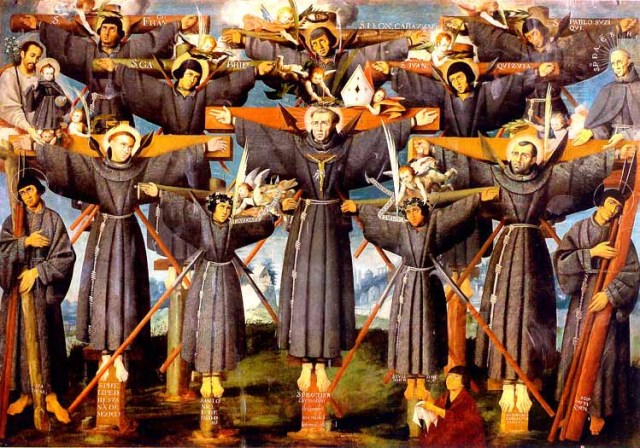
Yesterday, I wore a red dalmatic and stole as I assisted our Assistant Pastor Fr. Joseph P. Upton at Holy Mass. We wore red in honor of St. Paul Miki, a Japanese Jesuit Scholastic, who along with twenty-five of his companions including two other Jesuits, six Franciscans, fifteen Franciscan tertiaries, and two laymen were all put to death on February 5, 1597 on the order of the ruler Hideyoshi.

These martyrs gave witness to Christ within a hostile society whose people and rulers were unable to see and accept the Truth. Their courage speaks volumes as to the ability of average men and women to stand up to tyranny and promote the truth and love of our Lord Jesus Christ. These martyrs were able to defy governmental tyranny because their faith was alive and confident.

This is not a political blog. It is a blog that is intended to promote the prayer life, the artistic appreciation, and creation of sacred art by its subscribers; but, we cannot fail to observe with sadness and deep concern all of the repugnant and anti-Constitutional acts that have been imposed on the Catholic Church as an institution, and upon its individual members within the last few weeks (here, most recently, I speak of the bishops, priests, and deacons who serve within the Armed Services who were told not to publicly read a letter of opposition from the Catholic bishops in response to the Executive Branch’s mandate to impose its Health and Human Services Policy throughout the nation).

As primarily artists of faith we cannot fail to see the implications of the Administration’s actions. They are embarking the ship of state on very dangerous waters. These are perilous times for people of all faiths.

I cannot and should not fail to mention the witness, a week or so ago within our own State of Rhode Island, of the courageous students, laypeople, and clergy who gathered at the State House to pray in favor of the Pro-Life movement. They were met not with the opportunity, guaranteed by the Constitution, to freely express their views – rather, they were met with opposition members of various groups (one being identified as Occupy Providence) who shouted them down, prevented them from expressing their prayer, and pelted female high school students with condoms. Is this what public discourse has come to in our State and Nation?

As you may know the forces of secularism will stop at nothing in their attempt to shout down the Pro Life’s right to freedom of speech; but we should remember that the Pro Life Movement mirrors the witness of the simple people of Israel in yesterday’s Gospel – and the testimony of the martyrs – because like them they are willing to publicly stand up to the forces of darkness and say – with charity  – “Our faith is alive and confident – we believe in Jesus Christ and the witness for life that He embodies – and the darkness of secularism will never stifle the shining light of His Truth.”

As writers, as artists in various media, as musicians, and as performance artists who may be Catholic, Protestant, Orthodox, or Jewish, or members of other faiths – it is critical that we do not lose sight of what is happening in our society. We cannot pursue our art in a vacuum. Rather, we pursue our art, and the Holy Spirit as well, so that our faith and confidence will be strengthened, and our sense of gratitude will be increased, for all those within our Church – and those from other denominations – who courageously witness to the truth of the Gospel and promote the value of life in their  prayer, art, and social action.

Copyright © 2012 Deacon Paul O. Iacono All Rights Reserved

Thanks to/redemptores.blogspot.com/2011/02/st-paul-miki-companions-m.html for the image of St. Paul Miki and companions.

St. Vincent of Saragossa – Martyr – And An Artistic Challenge!

Today, January 23rd, is the Feast Day of Saint Vincent of Saragossa.  St. Vincent was a deacon and served as a minister and trustworthy pastoral assistant of Bishop Valerius, of Saragossa, Spain. He was martyred in the year 304 during the ferocious persecution of the Roman Emperor Diocletian. Saint Vincent is the most famous martyr of Spain, and St. Augustine testifies to this in his sermons that Vincent’s acts of love and loyalty to Jesus Christ, and service to the Catholic faith, were so respected that they were read and discussed in all the churches of North Africa.

Owing to the fact that Bishop Valerius had a speech impediment, Deacon Vincent was given the faculty to do all the preaching in their diocese. When the persecutions resumed, the Roman governor Dacian had Vincent and the bishop dragged in chains to Valencia where they were imprisoned. Bishop Valerius was subsequently banished, but Deacon Vincent, as a result of his preaching, was subjected to many cruel tortures such as the rack, the gridiron, and frequent scourging, all of which ultimately led to his martyrdom.

Legend tells us that even in death his murderers were not satisfied, for they threw his corpse into a field to be devoured by vultures; but, according to eyewitnes- ses, a raven defended his body by successfully fighting off the scavengers. His body was later buried and a chapel built over it.

In Vincent’s story we have the witness of a man who stood up, in Christian love and faith, to the might of a Roman imperial government that did all it could to destroy him in life and in death. They were so outraged by him because Saint Vincent would not renounce his sacred ordination to the diaconate, would not renounce the truth of the Church, and would not renounce Jesus Christ even in the face of unspeakable and savage tortures.

St. Vincent of Saragossa is a man who deserves to be recognized. If we review the images of this early Spanish saint, we see  a number that are sensitive and well-done, but it really is time to produce a new icon, or sacred image, of this great witness to the truth, love, and mercy of Jesus Christ. If you are a sacred artist or iconographer, and are interested in producing an icon or sacred image of St. Vincent, I will happily post it (with your permission of course) on this blog. He is a great model for all Christian young people today and we need an image of him that is contemporary to our age.

Come and join us, and like St. Vincent of Saragossa, have some of your art, or all of it, spread the Good News that the love, life, death, and resurrection of Jesus Christ has healed our broken relationship with God the Father!

Copyright © 2012 Deacon Paul O. Iacono All Rights Reserved

Whose Star Do We Follow?

St. Thomas, in his Summa Theologiae, has a wonderful meditation on today’s Solemnity of the Epiphany. He says that “Salvation was to be through Christ and apply to all sorts and conditions of men because in Christ Jesus there cannot be Greek or Jew, slave and free man. In order that this should be foreshadowed in Christ’s birth, he was made known to men and women of all conditions, because as St. Augustine says, the shepherds were Israelites, the Magi were Gentiles, the first were near, the latter from afar: both hastened to Christ the cornerstone…. The Magi were wise and powerful, the shepherds, simple and lowly. He was also manifested to the just, Simon and Anna, and to sinners, namely the Magi. And also both to men and to women… so as to show that no human condition was barred from His salvation.”

Dominican Father Andrew Carl Wisdom, OP adds to these observations the following prayer: “Newborn King, you show no partiality in your love for us. Young or old, rich or poor, educated or uneducated, you could not love us any more in the next moment than you do in this moment. But my witness wavers at times, Lord. I lose track of the real Star, caught up in becoming one myself. Help me to once again kneel before you like a little child and open up my treasuries of time and talent on behalf of the work which I was sent.”

As you know, this blog is dedicated to evangelizing the truth, goodness, and beauty of God through the study and creation of sacred art in His honor. As artists the meaning of the Epiphany is very important solemnity to us. Why? Because it reminds us and redirects our creative efforts away from following the supposed light and friendship of the secular world, the television, the political party, or the glow of the computer screen, to the true Light – the Light emanating from the face of Christ.

Yes, we have to exist within our particular culture. We have to make a living and provide for ourselves and our loved ones. Yet, as Christians, Jesus Christ’s manifestation to the Magi asks us to remember that we must live in the world but not have our souls be overcome or compromised by it. The shepherds and Magi were changed by the Light of Christ’s face – may His Light and Presence change us, too.

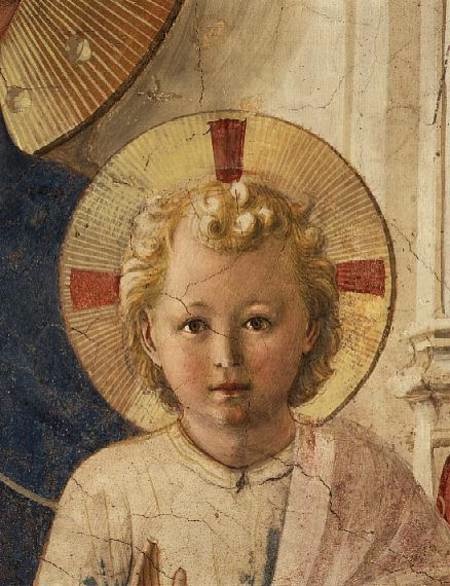
Image of Jesus Christ by Blessed Fra Angelico (1387 – 1455).

Copyright © 2012 Deacon Paul O. Iacono All Rights Reserved

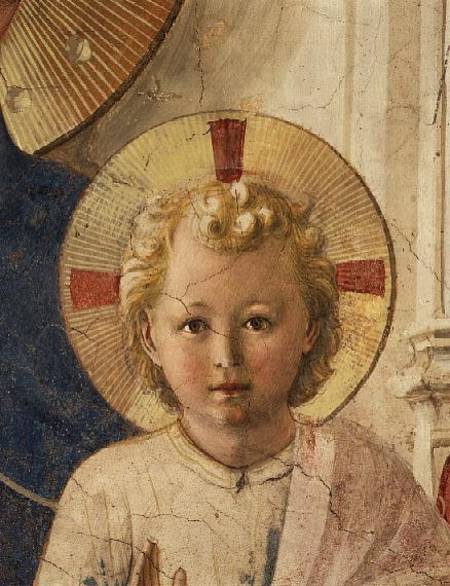
Christ Child by Fra Angelico

To all the friends, followers, and members of the Fra Angelico Institute for the Sacred Arts,

We wish you all a very Merry and Holy Christmas Season and a grace filled New Year!  May the blessings of the child Jesus and the adult Savior remain with you, and your loved ones, throughout the coming months.

We thank you so very much for your support, advice, and participation, and we look forward to sharing new artistic adventures with you during the next year! Thanks again for all that you have done to make the Institute meaningful and helpful in the promotion of the sacred arts and in the evangelization of the truth, goodness, and beauty of God, His angels, and His saints.

Warm regards,   Deacon Paul and Jackie Iacono

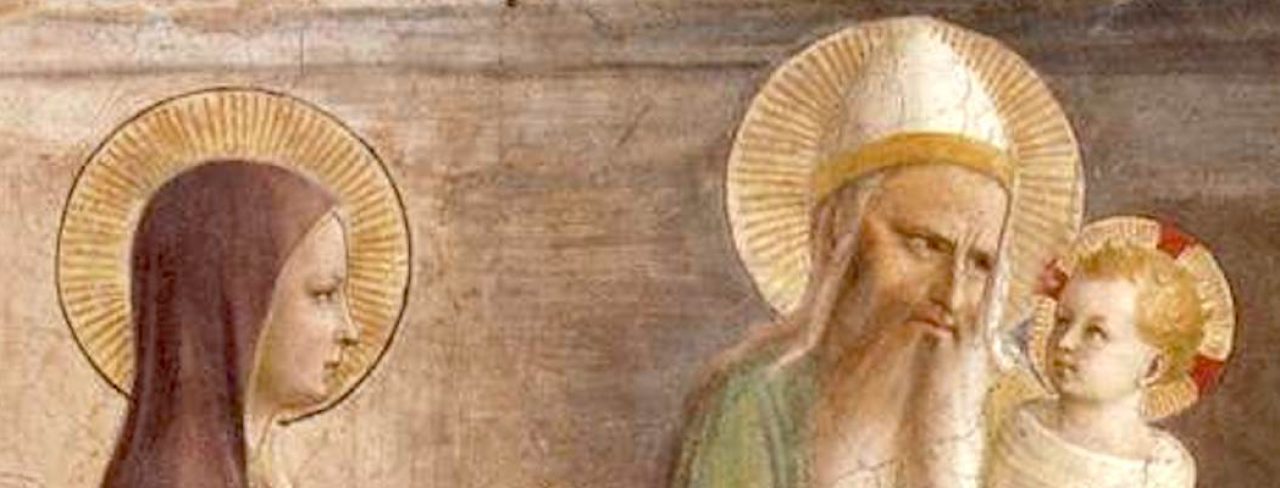
This image is an extreme close-up of a painting of the Madonna and Child Jesus with assorted saints painted by Fra Angelico in Florence during the early 15th century.

Copyright © 2011 Deacon Paul O. Iacono All Rights Reserved


Five Days Before Christmas: A Unique Story About The Graciousness of God

A very clear narrative greeted us in yesterday morning’s Gospel by St. Luke. He tells us that both Zechariah and his wife Elizabeth were both righteous before God: walking in all the commandments and ordinances of the Lord – they were blameless; but they have no child. Elizabeth was barren and both were elderly. We read of Zechariah silently bringing his heavy heart before the Lord – even after all those years – it was still burdened with disappointment. The couple probably remembered Psalm 112 which says:

“Happy the man who fears the Lord, who takes delight in his commands. His sons will be powerful on earth; the children of the upright are blessed.”

Zechariah was a priest, and on that day – by lot – it was his turn to enter the chamber within the Temple called the Holy Place and burn incense on the special altar. The Holy Place was a small chamber that led to the Holy of Holies, which housed the Ark of the Covenant.

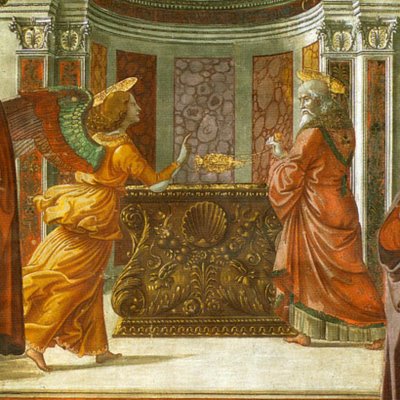
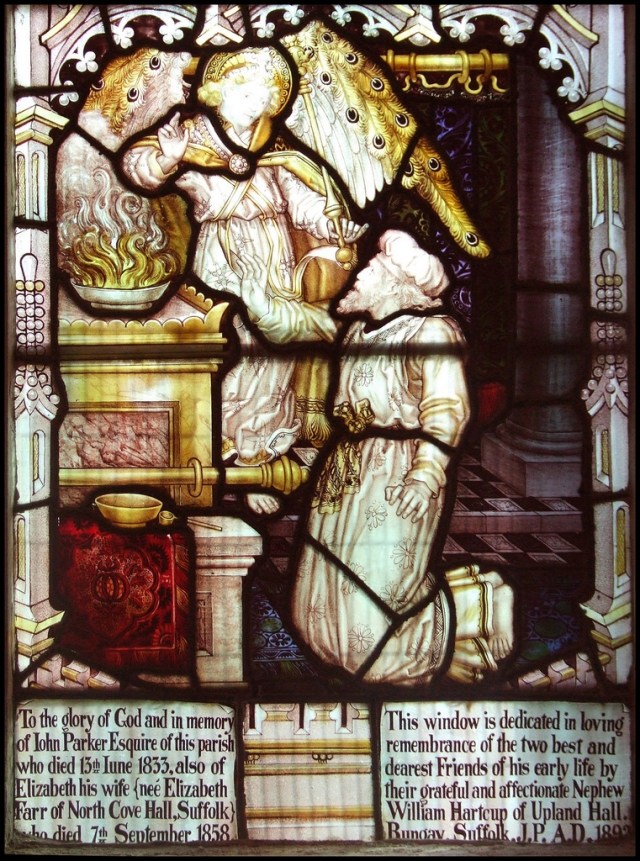
For whatever reason, Zechariah that morning carried his disappointment with him into the Holy Place; and while he was there the archangel, Gabriel, appeared on the right side of the Altar of Incense. Gabriel tells Zechariah not to be afraid and that his prayer was heard before the throne of God. Gabriel continues with the joyous news that Elizabeth will bear a son, and that he will be called John – which in Hebrew means – “the Lord is gracious.” This child will grow and be great before the Lord, and even from his mother’s womb – he will be filled with the Holy Spirit.

But, in a typically human way, Zechariah questions the archangel’s announcement. His query must have been different in tone. It must have had the typical masculine attitude of “Are you kidding me!” Zechariah’s tenor makes Gabriel, and possibly God, indignant – and Zechariah is struck speechless for his insolence.

In Scripture, few lines later, we see Gabriel’s announcement to Mary. She questions him, too, as “How can this be since I do not know man? But Gabriel does not strike her speechless. We have to be struck by this difference. What does it teach us?

It is clear that God knows our hearts. God knew what was on Zechariah’s heart when he was in the Holy Place. Zechariah does not trust the message or the messenger, and by inference – he does not trust God. God knows his heart; and disciplines this good man. Like Zechariah, we, too, may disbelieve God. In our sophistication or position in life we may say “Well that’s fine, but, the Scriptures don’t apply to our situation, or this specific teaching was acceptable years ago, but, too much time has passed and it doesn’t apply to my problems. Remember, the Gospel says that Zechariah and his wife were good and righteous people. It was mentioned that he kept all the Commandments and ordinances. Yet, when his big moment comes – where is all that goodness and righteousness? It might still be there in his heart, but, there was also a pocket of doubta crevice of skepticism – that was significant enough for him, as a priest of the Almighty God, to be struck speechless in punishment for not trusting Gabriel’s message.

As sacred artists, as Christians, this Gospel asks us to stop, and check our souls in this last week of Advent. It asks us how patient, confident, and trusting have we been of the Lord’s message to our hearts, and have we allowed this to carry over into our actions?

Zechariah learned the hard way that when the Lord prepares us for His coming He desires us to be alive, awake, and alert to His call and to trust His message. So, our prayer this week should echo that of Zechariah, who in the months of speechless waiting, most likely in his mental prayer said,  “Lord, I believe; cleanse me of my disbelief. Lord, I trust, heal me of my distrust;” and it should also echo that of Mary – who in humility and expectation waited patiently for the graciousness of the Lord to take fruit in her womb.

Copyright © 2011 Deacon Paul O. Iacono All Rights Reserved

Thanks to angels-angelology.com for stained glass window image.

Sacred Photography – A Shot That Will Rock Your Soul

The following photograph haunts my mind.

I found it on the blog (http://soulblindministry.com/2011/12/12/necessity/) of an artist who had a horrific life changing experience and has now turned his life, and possibly his art, over to Christ.

The photo stopped me cold.

But you say, these shoppers could be wonderful, God fearing, neighbor loving people.

True enough.

Then, why do you judge them?

I don’t.

It’s the entire photograph.

It makes me judge, and question, myself – in relation to God and my neighbor.

This is truly one of the functions of the sacred arts.

Copyright © 2011 Deacon Paul O. Iacono All Rights Reserved

A Beautiful Pregnant Young Woman And Her Message To A Weary World

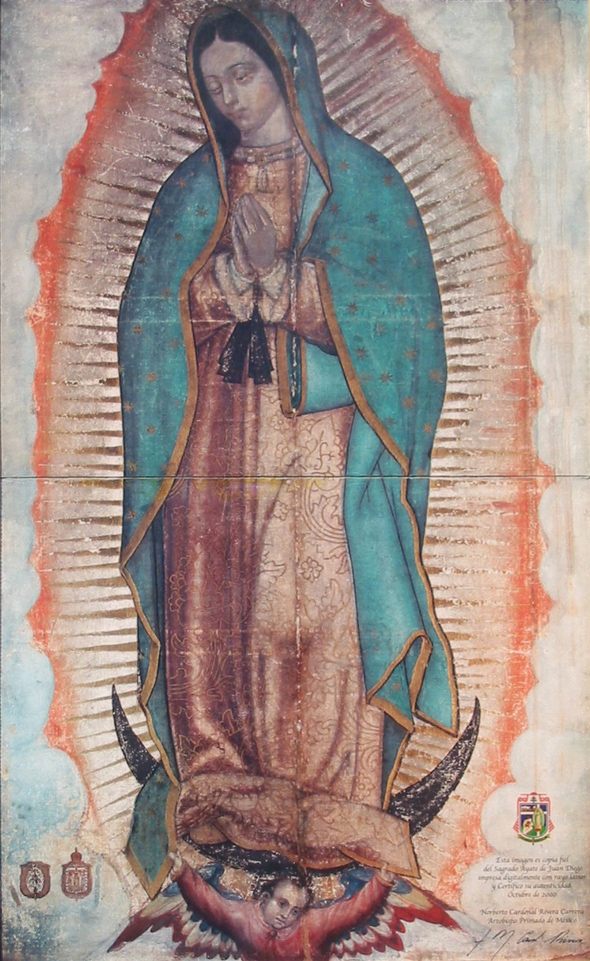
Today’s feast of Our Lady of Guadalupe, the patroness of all the Americas, recalls the apparition of our Blessed Mother on the hill of Tepeyac in present day Mexico City from December 9th through the 12th in the year 1531. Guadalupe is the Spanish translation of the Aztec phrase that Juan Diego heard Mary associate herself with – the name, interestingly, in Aztec means “she will crush the serpent of stone.”

In the same year – 1531 – thousands of miles away in what today we call Germany – Martin Luther was pro- claiming his doctrine of protest and rebellion from the Catholic faith. As Martin Luther was convincing millions of Catholics to leave the faith, our Blessed Mother, through the miraculous image that appeared on Juan Diego’s tilma, convinces millions of Native Americans to convert to the faith.

As the Protestant rebellion was tearing down millennia of Church theology and sacred tradition, Our Lady was building up the understanding of both the Spanish clergy in Mexico and the Native American population, of the love of God and the assurance of her protection.

Our Lady spoke to Juan Diego in his native dialect. She identified herself and said:  “Juanito, the humblest of my children, know and understand that I am the ever virgin Mary, Mother of the true God through whom all things live. It is my ardent desire that a church be erected here so that in it I can show and bestow my love, compassion, help, and protection to all who inhabit this land and to those others who love me, that they might call upon and confide in me. Go to the Bishop of Mexico to make known to him what I greatly desire. Go and put all your efforts into this.”(1)


Of course you probably know the rest of the story. The Bishop is told, disbelieves Juan Diego, the bishop asks for a sign, Juan Diego reports back to Mary and is told by her to cut the Castilian roses that are growing and put them in his poncho which is called a tilma. The tilma is opened in front of the Bishop and other witnesses, the roses fall out, and the miraculous image of Our Lady appears on the tilma. But is this story true? What are the facts that surround it?

Our Lady of Guadalupe is honored as a feast throughout the Americas on this day because of the miraculous events associated with this particular three-day apparition, a very few being:

1) The extraordinary conversion of multi-millions of Native Americans, and the Aztecs in particular, who, as a blood thirsty civilization, were known to kill as many as 20,000 human beings in one day to appease the blood lust of their primary god.

2) The roses that Juan Diego cut were native of Damascus, Syria, and did grow in Spain, but were unknown in Mexico at that time.

3) The tilma, or poncho, that Juan Diego wore was made of the agave fibers traditionally used by the Native Americans. These fibers were a natural substance that should have deteriorated within 35 years, and yet, today, the 480th anniversary of the event – this tilma is still in excellent condition.

4) Through scientific analysis done over the last forty years, it has been determined that the pigments used on the tilma are not of natural or man-made material, and there is no glue or sizing on the tilma to fix the pigment in place. Plus the colorization or iridescence of the image on this “icon not made with human hands” would not have been able to be produced by a human artist in the 16th century. This iridescent effect would have been seen only in nature.

5) Our Lady is represented in the colors and dress of a pregnant Aztec princess. Modern astronomical research has shown that the stars on Our Lady’s image are in the configuration of the stars in the heavens on the nights of the apparition in 1531. Most remarkably, a microscopic analysis of Our Lady’s eyes was completed by Peruvian engineer and optical scientist Dr. Jose Aste Tonsmann (who trained at Cornell University and worked at IBM). He magnified the iris of the Virgin’s eyes 2,500 times and, through mathematical and optical calculations, was able to identify the witnesses of the Guadalupan miracle at the moment Juan Diego unfurled his tilma before the bishop and other witnesses [the bishop was Juan de Zumarraga, the Franciscan bishop of Mexico City.] (2)

But most importantly, these few miraculous facts about the icon of Our Lady of Guadalupe, do not stress the key issues of this apparition.

You see, Our Lady came to the Mexican people – as she comes to us this Advent season – as a pregnant young woman who is promoting life and her protection – not only for her unborn child – but for all of us.

Our Lady calls to us through this icon to stress that she loves us, has compassion for us, sees our tears, and desires to offer us her love and comfort. As the Mother of the incarnate Son of God she also points to her Son, and desires a church to be built so He can be properly worshipped and so she can be there to assist us in our prayers to God.

Mary has always reminded us that He is the One, True, All Powerful God who desires our love and respect. She also stresses that she is always here to provide her protection.

I commend to you to do some research this week on this magnificent Church approved apparition which indicates the Lord’s and Our Lady’s love for us. How blessed we are to have the spiritual motherhood of Mary, and the Fatherhood of the One True God.

Copyright © 2011 Deacon Paul O. Iacono All Rights Reserved

Footnotes and  sites to investigate for more information:

(1) From a report by Don Antonio Valeriano, a Native American author of the 16th century; as published in the Supplement of the New Feasts and Memorials for the General Roman Calendar – The Liturgy of the Hours.

(2)Science Sees What Mary Saw From Juan Diego’s Tilma”   Zenit News Service, 2001.

Zenit News Agency. Science Stunned by Virgin of Guadalupe’s Eyes. 1/14/2001

http://www.miraclehunter.com/marian_apparitions/index.html

The Immaculate Conception – A Time To Reflect On The Meaning of Mary

1) Mary’s Personal History

Tradition tells us that Mary was the daughter of Saints Joachim and Anne. They were devoted Jews who raised their child to be loyal and pure within the Jewish holy tradition. Mary was born within the royal line of King David and was betrothed and later married Joseph, a respected Jewish carpenter from Nazareth. Little is known of Mary’s day-to-day life other than the references to her in the Gospels. Those early references indicate that she was a loving, concerned, and devoted person. During her Son’s ministry she attended the wedding feast at Cana, was present at Jesus’ crucifixion, and was most likely with the Apostles at the coming of the Holy Spirit on Pentecost.

 2) Mary Prefigured in the Hebrew Scriptures

“The most famous Old Testament prophecies concerning the coming of the Messiah are Genesis 3:15, Isaiah 7:14 and Micah 5:1-4. In all three prophecies the Mother of the Messiah plays a prominent role. “Therefore the Lord Himself shall give you a sign; Behold, a virgin shall conceive, and bear a son, and shall call his name Immanuel.” [Isaiah 7:10-14].  The name Immanuel in Hebrew means “God is with us.”

 3) Mary as Mother and Saint

As the mother of Jesus, and the wife of Saint Joseph, Mary is the greatest saint. She is the model of faith, purity, and maternal devotion for all Christians. Mary is called the Blessed Virgin because she conceived Jesus by the power of the Holy Spirit (this is part of the Mystery of the Incarnation).  Saint Joseph is the foster father, not the biological father, of Jesus.

To become the mother of the Savior, Mary was “enriched by God with gifts appropriate to such a role.” (Lumen Gentium). Mary freely gave herself to God (confer Chapter 1 in the Gospels of Luke and Matthew), with complete trust even in the face of possible confusion about what was happening to her, and she freely responded and consented to God’s Will for her life.  Mary’s “Yes” to God’s request that she become the Mother of the Incarnate Son of God, Jesus, enabled our Redemption to occur.

What is the Dogma of the Immaculate Conception? The Church teaches that Mary was conceived without sin.  This is the Dogma of the Immaculate Conception which we celebrate today.

As The Catechism of the Catholic Church states in paragraph 491, the Dogma of the Immaculate Conception means that “Mary was redeemed from the moment of her conception.”  Pope Pius 9th announced this Dogma when he said: “Mary was preserved immune from all stain of original sin.” This was accomplished through the power of God. He willed and acted so that Mary should be free from the stain of sin. Mary, as the angel Gabriel described is “full of grace”… “Hail Full of Grace / Rejoice Highly Favored One.” The Fathers of the Eastern Catholic Church also agree with this truth and verify it when they address the Mother of God as “the All-Holy” (Panagia) and celebrate her as free from any stain of sin.

An interesting article entitled Mary in Scripture explains “The angel Gabriel’s greeting to Mary is of great consequence for our understanding of Mary and Marian doctrine. The greeting has been variously translated as “Rejoice highly favored” and “Hail full of grace.” The object of the varied translations is the Greek word kecharitomene which refers to one who has been transformed by God’s grace. The word is used only one other time in the New Testament and that is in the Epistle to the Ephesians where Paul is addressing those who, by becoming Christians, are transformed by grace and receive the remission of sins. It is clearly significant that Mary is considered to already have been transformed by grace before the birth of Christ.” ( Confer the article “Mary in Scripture” at this site: http://www.ewtn.com/library/MARY/MARYINSC.htm

So, we see that God intervened and did not allow the stain of Original Sin to be passed to Mary. She – as the pure vessel – would receive the redemptive grace of God before the actual Redemption took place. This is logical and filled with common sense. Why would God the Father have His Incarnate Son be conceived in a woman who was tainted by the stain of Original Sin? As the Scriptures state – we do not put new wine into old wineskins. To make a commonplace analogy: would any self respecting surgeon, cook, artist, or musician use soiled instruments as they were healing, creating, or performing a masterpiece in their art?

The scholar Origen (AD 185 -254) made a very interesting observation, he said,  “Because the angel greeted Mary with new expressions, which I have never encountered elsewhere in the Scriptures, it is necessary to comment on this. I do not, in fact, recall having read in any other place in the Sacred Scriptures these words: “Rejoice highly favored one, O Full of Grace. ” Neither of these expressions is ever addressed to a man: such a special greeting was reserved only for Mary.” (This quote is also taken from the article referenced above – “Mary in Scripture.”)

 4) Some of the Titles of Mary

In the year AD 431, at the Council of Ephesus (attended by over 200 bishops from throughout Christendom), Mary was named Theotokos (the God Bearer) and a model of Christian living. “Mary is truly “Mother of God” since she is the mother of the eternal Son of God made man, who is God Himself.” (Catechism of the Catholic Church, 2nd edition, #509).

She is called the New Eve because just as the original Eve brought sin and death into the world, Mary, as the bearer of spiritual life, brought Jesus (the New Adam) into the world. This provided the opportunity for grace, redemption, and salvation to impact and transform mankind for all eternity.

Since 1964, Mary has been honored as the Mother of the Church.  She is called The Mother of the Church because through her free choice she cooperated with God’s plan to build a new “arc of salvation” (the Church) for His people.

By the eighth century (700’s) the Catholic Church celebrated the Annunciation (Gabriel’s announcement to Mary that she would be the Mother of the Savior), the Presentation of Mary in the Temple, the Assumption of Mary, and the Birthday of Mary. The Immaculate Conception became popular by the tenth century (900’s). Saint Bernard of Clairvaux, Saint Louis de Montfort, Pope John Paul II and many other saints of the Church have written extensively on Mary and her role in the Church and in the lives of individuals. The Church teaches that Mary was assumed into heaven with body and soul united.  This is the Dogma of the Assumption of Mary.

5) Mary as Intercessor

Roman Catholics, Greek Orthodox, Russian Orthodox, and any of the Eastern Rite Catholic Churches DO NOT worship Mary. WORSHIP IS RESERVED FOR GOD ALONE. These Churches pay respect and reverence to Mary but never worship her.

The meaning of Our Blessed Mother Mary for us today is that, especially at this time in history, we must remember that she spiritually intercedes (pleads for mercy on behalf of us – the Church) before the throne of God. She does this in the same way that a mother would intercede with the father on behalf of her children. She loves us with the love of a true mother – for she sees not only our faults but our inherent goodness, too. Please God that we respond to the graces she has to offer us. Hail Mary, full of grace. The Lord is with you. Blessed are you among women, and blessed is the fruit of your womb, Jesus.

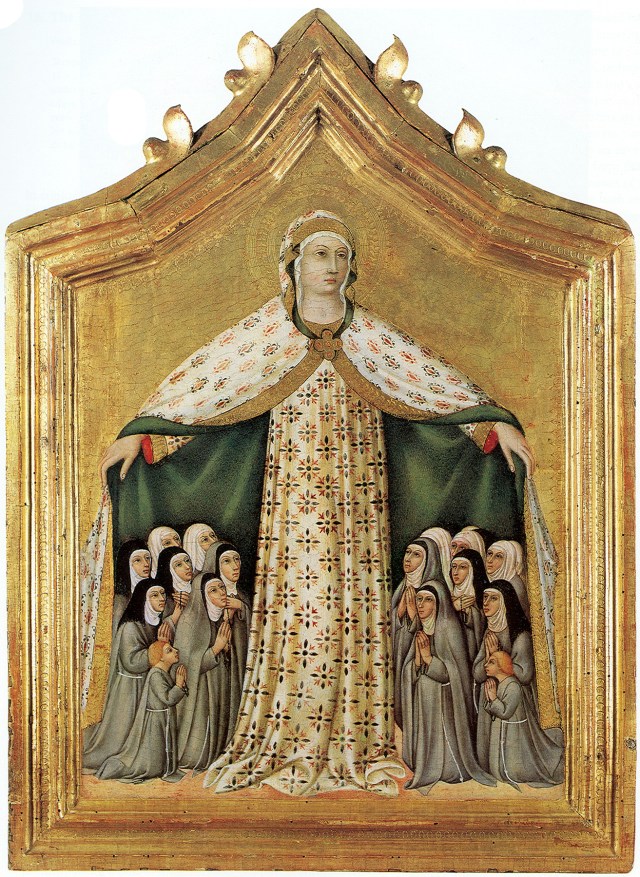
This painting is by Sano di Pietro an early Renaissance painter. It is entitled Our Lady of Mercy and was painted in the 1440’s. Sano di Pietro was from Siena.

Copyright © 2011 Deacon Paul O. Iacono All Rights Reserved


Stones and Sea Glass Can Tell A Story – The Art of Valerie Szlatenyi

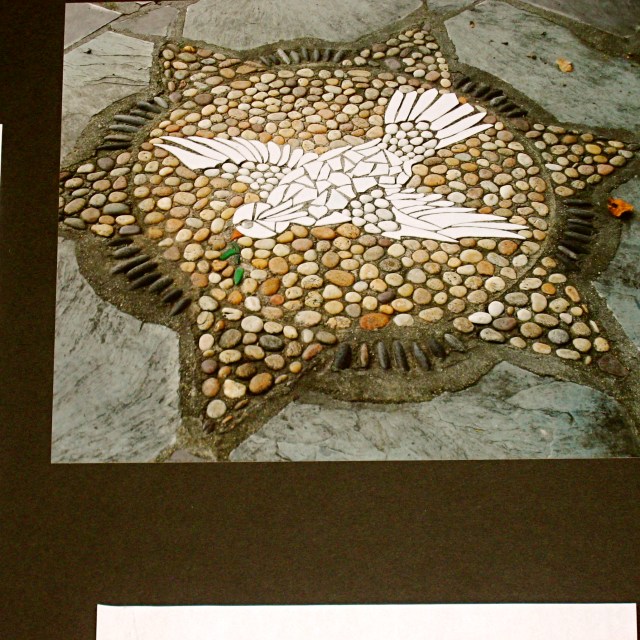
One of the first St. Francis of Assisi parishioners to contact me to become a member of the Fra Angelico Institute for the Sacred Arts is a wonderful lady and artist by the name of Valerie Szlatenyi. In our discussion she shared with me the work she had recently done for the Wakefield Baptist Church Memorial Garden here in Wakefield, Rhode Island. The work is a large garden mosaic casting in glass and stone. It appears in a quiet corner on the Baptist Church yard grounds.

Valerie described the process she went through as she decided upon her composition for the church yard. She mentioned “Like a voice talking,” an impression “came to me that a mosaic dove would be part of the garden.” At first she wasn’t sure how to do it but she resigned herself to forge ahead and listen to her Muse.

It wasn’t a simple task, details of the dove began to fill her mind, and she realized that careful planning was essential for it to be a success. Combining prayer, with the assistance of a friend, she made numerous visits to the Atlantic coastline a few miles away and began to reflect on the shapes of the various stones that she was collecting.

An assortment of shapes, sizes, and shades of color, all began to fill her mind with impression that some of the stones had characteristics of various human personalities in that some were worn, some scarred, and some smoothed with the passage of time. The rough and tumble of countless waves, sand particles, and fellow stones sliding, and sometimes crashing into them, forever changing their appearance.

Valerie’s meditative trips to the shore helped her formulate her design which required stones of various quality, texture, and definition. In some cases she could see that the stones were made better for all the tumultuous behavior they had undergone. New lines of grain were exposed: mica, colored granite, sedimentary rock, or various minerals long hidden after eons of time now exposed to the elements of sea, wind, and sand. It was as if the best of the stone had to be burnished by nature – and nature’s God – in order to show its true complexity; the life of the seashore mirroring the life of the land walkers.

Like Valerie, my wife and I enjoy walking the beautiful Rhode Island beaches that face the Atlantic Ocean. We are amazed at the lovely collection of small stones and rocks that at times appear after an especially violent storm. Our imaginations kick in when we come across broken, yet harmless, sea glass.

Colored glass has a unique role to play in the enjoyment level of many beachcombers. Especially along the Atlantic Coast we are probably all impressed by their similarity to jewels from the treasure chests of long dead pirates. They sit at the shoreline, under a clear blanket of water, shimmering in the afternoon sun – beckoning you to pick them up and rejoice at your good fortune.

Valerie decided to center her creative efforts on composing a mosaic dove for the local church’s healing and prayer garden. She explains that the dove has always been a symbol of peace, love, and purity. Expanding the symbolism out onto a theological level, we can say that the dove, as one of the symbols for the Holy Spirit, is a representation of God’s love and grace coming to those who participate in the Sacramental life of the Church. Her composition also asks us to find the three feathers on the neck of the dove. She explains that they represent the Father, Son, and Holy Spirit united in love. The heart of the dove expresses the never ending love of the Father for the Son and the Son for the Father – and united as the Holy Trinity – their love for us.

Well done Valerie, it is a beautiful and inspiring composition.

Copyright © 2011 Deacon Paul O. Iacono All Rights Reserved

Photo and image Copyright © 2011 Valerie Szlatenyi All Rights Reserved


Just A Minute Mr. Disney – Let’s Take A Look At The Art Of Peter D. Spaine!

Another South Kingstown, Rhode Island artist, a fine gentleman by the name of Peter D. Spaine, contacted me this past summer when he read about the Fra Angelico Institute for the Sacred Arts in an early June issue of the RI Catholic newspaper. He invited me to his home where I met his lovely wife Marlene, and viewed his studio while discussing the goals of the Institute. We chatted about sacred iconography while I enjoyed his paintings and wood carvings.

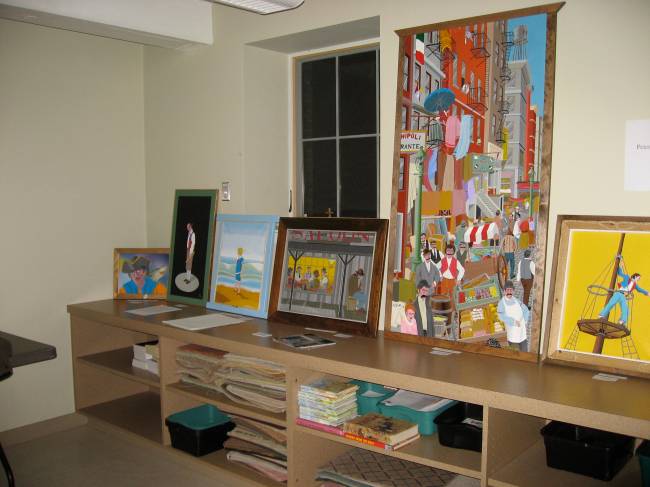
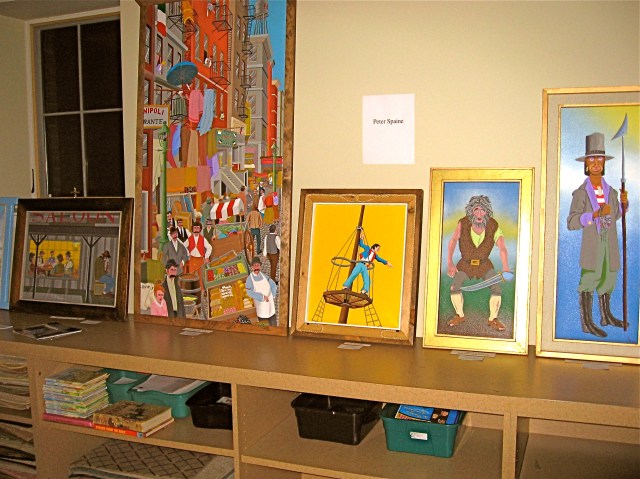
Peter has a great studio space and it is filled with an assortment of his paintings that depict pirates, Civil War generals, cowboys, desperados, hobos, saloon hall sweeties, and characters from Moby Dick and Treasure Island.

While you will occasionally find a land or seascape, Peter is primarily concerned with portraying his fellow man and the extraordinarily different characters that humanity has produced.

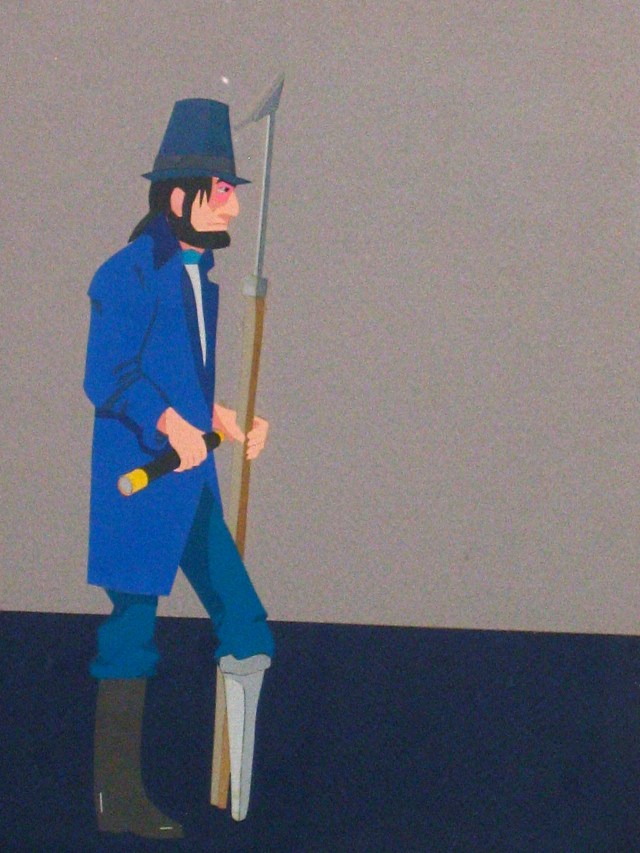
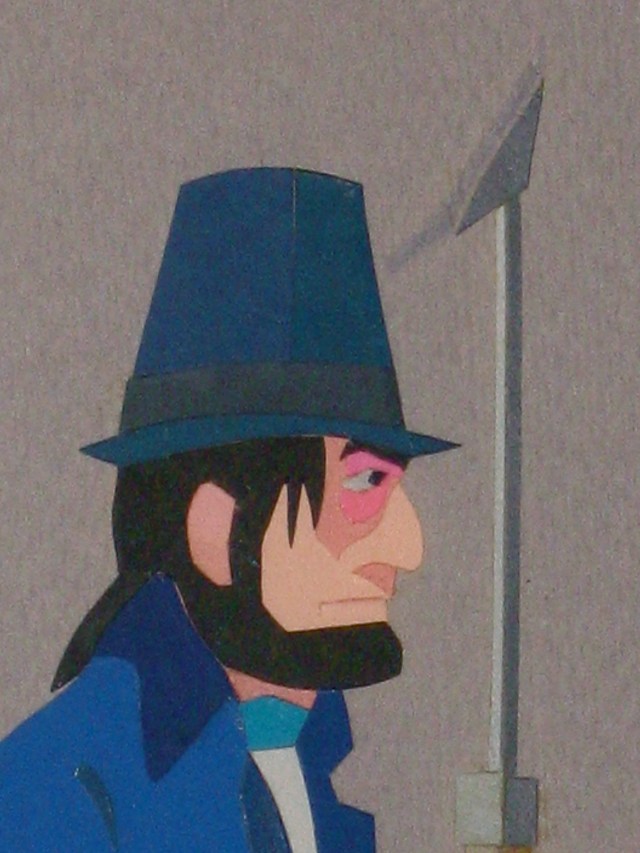
Peter paints the stories that his mind develops and prods him into fleshing out in paint. He works in acrylic and occasionally in oil. He also showed me a number of pieces he created using cut pieces of colored paper to tell the story. He very generously gave me a gift of one of these paper “paintings.” I like it very much. It portrays one of my favorite characters from American literature – Captain Ahab – who with his harpoon at  the ready is staring out to sea – waiting…

Spaine has created traditional paintings of seascapes, portraits of grandchildren, and the typical scenes many of us have painted; but the idea that stands out about him is, similar to Walt Disney, he uses paint the way a writer would use ink to express the stories that pop into his imagination. An example being a series of two themes that I found to be quite exceptional in their ability to focus my eye and move me into the action of the story itself.

The first is a scene from his series entitled “Little Italy” (seen below) which captures the action, personalities, sights and sounds of that New York neighborhood with its pushcarts and fresh produce at the turn of the last century. He has a similar series that portrays the Jewish Quarter of New York in the early 19th century, and the difficulty that a Jewish matron encounters when she thinks it is safe to go out on the front stoop and secretly have a quick cigarette. Each painting is filled with details that marvelously enhance your understanding of the story.

Peter is a unique and wonderful storyteller, as with all the members of the Fra Angelico Institute, I am priviledged to call him my colleague. As a member of the Institute, he is currently working on a series about St. Francis of Assisi, one of the Institute’s patrons. I have seen some preliminary drawings and I am very impressed.

The first two images below is one of Peter’s “paper paintings” – using colored paper to create the image. It is of the Captain Ahab scene that I described above. The third and fourth images are a collection from some of the paintings in Peter’s studio that he selected to bring to our Autumn meeting.

Photos taken with the permission of Peter D. Spaine; images Copyright © 2011 Peter D. Spaine All Rights Reserved.

Copyright © 2011 Deacon Paul O. Iacono All Rights Reserved

Shades of Monet – The Art of Eric Peter McLaughlin

The Fra Angelico Institute for the Sacred Arts, as a gathering place for sacred artists to create, share, learn, and pray together about their creation of sacred art, has blossomed into a small organization that has met the spiritual and creative needs of a number of people within, and outside, of the Diocese of Providence, Rhode Island. This post, and the next three posts, will continue to discuss and display some of the work that was displayed by member artists at our Autumn meeting. One of those artists is the talented Eric Peter McLaughlin.

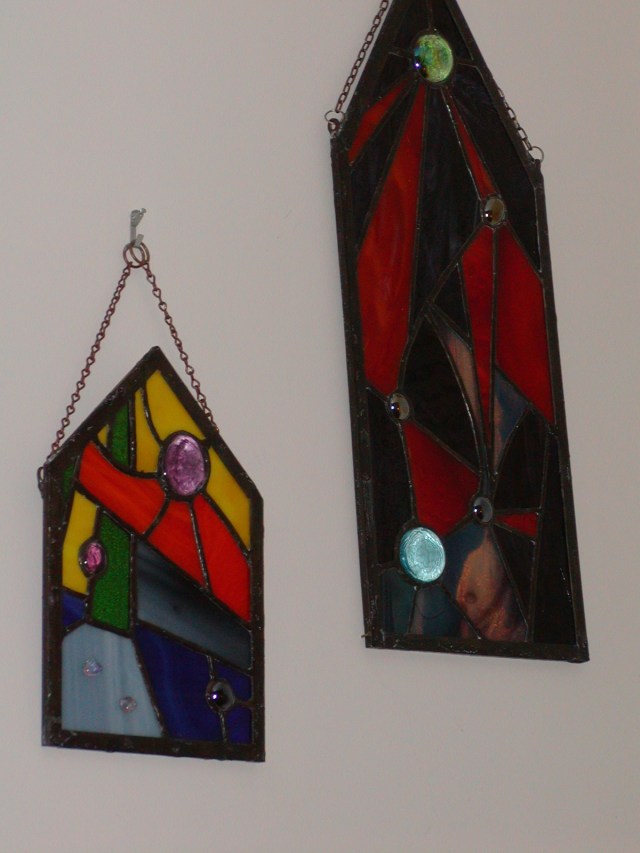
Eric is an artist and a wordsmith. He contacted me last summer to learn more about the Institute and to become a member. Eric is a fascinating person. As a  multidimensional artist he creates two and three dimensional works in a variety of media. He composes in stained glass, sculpture, and images in oil, watercolor, pastel, and acrylic. He also writes and teaches classes to all age groups and experience levels. His work has been shown at the Lowell Thomas Museum and the Monarch Gallery in Victor, Colorado, as well as the Providence Art Club and the Rhode Island Watercolor Society.

Eric has exhibited in over twenty shows and won awards in Michigan and Rhode Island for his stained glass and watercolor pieces. No stranger to the written word, Eric has written a newspaper column, newsletters, promotional literature, and a children’s play for a theater arts program. He currently is the author of his own blog entitled The Cranky Bachelor Blog, which can be read at http://the crankybachelor.blogspot.com. He describes it as the world seen through the lens of a “cranky bachelor.” It’s a fun read.

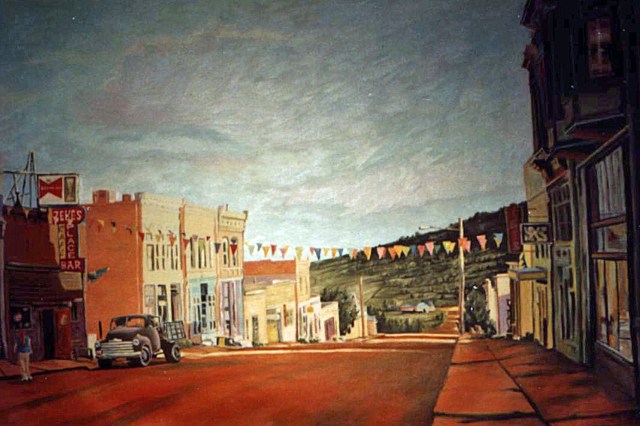
When Eric contacted me he expressed sincere interest in moving into the category of sacred art. He wanted me to see some of his work so we met and discussed what he was interested in and he also provided me with some samples of his art.  At the recent Autumn meeting of the Fra Angelico Institute, he brought some beautiful works that show the level of skill that he has achieved.

Eric’s works bring me back to Claude Monet, Edward Hopper, and Pietro Annigoni. His shading and color choices are wonderful in their ability to set a mood and convey the beauty of a scene. He has much to teach us and we look forward to it.

Copyright © 2011 Deacon Paul O. Iacono All Rights Reserved

The following photos were taken by, or with the permission of, Eric P. McLaughlin. All images and photos are Copyright © 2011 Eric Peter McLaughlin. All Rights Reserved.

A Custodian of Beauty – The Talent of Artist Jamie Medeiros

After an article explaining the mission of the Fra Angelico Institute for the Sacred Arts appeared last June in our Diocesan newspaper, the Rhode Island Catholic, I received a call from a lovely young woman by the name of Jamie Medeiros. She explained that she was from Massachusetts and that she, too, had been touched by the Holy Spirit to offer people the opportunity to blend the creation of beauty with personal prayer. She described the process through which she currently leads people to express themselves in art while they are praying – actually to make prayer part of their artisitc process. She told me that she calls their parish meetings Pray and Create, and that they successfully had a number of parishioners involved who were doing exactly that – joining prayer with artistic expression.

As she was explaining what she was doing in her Pray and Create sessions I couldn’t help but stand in awe of the power of the Holy Spirit to be touching people with the same impulse throughout the United States. This same impulse – the same desire – to combine prayer with art; from the Fra Angelico Institute for the Sacred Arts in Rhode Island to the Catholic Artists Society in New York City, to Pray and Create in Massachusetts, and the Way of Beauty at Thomas More College in New Hampshire, to the Foundation for the Sacred Arts in Washington, D.C. – all attempting to examine and put into practice the words of Beato John Paul 2 and Pope Benedict 16th to become “custodians of sacred beauty.”

By becoming involved in the sacred movement to be a custodian of beauty we refashion culture and ourselves. We accomplish that end by evangelizing the truth, goodness and beauty of God through the study and creation of sacred art.

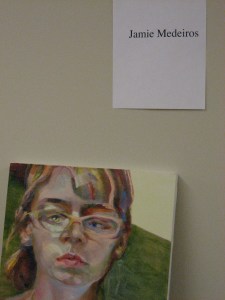
We continued to talk and I invited Jamie to become a member of the Fra Angelico Institute for the Sacred Arts, and she graciously accepted. Jamie has a wealth of experience in the arts, having received a Master of Fine Arts in painting from the American University in Italy, and an undergraduate degree from the Catholic University of America. She currently is a self employed artist and lives in Massachusetts. A self portrait appears here:

Jamie’s talent can be appreciated in the above portrait as well as in a sampling of her sketches (seen below) – which she showed at our Autumn Meeting. To see more of Jamie’s paintings and sketches please go to her web site iliveinhope.com. She has a potpourri of different photographs, sketches, paintings, and whimsical studies. I especially like the work she has done of her dog “Daisy” and – a Rhode Island icon: Mr. Potato Head! Actually, I am sure that as soon as  Hasbro Industries (headquartered in Rhode Island and the creator of Mr. Potato Head), or Hasbro Children’s Hospital in Providence sees them they will snatch up those beauties!

The sketches below were done during her Pray and Create sessions at her parish church. Photos taken and used with the permission of Jamie Medeiros. Her painting and sketches are Copyright © 2011 Jamie Medeiros All Rights Reserved.

Very powerful, indeed! Thank you Jamie for the time, talent, and treasure that you are willing to share with others who accompany you on our beautiful spiritual journey back to the Lord.

Photos taken and used with the permission of Jamie Medeiros. Her painting and sketches are Copyright © 2011 Jamie Medeiros All Rights Reserved.

 Copyright © 2011 Deacon Paul O. All Rights Reserved.