In the June 22, 2020 issue of Newsweek an on-line article by Aila Slisco reported some statements by political activist Mr. Shaun King.
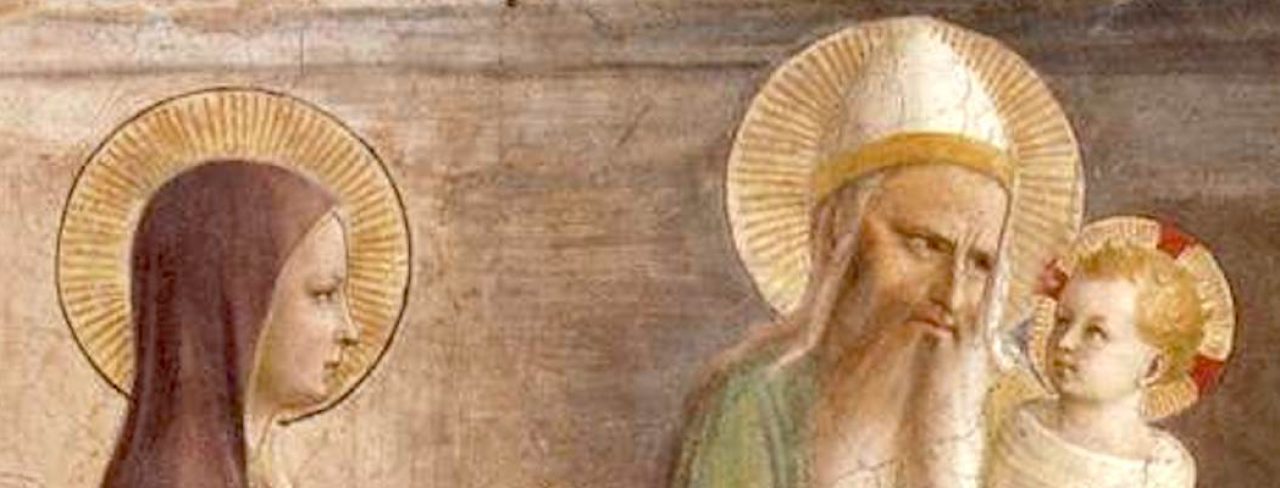
She states: “He [King] also remarked that stained glass windows and other images of a white Jesus, his European mother and their white friends should all be destroyed, insisting they are racist, examples of ethnic propaganda, and “a form of white supremacy. “They should all come down.” (I’ll comment on these statements by Mr. King in another post).
King’s comments came in association with Black Lives Matter protests against the brutality of some police officers toward minorities. These protests quickly moved away from the issue of police brutality in some major cites and expanded into protests against historic and artistic representations of American/European civilization and the “white supremacy” that it allegedly represented.
We have observed over the last two weeks examples of the new iconoclasm.
Rhetoric like Mr. King’s and other activists could be passed off as uninformed except for the fact that two California mobs tore down and desecrated a statue of the Spanish missionary Fr. Serra. In the process they also harassed Catholic college students, laity, and a priest who were defending it.

Legitimate non-violent protests are protected by the U.S. Constitution, however, the destruction of public or private property is not.
Public religious, military and political statues are the property of the local churches and governments. What happened to the government’s responsibility to protect them? Churches, and whatever articles they contain, are the property of the church regardless of denomination. Will the governments across the nation protect them?
Religious statues, sacred art, stained glass windows, etc, are defended by the 1st amendment of the U. S. Constitution. Is Mr. King saying that a Satanic statue of Baphomet can be placed in a public square but a statue of a Roman Catholic saint, who is specifically honored for his cultural contributions, cannot?
Are the representations of the God and saints of the Roman Catholic Church, who has been a major contributor to world civilization, to be torn down because a segment of the population believe that they, without taking into account time period or cultural conditions, have been historically ethnocentric and intolerant of other cultures? Are these legitimate religious statues equivalent to the statues of Lenin, Stalin, Mao or Saddam Hussein?
What happened to Martin Luther King Jr.’s call for positive non violent change and tolerance in America?
Today, July 1st, is the Roman Catholic Church’s memorial of the missionary efforts of Fr. Junipero Serra, an 18th century Spanish missionary priest. Fr. Serra’s leadership and contributions to improving the educational and technological life of Native Americans and development of California is recognized as a public act and not just a religious effort; this is why his statues were erected by the state of California. His statue also stands in Statuary Hall in the U. S. Capitol building in Washington, D. C. At various times national and state politicians, of both political parties, were present to honor him.
Fr. Serra’s main goal was to be an effective Christian missionary. He was following the Gospel injunction of Christ Himself in the 28th chapter of the Gospel of Matthew: “All power in heaven and earth has been given to me. Go, therefore, and make disciples of all nations, baptizing them in the name of the Father, and of the Son, and the Holy Ghost, teaching them to observe all that I have commanded you. And behold, I am with you always, until the end of the age.”
The new iconoclasm appears to be intolerant, or unaware, of history. The adherents public efforts, both in word and deed, are clearly seen in the mobs in California and specifically in St. Louis, Missouri where they beat Catholics who were praying in front of a monument of St. Louis IX. In both cases mob action desires to vent its anger, ideology, and psychological wounds against historic personalities. The mob desires to sponge away the past rather than continue to lawfully, peacefully, and vigorously work for social change.
Is significant change necessary in the way some police departments train their recruits? Absolutely. Productive change can occur. It cannot occur when the structures of Constitutional democracy are trampled upon. Polarization has never accomplished anything; positive social change has never occurred through a mob’s physical or verbal violence.
The past cannot be rewritten. In America, many times statues regardless of being religious, political, or military, celebrate the good that people have accomplished, not their ethnocentrism. If small groups through mob action tear down public property, or Church property, then they are no better than many other mobs, tyrants and demagogues through history; such as Mao Zedong’s actions during the ten years of China’s Cultural Revolution, Lenin and Stalin’s iconoclasm and political/religious oppression during the 70 odd years of their Communist debacle, Hitler’s 13 year rampage of mass destruction and inhumanity, or present day Isil and their damage of populations and archaeological sites in the name of religious ideology.
As civilizations are we still unable to learn from the lessons of history? Is it too late?
Copyright © 2011- 2020, Deacon Paul O. Iacono – All Rights Reserved. Permission to reprint must be obtained from the author in writing. Students, and those interested, may quote small sections of the article as long as the proper credit and notation is given. Thank you.


 The Fra Angelico Institute for Sacred Art
You must be logged in to post a comment.